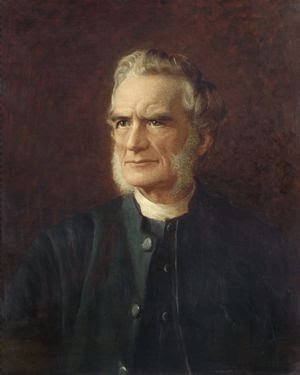
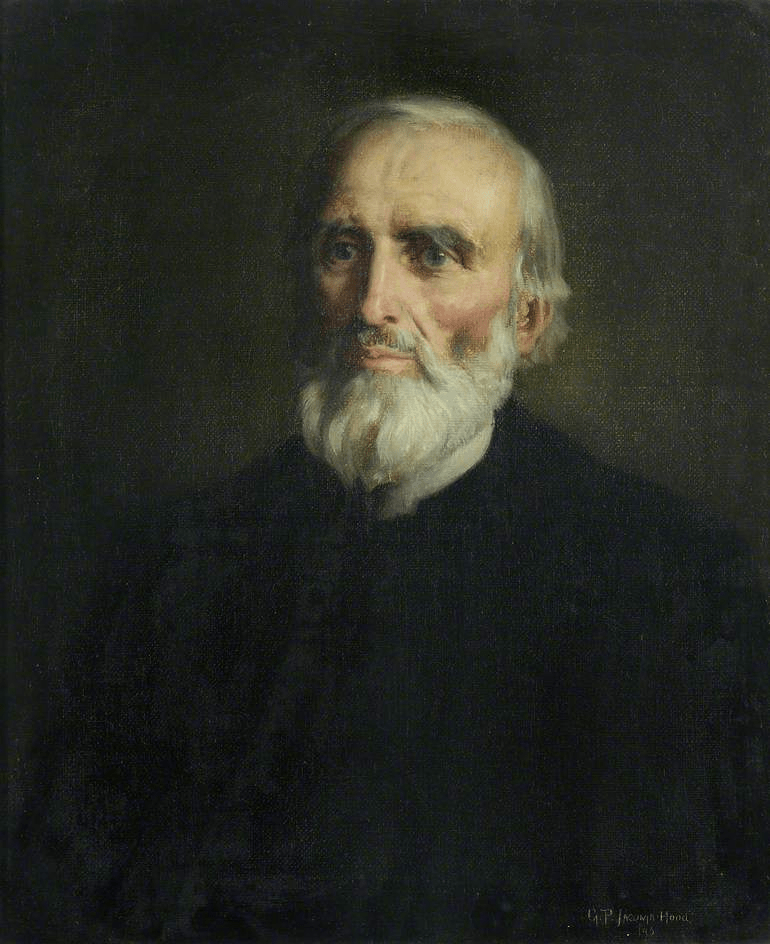
We’ve been told they were heretics, occultists, even sodomites. We are told by KJV-only authors and TR Defenders that Westcott and Hort denied the deity of Christ, the bodily Resurrection, and the inspiration of Scripture, and were secretly occultists of the worst degree and the fathers of the New Age movement. Critics of KJV-onlyism such as White, Wallace, and Ward are quick to point out the orthodox character of their writings. Are Westcott and Hort innocent of the charges laid against them by authors such as Waite, Ruckman and Riplinger, did they cleverly hide bezar beliefes from the public, are their spooky writings being ignored by modern Bible version defenders, or were they scapegoats for a more sinister agenda?
As an Amazon Associate, I earn from qualifying purchases.
The Playlist
Finding the truth on these two individuals among among the retoric put forward by both sides of the Bible translation debate can be challenging. Here are all the videos we have about Westcott and Hort and they keep getting stranger!
Heresy & Hearsay Check List
In the interest of truth, here is a brief list of accusations made against Westcott and Hort as well as the confirmation that they did indeed hold dangerous views peculiar to themselves that were not held by other Anglicans of the time. The accusations may be true, but they will remain listed as “Not confirmed” until we have personally confirmed them. Please feel free to send us your input via the contact section below.
- Anti-American (But who else was?) (Not confirmed)
- Blavatsky, Involvement with (Not confirmed)
- Blood Atonement denial (Not confirmed)
- Deity of Christ denial (Not confirmed)
- Infallibility of Scripture denial (Not confirmed)
- Inspiration of Scripture denial (Not confirmed)
- Miracle denial (Not confirmed)
- Occultism (Not confirmed)
- Racism (But who wasn’t) (Not confirmed)
- Resurrection denial (Not confirmed)
- Sodomy (Not confirmed)
Lake Spots the Fake
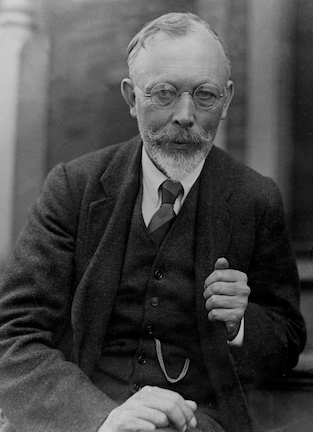
Defenders of Westcott affirm his belief in the physical Resurrection based on his writings. According to Greek New Testament scholar Kirsopp Lake, the last place you would want to look for Westcott’s true sentiments and opinions is in his writings. (This is probably what D.A. Waite describes in his book on Westcott’s sneaky denial of the resurrection of the body.) Lake writes in Immortality and the Modern Mind:
“APPENDIX I
THE ABANDONMENT IN THE CHURCH OF THE BELIEF IN THE RESURRECTION OF THE FLESH
THE way in which this change was brought about in England is very interesting and may serve as an illustration of a process which has been almost universal in Protestantism.
Until the middle of the nineteenth century, opinion in England maintained the same position as Catholic theologians. They held uncompromisingly to the opinion demanded by the Apostles’ Creed, and affirmed the Resurrection of the Flesh. The first theologian who abandoned this attitude was perhaps F. D. Maurice, but the natural obscurity of his style renders it hard to say exactly what he meant, and Bishop Westcott is really the author of the great change. He entirely abandoned belief in the Resurrection of the Flesh as formulated in the Creed, but he never said so. On the contrary he used all his matchless powers of shading language , so that the change from white to black appeared inevitable, natural, indeed scarcely perceptible.
HIe writes, for instance, in The Historic Faith, page 136, as follows: “I believe in the resurrection of the flesh. But in shaping for ourselves this belief we need to use more than common care lest we allow gross, earthly thoughts to intrude into a realm where they have no place. The ‘flesh’ of which we speak as destined to a resurrection is not that material substance which we can see and handle, measured by properties of sense.”
Thus he explained that when the Creed spoke of the Resurrection of the Body it did not mean the Resurrection of the Flesh (though both in the Greek and Latin originals it said so), but that it was affirming the Survival of Personal Identity. No doubt it was; but it was affirming that this personal identity was maintained in a special manner, and it was this point which the bishop entirely passed by.
The same position was maintained by Bishop Gore. He writes, for instance, in The Creed of the Christian, page 92, as follows: “We believe for certain in the resurrection of the body. This does not mean that the particles of our former bodies, which were laid in the grave and which have decayed and passed into all sorts and forms of natural life, will be collected together again; but it means that we in our same selves shall be re-clothed in a spiritual body which we shall recognise [sic] as our own unchanged selves.”
A more complete denial of the Creed cannot be imagined, and the situation is not improved by the fact that Bishop Gore, unlike Bishop Westcott, did not shrink from quoting the erroneous English translation, – ‘body’ instead of ‘flesh,’-though he knew, even if most of his readers did not, what the original Greek really was
It speaks much for the power which these two bishops had over the English language that they were successful in imposing the change on the English Church with scarcely a struggle. To historians it was obvious, of course, that the Creed had been denied, though by way of paraphrase rather than by contradiction, but it was not so stated, and when in 1922, Mr. Major, the Principal of Ripon Hall in Oxford, put the case frankly he was delated to his bishop as a heretic. He did not, however, follow the policy of Bishops Westcott and Gore, but admitted that though the Church had on the whole always maintained the Resurrection of the Flesh, the Church had been wrong.1 He claimed that it was a proper use of liberty to explain the Creed in such a way as to affirm the contrary of its original meaning, and to “interpret’ the Resurrection of the Body as meaning the continuance of personal life without ” any of the physical integuments of this present body.” He won his case. But the reasons given by the Bishop of Oxford in acquitting him are remarkable Mr. Major said, “I desire to state as plainly as possible that I do not hold, nor do I make any pretence in my teaching to hold, that belief in the mode of the resurrection of the dead which has been held by the Catholic Church for eighteen centuries.”
The bishop’s comment is: “I do not find that Mr. Major denies the doctrine of the Resurrection of the Body: in fact, he positively asserts his belief in ‘the full survival of all that constitutes whatever is essential to human personality; in short, all that is meant by personal identity.’
“I notice the extreme candour and almost exaggerated emphasis with which Mr. Major declares that he cannot reconcile his teaching “with the Catholic tradition,’ inasmuch as he believes that the Catholic tradition is not compatible with the teaching of Scripture. I believe he is mistaken, and his mistake is due to the limited view he takes of Catholic tradition.”
So it was decided that Mr. Major was orthodox malgré lui. It is a very important incident, for it is the first official recognition in England that if the Apostles’ Creed should appear to be wrong, it can still be affirmed by making it mean the opposite of that which its writer intended. I have myself sometimes wondered whether it would not be simpler to say that the Creed is wrong and to cease affirming it, but the result reached is much the same, for very often in life, as in chess, Bishops move obliquely.” (Kirsopp Lake Immortality and the Modern Mind, 1922, p. 38-44)
A Really Bad Misquote
We have some apparently careless authors to thank for some horrendous misquotes of Westcott and Hort. Here are some examples.
Did you know that Mark Ward and his friends in the Textual Confidence Collective are trying to expose such misquotations and educate people about Westcott and Hort’s beliefs and writings? You can check out some of their videos on our playlist. Get your thinking caps on!
Rejection of “Infallibility”
Westcott is often quoted as saying “‘I reject the word infallibility of Holy Scriptures overwhelmingly.'” But what did he actually say? Sadly, Gail Riplinger’s quotation is the furthest removed from the actual quote. Compare the rendering of New Age Bible Versions to the actual letter Westcott wrote below.
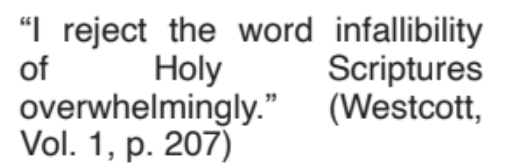
Sounds pretty bad, right? But is it true to the sorce? Joey Faust writing on the 400-year history of the KJV-only Movement gets closer thanks to copy/paste, but still falls short of telling the whole story and sounds sort of suspicious of you read it carefully. It was this suspicious sound that first prompted me to look into the context of this quotation.

Thankfully, Google Books has brought millions of old books within the reach of the common conspiracy theorist! Here is a screen capture of the actual letter from Life and Letters of Brooke Foss Westcott, D.D., D.C.L.: Sometime Bishop of Durham By Arthur Westcott (1903) p. 207. (If Gail didn’t borrow her sad misquotation from someone careless author, this is the very same page she would have been looking at when creativity struck and knocked the precise truth out of the citation.)
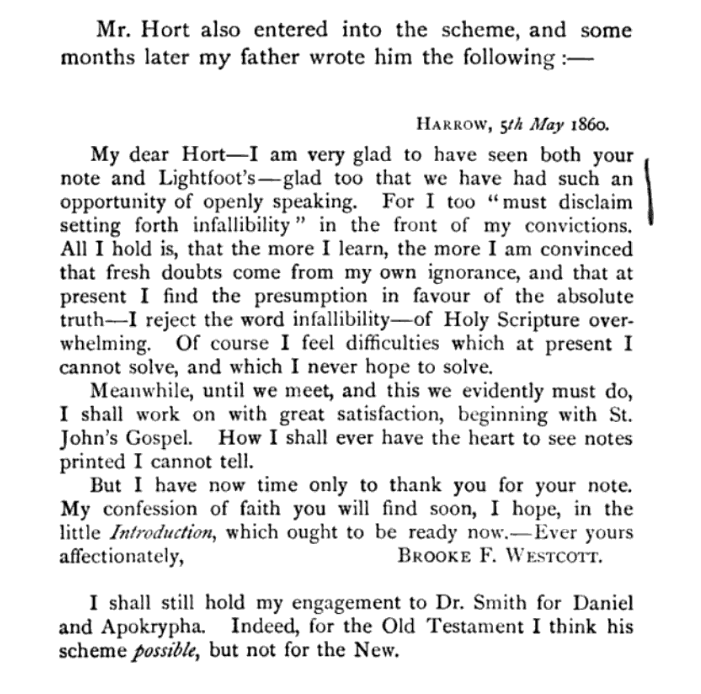
In other words: “If I follow my true convictions, I can’t say the Scriptures are infallible. I have too many unanswered questions. I do, however, hold that they are absolutely true, regardless of my doubts!” Remember, we were originally led to believe he was saying, “Of course, the Bible isn’t infallible! Don’t be a fool!” Do you think this is a fair rewording? Do you think Gail’s modified quotation is justifiable? Let me know in the contact form below!
The Amazing Miss Quote Gets Around
I’ve searched multiple KJV-only authors, but so far it appears that the misquotation comes straight from Gail’s NABV. It is interesting to note where her wording finds itself online.
Again Westcott said, “I reject the word infallibility of Holy Scriptures overwhelmingly.” (The Life and Letters of Brook Foss Westcott, p.207).
(Why Should you Use the King James Bible by David L. Brown)
It would be beyond irony if this miscitation was actually borrowed from Gail since David Brown and his partner Phill Stringer have made a great effort to distance themselves from her. To me, this indicates that both David and Gail borrowed the same misquotation from the same source. The most likely culprit would then be D.A. Waite.
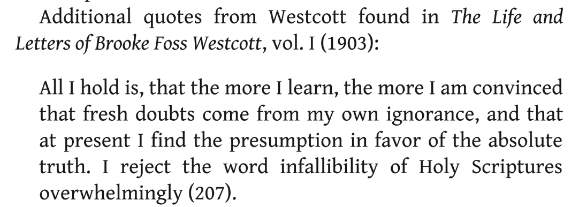
Many other websites have borrowed the same misquote by plagiarizing one author or another. Here are a couple printed examples.
The Truth about the TRUTH (2018) by Tommy Beeker accidentally quotes it twice on the same page, first incorrectly and then correctly. He gives two references, but I’m sure they are from the same or similar sources. Gail doesn’t provide this broad of context and has no dashes in NABV, but he does have “Scriptures” and “overwhelmingly” like Gail added. Tommy has his own interesting relationship with dashes.
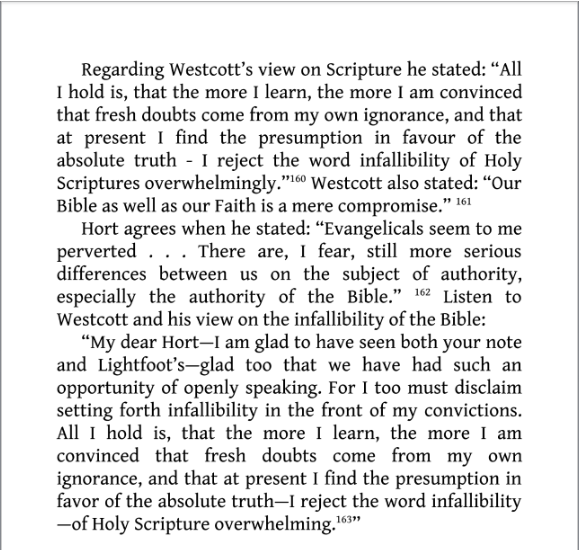

Hidden Bible Truths in Plain View by Windell Gillis does something similar but drops the dashes completely.
What did Westcott Mean? 🤔
To my understanding, Westcott’s denial was of mechanical dictation where the Bible would have been given in a form similar to automatic writing which almost no Christian, much less the critic of Westcott and Hort accepts today. This is pointed out in Mark Ward’s Textual Confidence Collective’s video True (and Mostly True) Accusations against Westcott & Hort. Please remember as you watch this that the charge is that Westcott denied the infallibility of the Bible, not that he was not KJV-only. Feel free to send us your thoughts.
I thought context would help me in interpreting the passage. The broader context of the entire book was my first search. Unfortunately, it is the only place the word “infallibility” and variations of the word appear. “Absolute truth” also yields no results. 🙁
I contacted Peter Van Kleeck for his opinion of the passage. We may also create a YouTube poll to see what others think.
Bryn Riplinger’s Defence of the Miscitation
Did an editor of NABV feel Gail had made a gramatical mistake and “correct” the citation to read as it does? Did D.A. Waite make a typo or “fix” Westcott’s grammar and did Gail inherit the newly created error? The desire to inquire about this miscitation (or typo) grew too strong. I had to know, so I eagerly sent an email to Gail Riplinger and her darughter Bryn. I queried:
Dear Gail,
As always I have a burning question. 😁 Recently a question arose about a quotation of Westcott’s beliefs about infallibility not being accurate. Mark Ward and Timothy Bergg from the Textual Confidence Collective made a video recently responding to “True (and Mostly True) Accusations against Westcott & Hort“.The quote in NABV reads “I reject the word infallibility of Holy Scriptures overwhelmingly.” (Westcott, Vol. 1, p. 207)”.
Bergg says that Westcott explained in another book (I forget which, but I can look it up if you like) why he disliked the term infallibility. He felt the term overemphasized the divine nature of scripture to the exclusion of all human involvement to the point where an unscriptural doctrine like mechanical dictation might be implied. When I looked it up, he affirms the “absolute truth” of Holy Scripture in the same sentence as Bergg says in the video. I’ve attached a screen capture of the original letter from Life and Letters of Brooke Foss Westcott, D.D., D.C.L.: Sometime Bishop of Durham By Arthur Westcott (1903) p. 207, and would love to hear your thoughts on this matter!
The quotation in NABV also seemed out of context to another pastor who responded to this quotation on YouTube. This pastor said there were deliberate changes in the quotation from the original that led to a misunderstanding of what Westcott was saying. When I carefully compared it to the original letter there were indeed changes in punctuation and wording making it seem like a stand-alone sentence and not a part of a greater more nuanced whole (see screen capture attached). Brother Joey Faust includes the quotation with greater accuracy in his book on page 24. Am I safe in assuming that your quotation of Wesctott was borrowed from someone like D.A. Waite in the days before he came out against you? If not, how would you defend the quotation as given in NABV? I ask because the issue does not seem to be addressed in Blind Guides and I am concerned.
I also sent an email in March with some questions and comments about your chapter in NABV called “[top secret information]”. The email is called “[top secret information]” and was sent on March 26th. Since I sent it so long ago, I’m assuming it slipped through the cracks between your visits to the hospital and illnesses. But since I’ve followed up on it so many times since I sent it, I often feel like the email is being ignored if I allow myself to do so. Please reply with your thoughts on this and the previous email. Please let me know if it is easier to talk about the matter on the phone. Thanks for reading and your patience with an inquisitive man. God bless!
In Christ,
Joseph Armstrong
Obviously, neither you nor I are required to agree with their explainations or claims completely and I often do not. However, we deeply appreciate the Riplingers taking time to respond to my questions and believe they are made in the utmost sincerety. This is the response I received from Bryn:
To be continued. [linked document]
W. W. Westcott & Charges of Spiritism
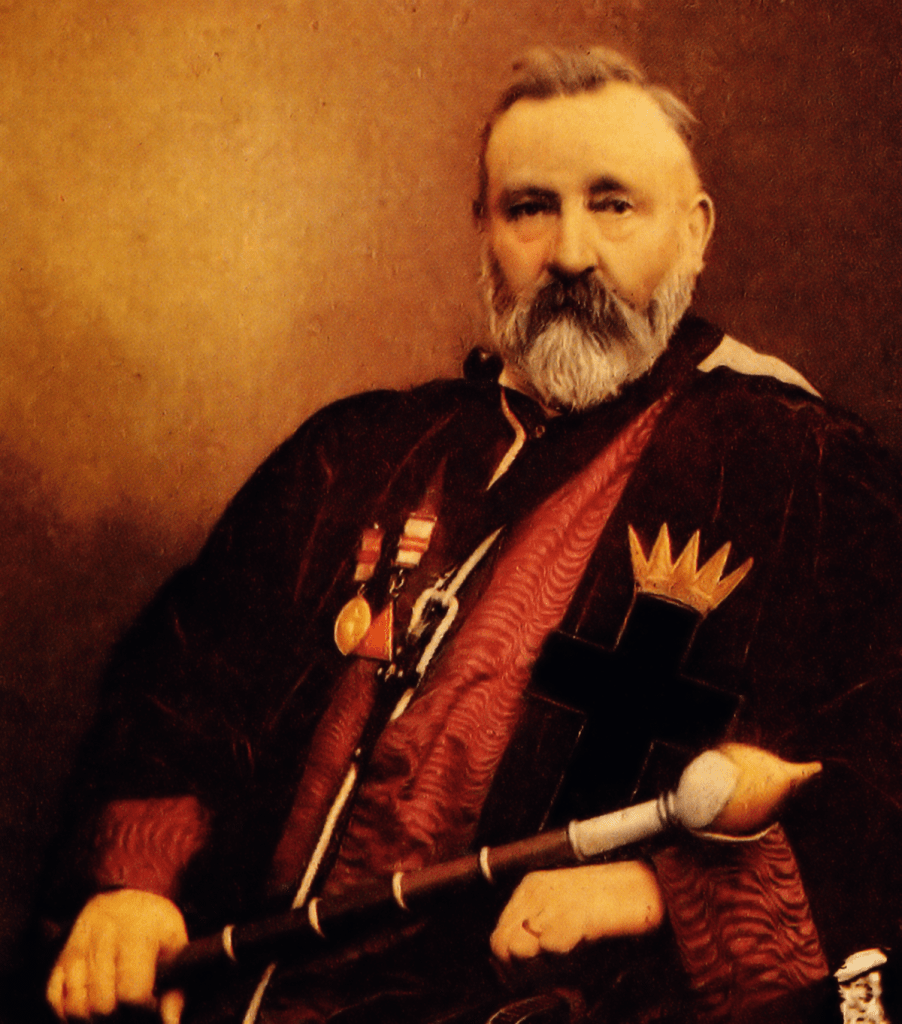
Critics of New Age Bible Versions by Gail Riplinger continue to claim that the “Westcott” she refers to as a “London spiritualist” is the Crown Coroner William Wynn Westcott, who was not only a Freemason and Rosicrucian but also co-founded the Hermetic Order of the Golden Dawn and was an active Theosophist. Does any connection exist between the two and did Riplinger conflate and confuse the two in her books?
Our desire, as always, is to get to the bottom of these statements and find the truth regarding them, not to justify Riplinger, Ward, White, Wallace, or anyone else.
Un-Slandering Westcott
Although we do not agree with them on many points, we greatly appreciate Ward and the Textual Confidence Collective’s efforts in dispelling myths that surround the modern Bible version debate. After we called out their statement that Gail publicly said that she doesn’t care if her statements in her books are factual, Mark and Peter issued an apology in the description of the video. However, they went on to repeat that Gail’s statements about B. F. Westcott are false and result from her conflation of Bishop Westcott with William Wynn Westcott, the Rosicuitian co-founder of the Hermetic Order of the Golden Dawn.
In the description of their video Is It Just to Slander Westcott & Hort?, Ward and the TCC cite James White’s and Daniel Wallace’s criticisms of Gail Riplinger’s New Age Bible Versions affirming the following.
“…Riplinger is someone ‘who knows better, who has been publicly called out, and who has kept repeating statements she had to know were false.’
“One concrete example of this is her conflation of B.F. Westcott with the much younger mortician W.W. Westcott, who was indeed a spiritualist. In the original edition of New Age Bible Versions from 1993, Riplinger identifies the two, though she admits that this is a ‘speculation’ (page 677). Yet though she has been repeatedly corrected on this matter, the latest edition of the book (2018) continues to speak of Westcott in terms that are only correct if the two are indeed the same person. Riplinger wrote: ‘New versions (and the ‘new’ church they are producing) owe their occult bend [sic] to their underlying Greek text, a novelty produced in the 1870’s by B.F. Westcott, a London Spiritualist. Secular historians and numerous occult books see him as ‘the Father’ of the current channeling phenomenon, a major source of the ‘doctrines of devils’ driving the New Age movement.’
“There is simply no reasonable way in which Christian scholar B.F. Westcott, whatever his flaws, can be described in this way. This is a clear description of the other Westcott.
“James White revealed this error many years ago here: [Why Respond to Gail Riplinger?].
“Dan Wallace reveals this error starting at minute 10 in this video, which has been freely available online for multiple years: [Textual Criticism – Lesson 25]”
(“Is It Just to Slander Westcott & Hort?
Notice that Ward and the TCC do not say that Gail used quotations from W.W. claiming that they are from B.F. They state that “Riplinger identifies the two, though she admits that this is a ‘speculation'”, and that her book “continues to speak of Westcott in terms that are only correct if the two are indeed the same person.”
The TCC takes issue with a single quote from Gail which simply states that “Secular historians and numerous occult books see him [B.F. Westcott] as ‘the Father’ of the current channeling phenomenon, a major source of the ‘doctrines of devils’ driving the New Age movement.” We will see the “Secular historians and numerous occult books” she refers to shortly.
I think the problem here is that the TCC is overlooking something that Gail wrote because they see her statements as ridiculous attacks on scholars like Westcott and wish to spend as little time examining her statements as possible. Many KJV-only people are guilty of this practice regarding those like the TCC whom they feel are ridiculously attacking their favorite KJV-only authors.
We will also see Gail’s answer to this charge in her book Blind Guides. Check out her website for a free PDF of the book.
In James White’s article which Ward mentions above, White states:
“Finally, I wish to address very briefly Mrs. Riplinger’s confident statements about Westcott and Hort….2) Mrs. Riplinger never once mentions the fact that many of her confident statements about Westcott and Hort being “spiritualists” are based upon pure speculation on her part. Note reference 128 on pages 676-677. Here Mrs. Riplinger admits that in point of fact, she is not referring in her statements to B.F. Westcott, the textual critic, but to W.W. Westcott, a London mortician! She asserts that B.F. Westcott was in fact W.W. Westcott, and that based upon the statement of B.F. Westcott’s son that his father wrote his “B’s” like “W’s”! Note the final statement she made: “The connection between B.F. Westcott and the activities attributed to the possible allonym W.W. Westcott are speculation on my part.” Did Mrs. Riplinger ever note this on Action 60’s? Did she ever say “Now, what I’m saying about Westcott and Hort is in fact merely speculation on my part”? No, she made her assertions directly and without qualification. What is more amazing is the fact that the very sources Mrs. Riplinger cites indicate that B.F. Westcott was born in January of 1825; W.W. Westcott was born in December of 1848. B.F. Westcott died in July of 1901; W.W. Westcott died in June of 1925. Indeed, the book Mrs. Riplinger cites most often about B.F. Westcott, The Life of Westcott, was published 22 years before W.W. Westcott died! Furthermore, W.W. Westcott published his work, Sepher Yetzirah, the Book of Formation in 1911, a full decade after B.F. Westcott was dead! How she can maintain that B.F. Westcott is actually W.W. Westcott, I have no idea.”
Why Respond to Gail Riplinger? by James White
Notice that White says “Mrs. Riplinger admits that in point of fact, she is not referring in her statements to B.F. Westcott, the textual critic, but to W.W. Westcott, a London mortician!” You can read her admission below. He is especially critical of her statement that “The connection between B.F. Westcott and the activities attributed to the possible allonym W.W. Westcott are speculation on my part.”
Wallace’s statements are similar. We have not accessed the video Mark Ward is referring to, but this what we read in the lesson outline entitled Who Were Westcott & Hort?:
III. WESTCOTT AND HORT’S NT: EYE OF THE STORM
A. Strong reaction by Dean Burgon who falsely attached [sic] Westcott–Hort
B. Burgon’s followers made falacious ad hominem arguments, all of which are false
1. G.A. Riplinger, New Age Bible Version (1993) confuses B.F. Westcott with W.W. Westcott who was involved in the occult
2. Falsely claim Westcott denied the deity of Christ
3. Falsely claim Westcott denied the resurrection of Christ
4. Falsely claim Hort denied all sorts of cardinal doctrines
C. What about Hort?
1. More difficult to determine but probably not as orthodox as Westcott
2. Ironically, considered a ‘papist’ by some KJV Only folks, but so was Erasmus
“Who Were Westcott & Hort?“by Dan Wallace
There are a few things I would like to point out. First
Second, Erasmus was not a “papist”. He was a Roman Catholic until the day of his death, but there is a big difference between a Priest who rejected the papacy and was in rebellion against many Catholic teachings (See In Awe of Thy Word by Gail Riplinger, Chapter_________) and an Anglican who may have been involved in a plot to bring Protestantism back to Rome. Personally, I believe that just as Erasmus served as a key instigator against the abuses of Romanism, so to Westcott and Hort played a pivotal role to play in the modern Counter Reformation of the Jesuits. I don’t know if either Erasmus or Westcott and Hort were aware of how they were being used towards a larger plan.
The Infamous “Footnote 128”
The problem is that Gail does not provide this footnote (seen below) to make a connection between the actions of these two Westcotts but rather to add information that may be of interest to the reader. Her claims of Westcott’s spiritualism come from books of Westcott’s letters published by his son, and the connections between the Ghostly Guild and SPR reference more than some “Westcott”. More on this in a moment.
Here is a screen capture of every time Gail references W.W. Westcott directly in NABV. There are only 7 mentions on three pages of her book.
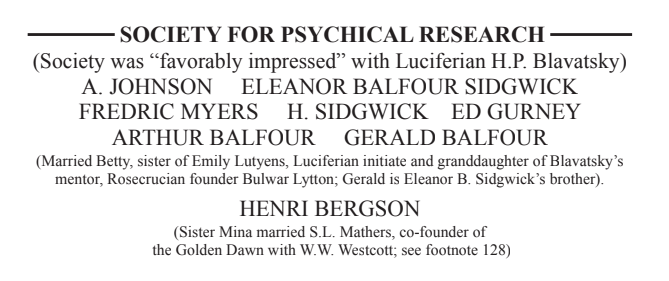
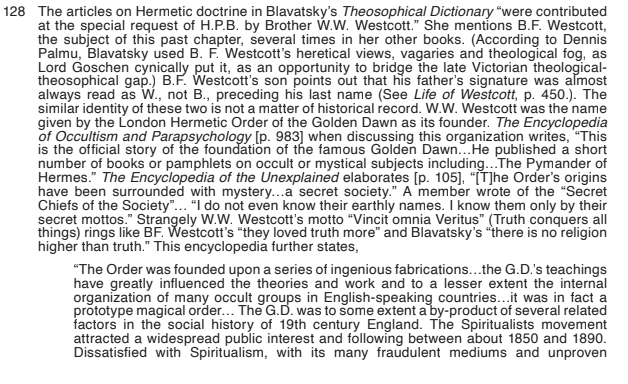
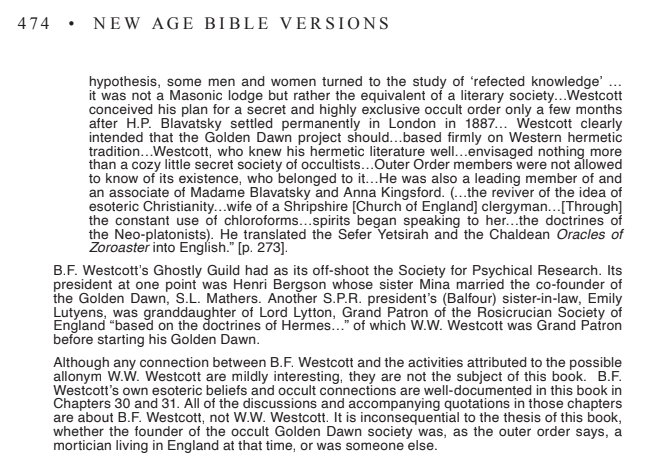
Could she say it any clearer? It is obvious from these quotations that Gail is aware of the difference between W.W. Westcott and B.F. Westcott and that W.W.W. not being equal to B.F.W. doesn’t come into play in the conclusions she draws.
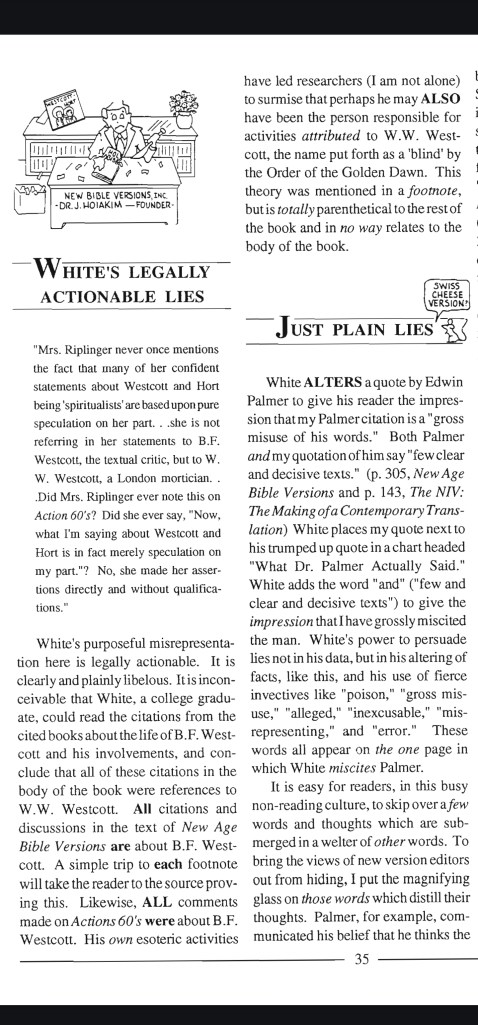
In her book Blind Guides, Gail offers the following reply to White’s objections:
“White’s Legally Actionable Lies
‘Mrs. Riplinger never once mentions the fact that many of her confident statements about Westcott and Hort being ‘spiritualists’ are based upon pure speculation on her part. . .she is not referring in her statements to B.F. Westcott, the textual critic, but to W.W. Westcott, a London mortician. Did Mrs. Riplinger ever note this on Action 60’s? Did she ever say, ‘Now, what I’m saying about Westcott and Hort is in fact merely speculation on my part.’? No, she made her assertions directly and without qualifications.’
White’s purposeful misrepresentation here is legally actionable. It is clearly and plainly libelous. It is inconceivable that White, a college graduate, could read the citations from the cited books about the life of B.F. Westcott and his involvements, and conclude that all of these citations in the body of the book were references to W.W. Westcott. All citations and discussions in the text of New Age Bible Versions are about B.F. Westcott. A simple trip to each footnote will take the reader to the source proving this. Likewise, ALL comments made on Actions 60’s were about B.F. Westcott. His own esoteric activities have led researchers (I am not alone) to surmise that perhaps he may ALSO have been the person responsible for activities attributed to W.W. Westcott, the name put forth as a ‘blind’ by the Order of the Golden Dawn. This theory was mentioned in a footnote but is totally parenthetical to the rest of the book and in no way relates to the body of the book.”
Blind Guides by Gail Riplinger, p. 35
Harsh words. Heading the reply with “Legally Actionable” has certainly caused more than one person to wonder what exactly Gail’s problem is. But, I get it, she feels that someone is putting effort into misrepresenting her book in any way possible. She thinks that White is claiming Gail confused the two men completely and drew conclusions based on her confusion. Reading White’s statement carefully dispels the confusion: “…her confident statements about Westcott and Hort being “spiritualists” are based upon pure speculation on her part….Did she ever say ‘Now, what I’m saying about Westcott and Hort [that is, them being spiritualists] is merely speculation on my part’? No, she made her assertions directly and without qualification.” It’s sad how a lack of communication and a careless understanding of your opponent can lead to such nonsense.
I’m not saying that Gail gave James what he deserved. White was unaware that Gail’s speculation was not how she attached the label “spiritualist” to Westcott. It is also clear that Gail misunderstood his statements to refer to the entire book’s citations rather than simply labeling Westcott a “spiritualist”. There is more than enough misunderstanding to go around with plenty to spare.
Master of Disguise?
Personally, I think it is highly unlikely that B.F. Westcott is actually W.W. Westcott. They don’t look the same at all and their lifetimes do not line up. In the realm of conspiracy theories, however, this could be possible, so long as there is an elaborate scenario ready to pop in the microwave.
“B.F.” and “W.W.” need simply be two names for the same person, who actually outlived both of his roles and had way too much time on his hands. This eccentric personality need only write a bunch of occult books in his secret office behind the bookcase, have them published after your death with a pseudonym, and voilà! “William Wynn Westcott” is born! Now all he needs is a fake birthday and a few fake portraits. However, further conspiracies need nuking if anyone is ever to meet the great magician. Shape-shifting immortal lizard people, anyone? Que the conspiracy music!
But really, why all the effort? One thing is certain. Such an elaborate conspiracy as would be necessary to make “B.F.” into “W.W.” is hardly necessary for any nefarious deeds to be carried out, or for Gail’s conclusions on “B.F.” to remain as documented as before.
We hope our efforts have cleared up the confusion regarding this controversy. From what I’ve seen, whether William Wynn ever lived or wrote anything in his lifetime seems to have no effect on the individual pieces of information gathered by Gail or her conclusions, though they may seem extreme.
Read more about W.W. Westcott from “William Wynn Westcott“. Books on occultism and esotericism by W.W. Westcott can be found on Google Books and Amazon.
Reaching Out ToWard Our Goal
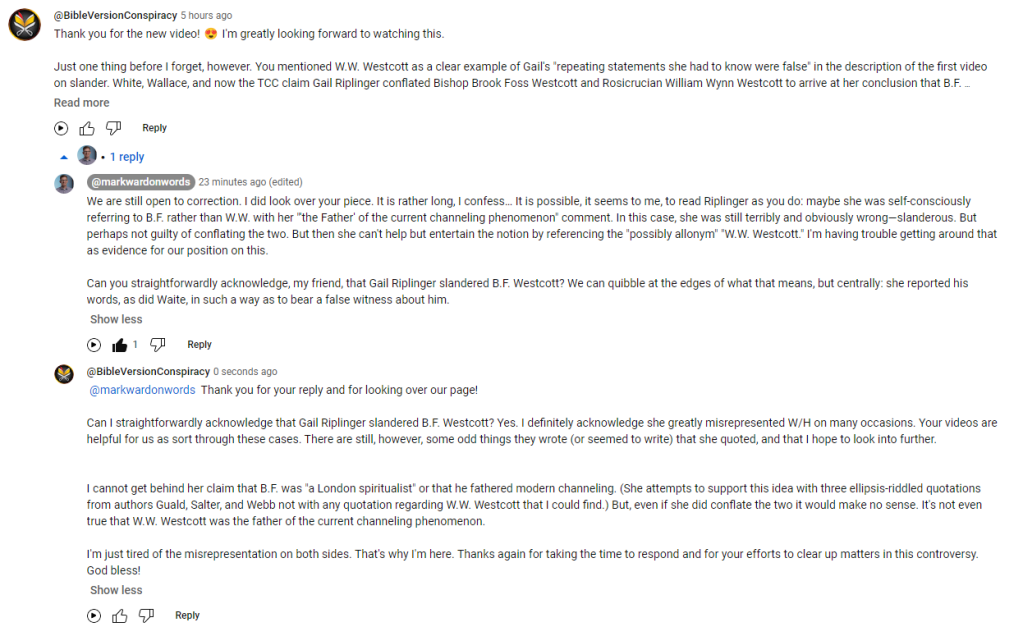
While it was still fresh, we dropped a comment on Mark Ward’s video entitled True (and Mostly True) Accusations against Westcott & Hort. I’m grateful to Mark for his replies (he has kindly replied many times since I’ve been watching his videos). Here’s what we said:
Spiritualism & Spiritualists
Gail places the label of “spiritualist” on B. F. Westcott many times throughout her book. We decided to go through NABV looking for every mention of “spiritualism”, “spiritualist”, and “spiritism” to see not only what she claims about Westcott and how she supports them, but also to see if the “spiritualist” badge was awarded the wrong Westcott by careless conflation as Ward and the TCC claim. There are definitely some interesting points to notice and we have included 18 screen captures of them below.
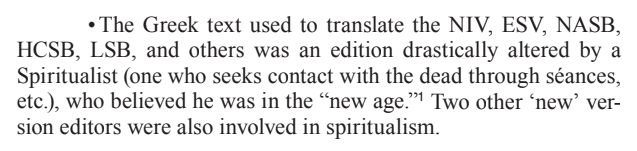
NABV (2021), p. 2 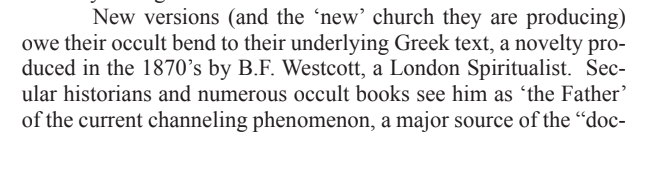
NABV (2021), p. 25 
NABV (2021), p. 27 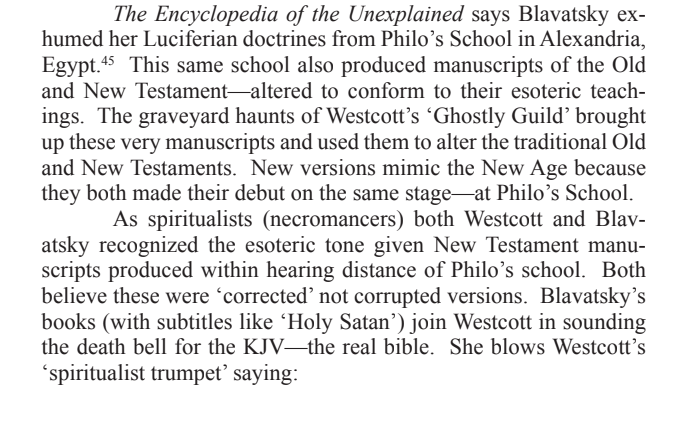
NABV (2021), p. 27 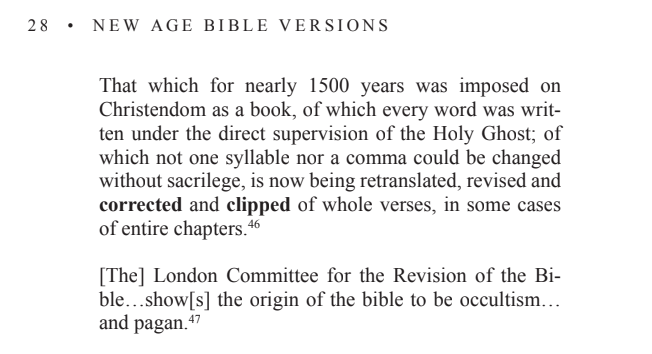
NABV (2021), p. 28 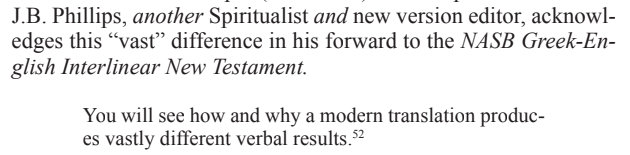
NABV (2021), p. 29 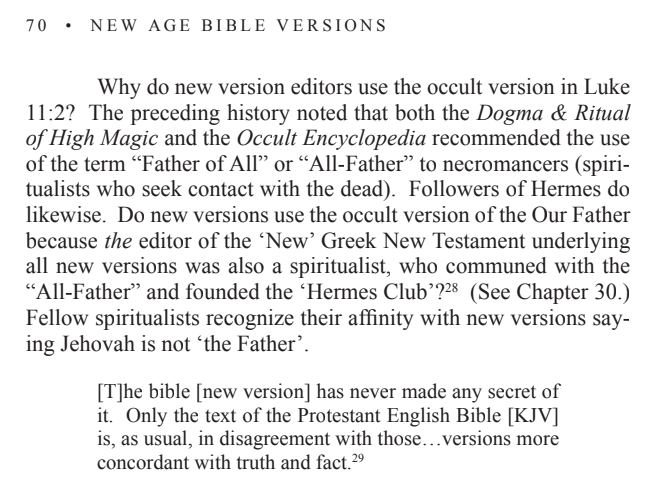
NABV (2021), p. 70 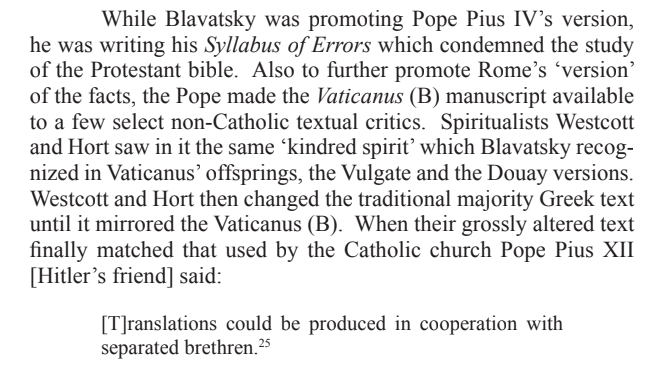
NABV (2021), p. 152 
NABV (2021), p. 419 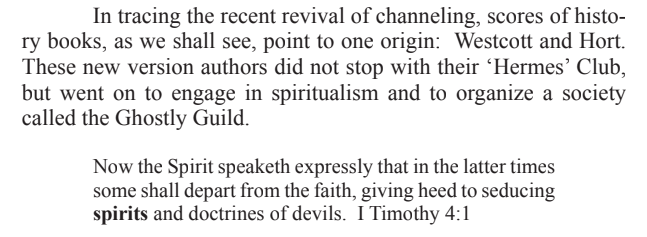
NABV (2021), p. 442 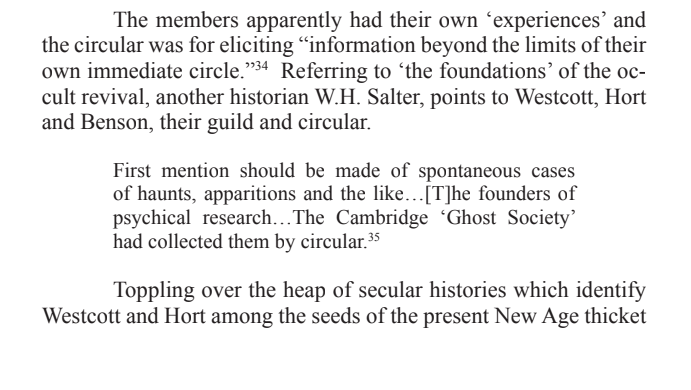
NABV (2021), p. 446 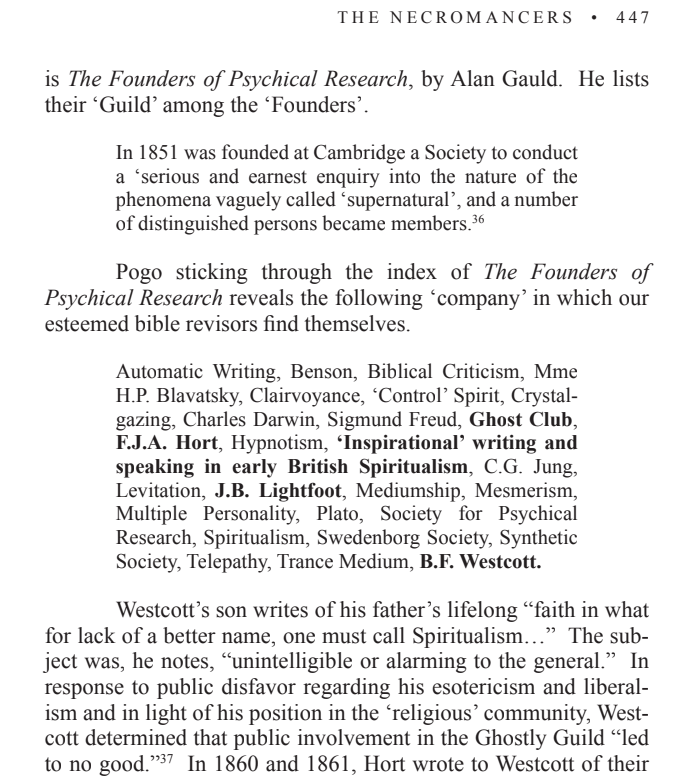
NABV (2021), p. 447 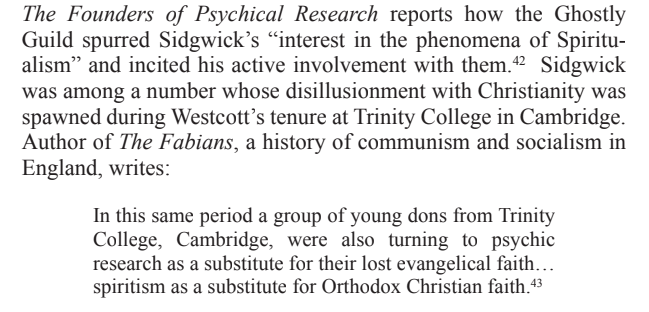
NABV (2021), p. 448 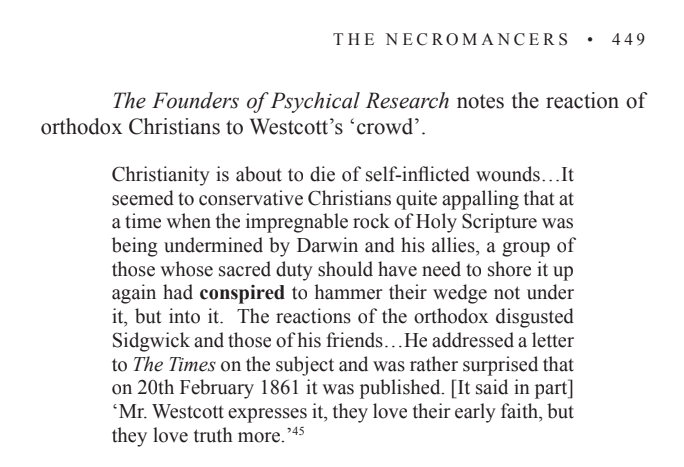
NABV (2021), p. 449 
NABV (2021), p. 449 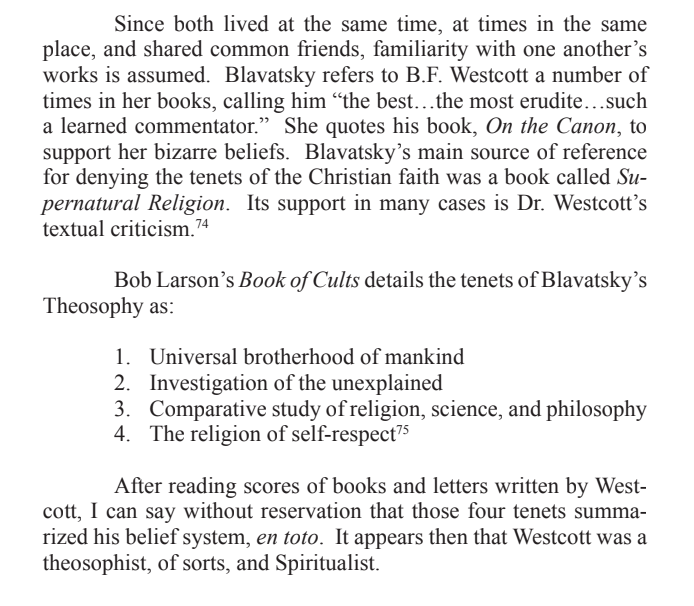
NABV (2021), p. 454 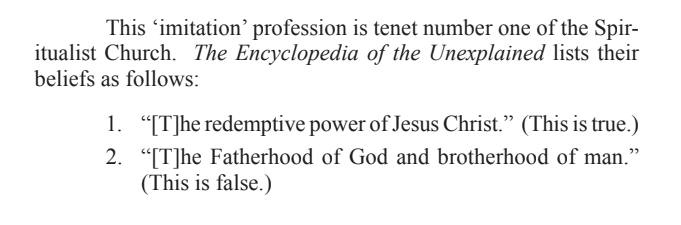
NABV (2021), p. 491 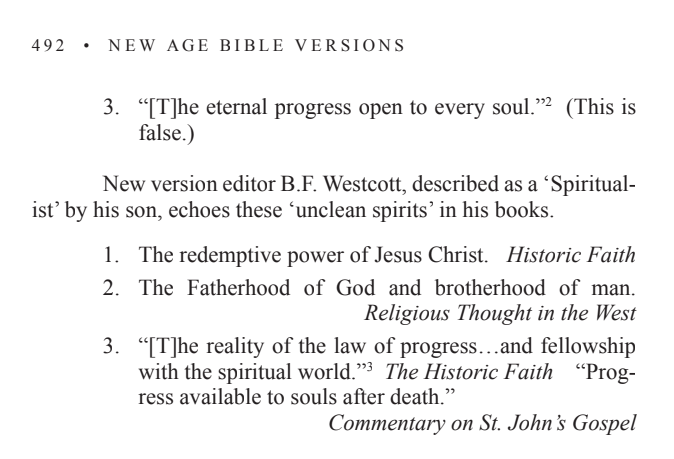
NABV (2021), p. 492
Researchers Referring to Rascals?
Thankfully, the text of NABV and Blind Guides are now searchable in PDF format! Closing this interesting segment will be a search of every mention of the word “Westcott” and determining whether there is any instance that leaves the identity of the man in question up for interpretation.
If her statements are false, there should be some reference to a “Westcott” who can be considered “‘the Father’ of the current channeling phenomenon, a major source of the ‘doctrines of devils’ driving the New Age movement.” This “Westcott” should not be identified with “B.F”, and is very unlikely to be partnered with a “Hort”, let alone an “F.J.A. Hort”. Let’s take a look and see what rascals researchers are referring to.
From all of these clips, it appears that the researchers Gail is referring to who place B. F. Westcott and F. J. A. Hort at the fountainhead of SPR are Alan Gauld (The Founders of Psychical Research, 1968), W. H. Salter (The Society for Psychical Research: An Outline of Its History, 1948) and James Webb (The Occult Underground, 1974). Please note that these authors are not writing about W. W. Westcott and the founding of the Golden Dawn. They refer directly to Westcott and Hort’s societies and Guald refers to them by name (p. 447).
Gail mentions that “numerous occult books see him as ‘the Father’ of the current channeling phenomenon”, but we are not aware of what these occult books are. Unless she is referring to the histories of the SPR by Gauld and Salter, which could hardly be considered either “numerous” or “occult”. There is some more information connecting the Ghostly Guild with the Society for Psychical Research in Joey Faust’s book The Word: God Will Keep It, Chapter 16: THE NECROMANCY OF WESTCOTT AND HORT.
We are not saying that White, Ward, Wallace, or any member of the TCC are liars or deceived. However, it is always sad to see the irresponsible perpetuating of statements simply because they trust the men or women who made them. Everyone deserves to be fairly and truthfully represented regardless of their views on anything. From what we have seen, Gail is referencing anyone who refers to W. W. Westcott as White, Ward, and many others claim. We hope the TCC will reevaluate its statements (above).
Pastor Bryan Ross also follows up on Gail’s footnotes refering to “scores of history books” in his PDF on Bullinger, Hort, Riplinger, and the Mystery of Romans 16 – Notes. Turns out that Westcott and Hort were never claimed as the fathers of the modern channeling movement by anyone but G.A. Riplinger. Her charge of Westcott’s “spiritualism” is also shown by Ross to be exactly the opposite of what Westcott’s son was saying in the passage Gail sites, but itsn’t this to be expected by now?
Commas Commas Everywhere!
Statements including one of the only statements Gail found necessary to put in all bold type are found on page 447 and remain a huge question in my mind. Personally, I greatly look forward digging into this myself and seeing what Ward and the TCC will dig up regarding the following quote from Wetcott’s son and a letter from Hort to Westcott.
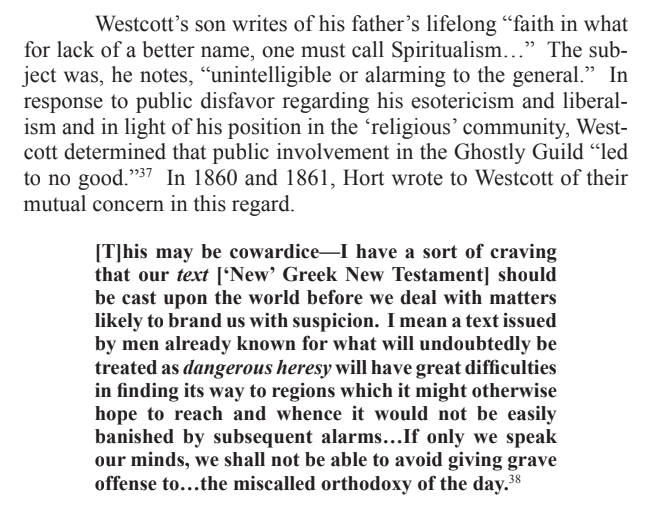
Gail states that, “Westcott’s son writes of his father’s lifelong ‘faith in what for lack of a better name, one must call Spiritualism…’ …In response to public disfavor regarding his esotericism and liberalism and in light of his position in the ‘religious’ community, Westcott determined that public involvement in the Ghostly Guild ‘led to no good.’37” (NABV (2021), p. 447, above) Footnote 37 refers us to “The Life of Westcott, Vol. I, p. 119.” (The same quotation can be found in Life and Letters of Brooke Foss Westcott: Sometime Bishop of Durham by Arthur Westcott (1905), p. 76)
Here is the exact quotation she is referring to:
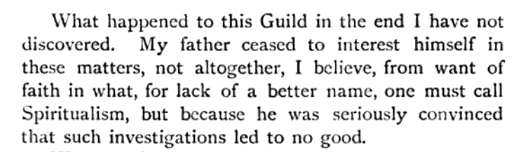
The same quotation can be found in Life and Letters of Brooke Foss Westcott: Sometime Bishop of Durham by Arthur Westcott (1905), p. 76.
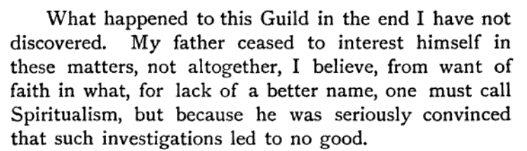
In other words, “My dad quit the Guild. It wasn’t because he didn’t believe in Spiritualism or anything, but rather because he felt it was harmful to even investigate it like the Guild proposed to do.” It is obvious that this quotation is not defending his loyalty to Spiritualist beliefs, but expressing that his disinterest in the Guild’s research was out of caution. Maybe this can be taken a different way. What do you think? Let us know below!
There are a lot of commas in this quote that may have led to the confusion exhibited by KJV-only material. Of course, we automatically rush to the context surrounding the paragraph, but the description of the Guild’s methods (before) and Westcott’s departure from Cambridge in 1851 and the Guild’s proceedings without him (after) didn’t help this “butchered” quotation much. We hope Gail will have a good answer to this, but this is very disappointing.
Thank you to Pastor Jonathan Burris for pointing this out in his video Are KJVO Gail Riplinger and Jack Chick Right About Westcott’s Affinity for Ghosts and Spirits?
The Dangerous Heresy
I can’t wait to look into this one! Given the track record of the last two horrible misquotes on infallibility and Westcott’s “lifelong faith“, I do not have high hopes, but this is the only quotation (with possibly one exception) that Gail felt the need to put in all bold print. It sounds really scary!
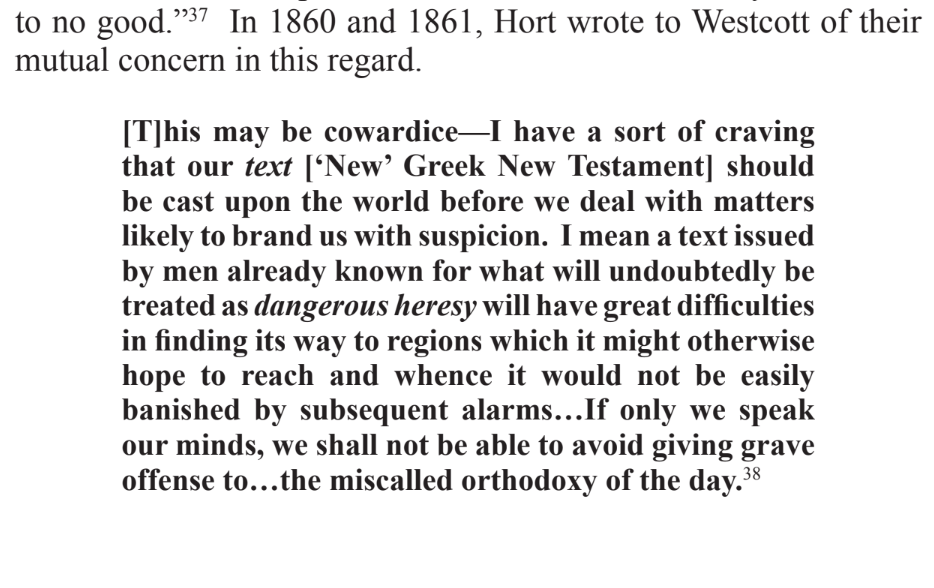
Footnote 38 refers us to “Life of Hort, Vol. I, pp. 445, 421.” It is cited again on page 476 where footnote 8 refers us to “Life of Hort, Vol. I, pp. 445, 421, 400.”:
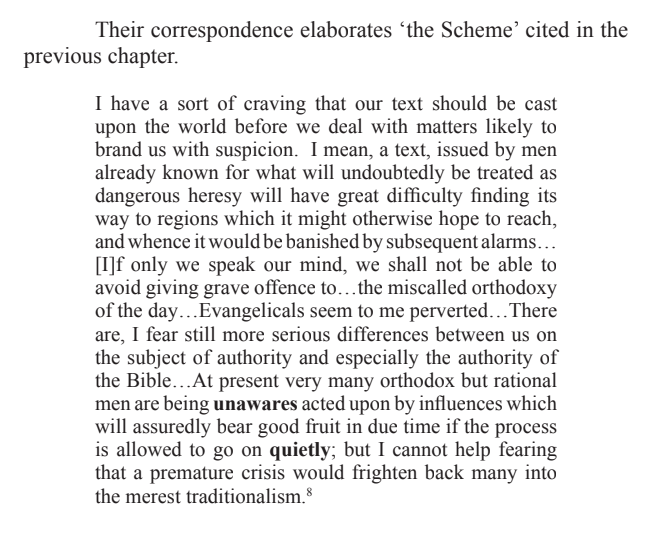
It looks pretty clean, except 5 sets of ellipsis. I fail to see why this all has to be appear as a single quotation. I also fail to see why the pages referenced need to be cited in reverse order. Here is the breakdown:
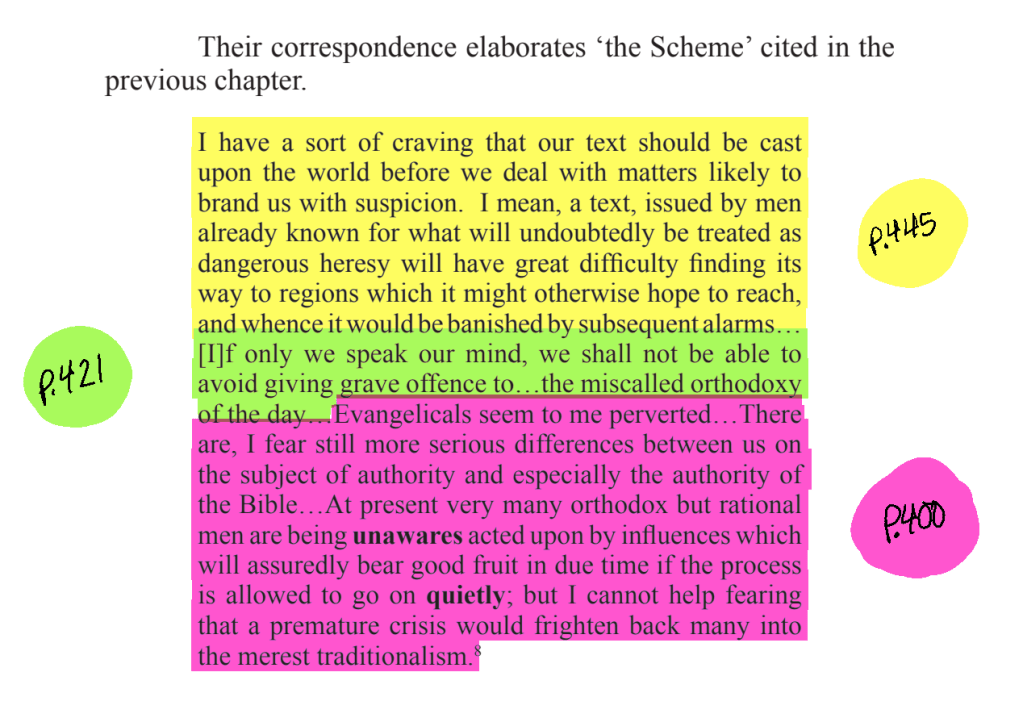
Its times like these where we reafirm that NABV’s has a big problem: It’s too big! If Gail’s chapters on Westcott and Hort formed their own book and there were no need to use countless sets of ellipsis, most of the problems would disappear! She would not only have space to include the context of her quotation, she would also have room to explain what she sees in them and give us further details.
Personally, my primary interest is in the citation from Life of Hort, Vol. I, pp. 445 regarding the “dangerous heresy”, but let’s take a look at the context of these 3 citations and see if they pan out.
The Textual Critical Collective gives their thoughts on the perverted Evangelicles quote in their video Common Lies about Westcott and Hort.
To be continued.
Dangerous Heresy
Paragraph
Miscalled Orthodoxy
Paragraph
Good Fruit in Due Time
Paragraph
The Communion of the Saints
Is there a “Christian” excuse for talking to dead people? Did Westcott and Hort practice it? What were the strange lights Arthur Westcott saw in the dark cathedral?
The first person to take issue with the Communion of the Saints seems to be the famous Seventh-Day Adventist Benjamin Wilkinson in Our Authorized Bible Vindicated (1930), p. 154. I am unaware of whether or not the Communion of the Saints had any controversy surrounding it before this point.
Gail dincusses the Communion of the Saints in NABV 2021 in a section called “Necromancy or ‘Communion of the Saints’?” on pages 484-485.
Phill Stringer also criticizes the Communion of the saints in his video called The Occult Connections of Westcott and Hort. Phill makes absolute hay out of the “strange lights” story.
We also hope to dig deeper into this shortly! In the meantime, check out The Word: God Will Keep It by Joey Faust, Chapter 16, “The Necromancy Of Westcott & Hort” and check out the audio of it below.
You can also check out this video I made with some of my own conspiracy theories. 😁
Quotations Provided in KJV-only Literature
“The Communion is a Communion of Saints as Saints, and not as men under the present conditions of humanity. It is independent of limitations of time and space, both in its range and in its fulfilment…We are learning, by the help of many teachers, the extent and the authority of the dominion which the dead exercise over us, and which we ourselves are shaping for our descendants. We feel, as perhaps it was impossible to feel before, how at every moment influences from the past enter our souls…It is becoming clear to us, that we are literally parts of others, and they of us…Men must be dependent on one another. For saints this dependence is transfigured into fellowship…We are constrained, in our attempts to give distinctness to it, to use the language of earth, but in itself the spiritual life, of which the Communion of Saints is the foretaste, belongs to another order…The Communion of Saints in the largest sense, the communion of angels and men, of men already perfected…The Communion of Saints must, therefore, be realised socially and personally – socially, to speak briefly, by commemoration; personally, by meditation…to our great loss, the faculty and the habit of meditation have not as yet been cultivated among us…This fellowship of spirit with spirit is closer, and may be more powerful, than the precious fellowship which we can hold with books…Meditation on the saintliness of saintly men must be supplemented by meditation on angels as the representatives of the unseen world, if we are to feel the full extent of the Communion of Saints… the Communion of Saints, with its manifold supplies of strength, with its boundless wealth of promise, becomes a fact of immediate experience.”
(The Official Report of the Church Congress Held at Leicester, 1880; 1881 as provided in Faust’s The Word: God Will Keep It)
“The subject [Communion of the Saints], too, is one so very dear to himself. He had an extraordinary power of realising this Communion. It was his delight to be alone at night in the great Cathedral, for there he could meditate and pray in full sympathy with all that was good and great in the past. I have been with him there on a moonlight evening when the vast building was haunted with strange lights and shades, and the ticking of the great clock sounded like some giant’s footsteps in the deep silence. Then he had always abundant company. Once a daughter in later years met him returning from one of his customary meditations in the solitary darkness of the chapel at Auckland Castle, and she said to him, ‘I expect you do not feel alone?’ ‘Oh no,’ he said, ‘it is full’; and as he spoke his face shone with one of his beautiful smiles.”
(Arthur Westcott, Life and Letters of Brooke Foss Westcott, 1903 as provided in Faust’s The Word: God Will Keep It.
This is also the only passage cited by Wilkinson regarding the Communion of the Saints. (See Our Authorized Bible Vindicated, p. 154.)
Phil Stinger often quotes this passage to say that operations of dead “saints” were appearing to Westcott regularly much like J.B. Phillips had C.S. Lewis appear to him. There is a difference, however, in that Lewis was recently dead. And, yes, this sort of thing does occur often as Phillips’s bishop informed him. This does not imply that ghosts of famous people (or demons) appear whenever the Communion is realized. Also, Phil seems to enjoy making exotic mountains out of mundane molehills as shown in his book on Gail Riplinger’s Occult Connections. See more information on how Phil uses this quotation in his video Wescott and Hort’s Occult Connections – Dr. Phil Stringer and the much shorter Dr Phil Stringer – Westcott, Hort, and C.S. Lewis seen below.
In this 3-minute, 2-D cartoon, Phil says,
[Westcott] believed in something called the Communion of the Saints. This is according to his son and according to his daughter. He said he couldn’t afford to tell everybody as a church of England preacher about this, but he believed that when you died, your spirit hovered around for several months before it went to heaven. And he would go in the chapel of the church repaid auditorium of the church that he pastored in the middle of the night when it was completely dark. And according to him, the ghosts of the recently departed would come more one after another and sit with him until the entire auditorium was full (a several hundred seat auditorium). And then that he was the only living person there, but they would fellowship and commune together all night till morning.
I could swear there is a statement by Westcott’s daughter I saw once. I have not found it, and Phil says he will get back to me about it. I am assuming this statement by Miss Westcott contains the elements Dr. Stringer includes in his story which are not on Aurthur Westcott’s statement including:
- Westcott wanted to keep his experiences a secret for fear of how the Church of England would react.
- Westcott believed the spirit hung around for several months after death.
- Ghosts of the recently departed appeared to Westcott and filled the auditorium.
- The only living person in the chapel was Westcott.
- Westcott stayed at the church all night with the ghosts until morning.
Unless these elements are embellishments added by Phil to fill in the gaps in the story and make things more interesting, they should find their origination in Miss Westcott’s account.
Questions
What is the communion of the saints?
How was the “Strange Lights” story taken by Westcott’s contemporaries?
See also
Communion of saints by Wikipedia
Documenting Cambridge’s Ghostly Guild/Association for Spiritual Inquiry/Ghost Society/Ghost Club by Brom Bones Books (About their involvement with the Ghostly Guild.)


 Bible Version Conspiracy