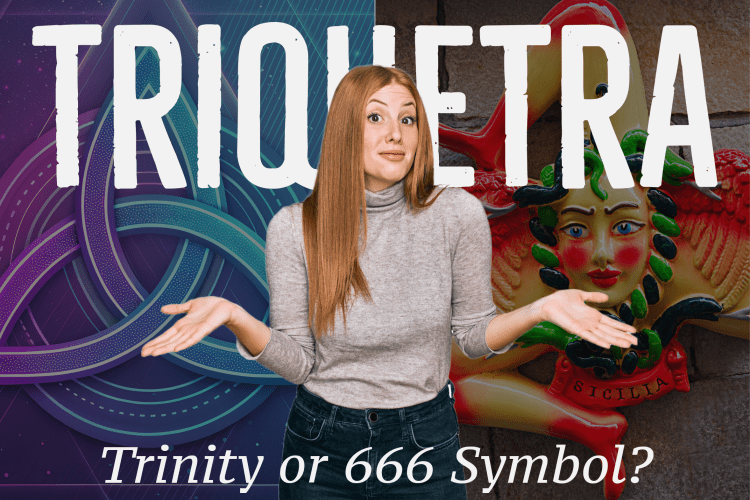
A three-pronged enigma has puzzled researchers of ancient symbolism and myth for centuries. The history of one of Ireland’s timeless symbols, the triquetra, is shrouded in dark mystery. Wiccans and Pagans claim it as their own while Christians use it to represent the Holy Trinity of Father, Son (Jesus), and Holy Ghost! In some King James only circles, the wildest claims imaginable – though of highly questionable accuracy – have surfaced in the last 30 years. But there are many important truths about the triquetra that have remained unexplored until now.
Many important questions need to be answered. Did the evil druids and worshipers of Thor supply us with a Trinitarian icon, or does it have a more Biblical origin? Is it an satanic number symbol which secretly signifies 666 as some KJV-only authors claim, or do it’s roots go back to a time before Paganism? Is the symbol ultimatly sanctified if it finds its true origins in a Bible story, or are Christinas to “win the symbol back for Jesus”? Is it right for pagans to repurpose their symbols to express biblical truths when they convert to Christianity? Should it be used on the cover of Bibles like the NKJV?
Despite close scrutiny, many dark corners of its past remain unilluminated and must remain unknowable, for now. However, history can teach us much about the symbol, its diverse meanings, and its unexpected origins! Facts of history and a dash of common sense can also teach us to avoid unreliable and superstitious claims like those made by “experts” who self-publish 700-page books to avoid peer review. Join us as we untie the famous Trinity knot!
This page is currently in development. We will continue to update it as we are able. Thank you for your patience!
Some links are affiliate links and we earn a small commission from qualifying purchases. Thank you!
Contents
Press Play
Press Play
Our videos about the triquetra are all in this playlist:
Dive deeper into the triquetra’s history and associations, as well as some fascinating information in defense of the Trinity all included in the following playlist:
Triquetra Lore of Gail Riplinger
I would like to be clear from the start that since we wrote this page we have discovered Gail’s research is severely wanting and often down right dishonest. As of September of 2024 we can no longer endorse or recommend her works to trusting readers. Until we have time to update this page it will reamin as it was before we uncovered the facts surrounding her claims. God bless!
Below is the most detailed examination of the triquetra available from Gail Riplinger. In her online store it is called the NKJV Logo Expose’ DVD.
Gail often appears to be a facinating speaker who knows what she’s talking about. We are sorry that she always seems rushed along dealing with such complex subjects, but one must wonder if she is truely trying to beat the clock or if she is trying to go so quick that you won’t notice her glaring errors. I will say that my own research has essentially confirmed some of what she said about the triquetra. However, as is so often the case with Gail, so much of her superstitious “research” is in serious error and leads her to erroneous conclusions.
In the video, Gail claims to have done study at Harvard University. Gail’s work at Harvard is also referred to in her book In Awe of Thy Word.
Other helpful training included coursework in sound at Harvard University, a minor in history and art history (with research in the migration of symbols), and coursework in advertising (with research in semantics).
In Awe of Thy Word, p. 1178
I’d love to find the master’s thesis-winning corse she co-taught on druid/tree worship symbolism! 😍 I’m sure it must have touched on the triquetra at some point. She uses this claim to lend credentials to what she is about to present. However, it is hard for me to believe it puts her on a level above the scholars who say the truquetra is also an ancient symbol for the Trinity. Unfortunately, Gail and so many other researchers have a tendency to trace things back to their “pagan origins” and then look no further.
Here’s how she describes the CD produced with Texe Marrs and the DVD of her presentation on her website:
Texe Marrs’ internationally heard radio program hosts Riplinger where the NKJV is exposed as a counterfeit.
See “Freebies” section for The NKJV Death Certificate, which cites many corrupted NKJV verses.
The NKJV is not easier to read.You will learn that on this program.
NKJV logo time stamps
Triquetra Discussion (34:36 – 45:07)
Looking up the Triquetra and finding the Serpent Noad ( starting at 35:48)
I did not notice her call the triquetra “the mobius symbol” in this audio. However, she did refer to the Pythagerus entry in Lempere’s “Dictionary of Proper Names” which seems to make no reference or allusion to the triquetra.
Texe Marrs (1944-2019)
Texe Marrs is known famously for his many books on the occult. He is also infamously known for his antisemitism (for which Gail faults Rudolf Kittle), rejecting the book of Esther saying Haman was the good guy trying to save the world from a global Jewish conspiracy (🤦♂️), and for a publicly aired incidents of gross immaturity and unchristian behavior in his interactions with James White (author of the King James Only Controversy), whom, due to Gail’s influence, Texe calls a servant of Satan) during the James White VS D.A. Waite debate (starting at 53:20).
In our phone conversations with Gail many years ago (back when we deeply believed in and passionatly supported her), I mentioned that Texe did something stupid, refering to the public radio spat he had with James White. Before I said just what he did, Gail gave a sigh and said, “What did he do now?” You could almost hear the face-palm. 🤦♂️
I mention all this not to demonize Texe, but to show how when Gail tries to sound like she shared the truth on an important radio program with a popular and prudent host, she probably didn’t. Kinda takes the wind out of the proverbial $ails.
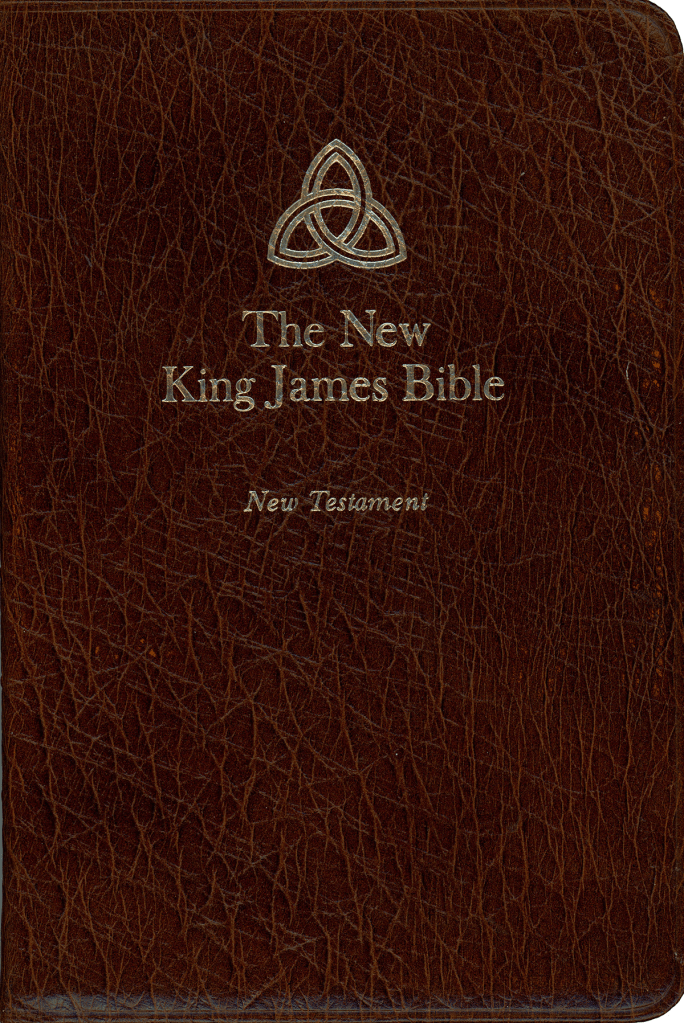
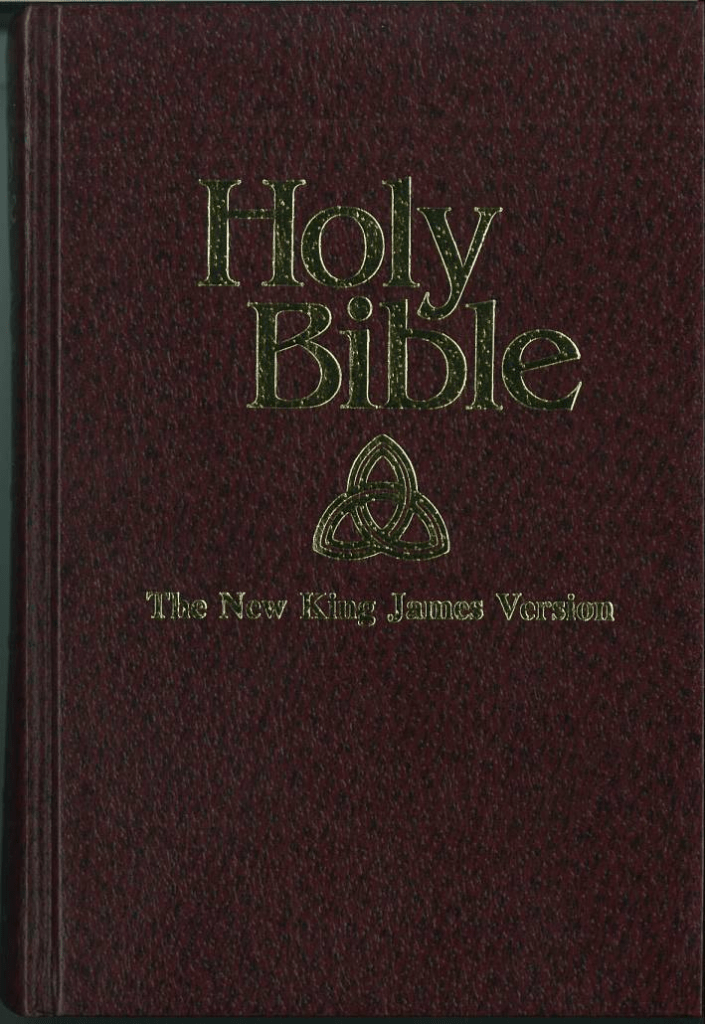
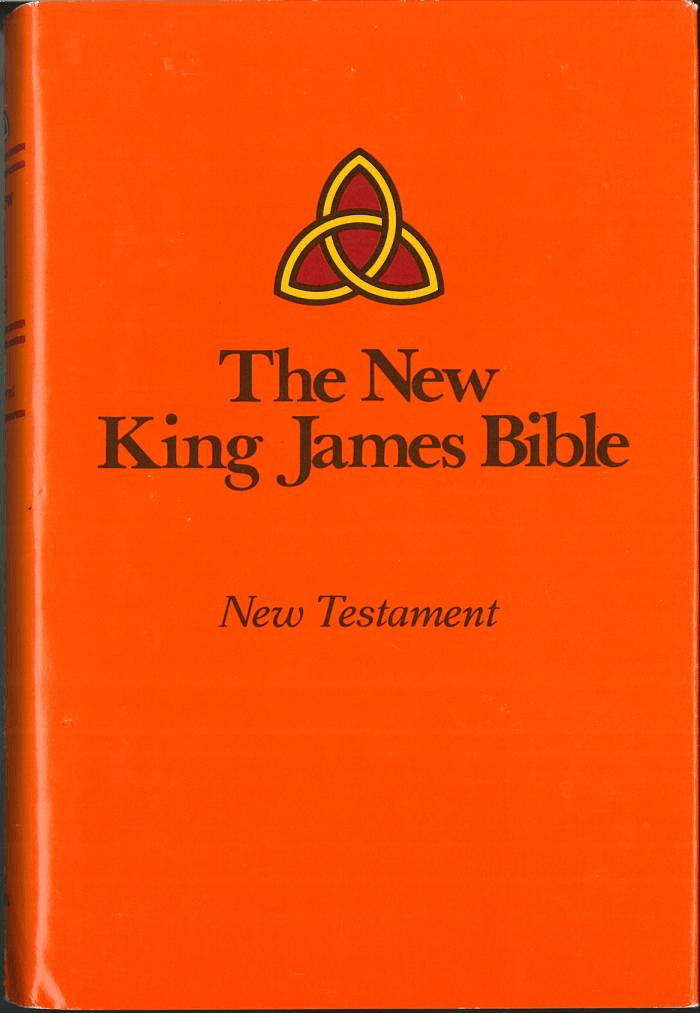
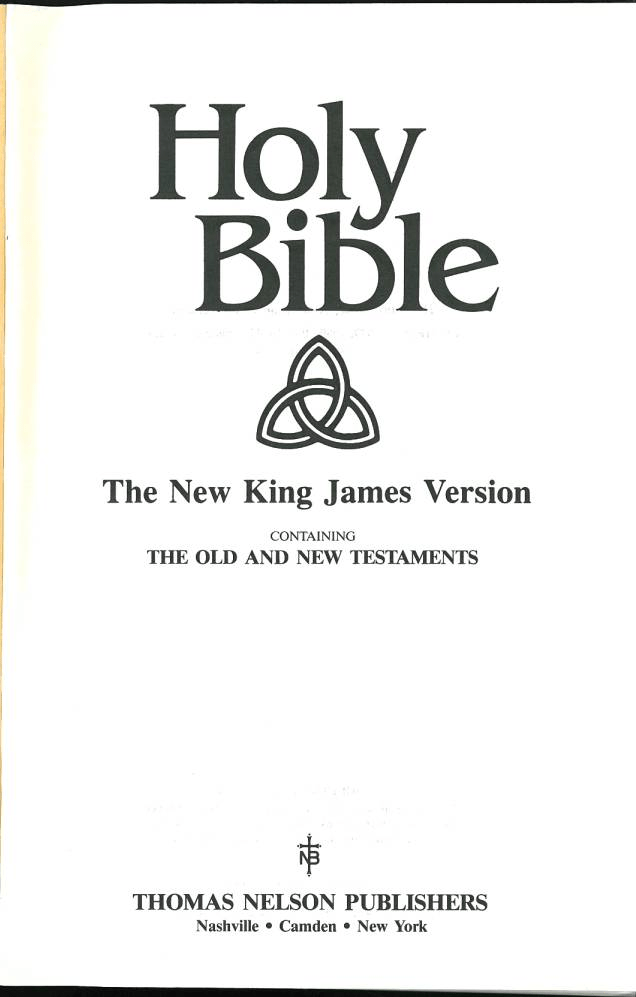
The New King James Version, NKJV, published by Thomas Nelson, has had a triquetra printed on its cover since its inception. Riplinger examines the history and current usage of this symbol and proves it to be a pagan symbol.
(One of Riplinger’s degrees is a Master of Fine Arts in which research was done in the origin and migration of symbols. This was followed by an invitation to teach a college course on the History of Symbols for a large state university.)
You will get a college level analysis of the history and usage of the NKJV’s triquetra. When you have viewed this presentation, with many, many visuals, you will be convinced that this symbol does not belong on a Bible. The symbol, perhaps, is a warning that the contents of the NKJV are pagan, as well.
In the description of this video, Gail calls the symbol the triquetra. This is a step in the right direction for her since in her program with Texe Marrs (above) she says the triquetra’s not the triquetra. Gail is slowly learning some basics over time.
The author of the description also seems to be understood the impression that the NKJV has adopted the triquetra “from its inception”. However, from what we’ve read, only the first few editions feature the triquetra. I have a suspicion that the misinformation spread by Gail in the 1990’s may have contributed to the NKJV’s dropping of the triquetra in it’s branding.
Despite being a very surface level examination of the triquetra, most of the claims she makes we have found to be among the most disingenuous and foolish she has ever made. The double standards she employs are astounding and become even more astounding when her “defense” of the word “Easter” in Acts 12:4 is examined. Let’s take a quick brake from the “NKJV logo” and I’ll show you what I mean.
After watching her presentation, does her seething sea of words suffice your curiosity, or does it only serve to tangle the knot even further? Let us know your opinion below!
Defending Easter SUNday
And when he had apprehended him, he put him in prison, and delivered him to four quaternions of soldiers to keep him; intending after Easter to bring him forth to the people.
Acts 12:4, KJV
Early Easter morning, KJV-only pastors line up to cast stones at the modern versions rendering the Greek “pasca” as “passover”. King James-only churGail not only rises with the sun to defend “Easter” from KJV critics, she even employs the heavenly orb in its defense!
You wouldn’t think it possible considering the harsh words Gail speaks of the triquetra’s “sunny” disposition, but it’s true! Satan did not invent the sun, he just corrupted the picture it draws in our minds. Keep in mind that the sun is a picture of the Son. It will be important later.
Read Gail’s full defense of the word “Easter”
Dear Fellow Bible Believer,
Have you ever wondered what the word ‘Easter‘ means? The King James Bible defines its own terms by the context and by its previous usage of either the word or its components. I have written the following essay to demonstrate exactly how the KJB defines ‘Easter.’
You will be quite surprised!
EASTER: The Bible’s Built-In Definition
THERE has been a debate for hundreds of years about theetymology (history and origin) of the word ‘Easter,’ as used in Acts 12:4 in the King James Bible. The very old books include both meanings, the pagan one and the Biblical one, which I think is correct. This demonstrates that God and his Bible have a genuine word and principle and the devil counterfeits it. The etymological focus for ‘east-er’ or ‘ea-ster’ has been on both ‘east’ and ‘star’ (ster or stern in Germanic languages). Let’s look at the genuine origin of ‘east-er’ first:
The Genuine, Then The Counterfeit:
The sun rises in the east; it sets in the west. The reader of the Bible and the natural man, observing his world, are preconditioned to understand that the word ‘east’ is a reference to the place where the sun rises.
Jesus Christ is referred to as the “Sun of righteousness.…” Mal. 4:2 says, “But unto you that fear my same shall the Sun of righteousness arise with healing in his wings:…” The parallel between the Son of God and the sun (Sun) is obvious. The O.T. made it clear that the Sun of righteous would rise from the dead, just as the sun rises in the east in the morning.
Numbers 2:3 refers to the “east…rising of the sun.”
Numbers 24:17 calls Jesus the “Star”:
“I shall see him, but not now: I shall behold him, but not nigh: there shall come a Star out of Jacob, and a Sceptre shall rise out of Israel…”
The counterfeiter came along quickly, as in Deut 1:4 we see “A-star-oth” appears. She is the fertility goddess (Astarte, Ishtar, etc.), from which the word ‘Easter’ is sometimes traced.
Her reproductive proclivity is portrayed by the bunny rabbits and eggs. Of course, the pagan counterfeit continues to this day with the focus on bunnies and eggs.
In Ezek. 8:16 we see an example of the pagan practice, with their “…faces toward the east; and they worshipped the sun toward the east.” Just as there is “another Jesus,” (2 Cor. 11:4) there is ‘another’ Easter or east ‘star.’
But, according to the Bible, the word ‘east’ and ‘star’ (Ea-ster) first related to the resurrection of the promised Messiah, Jesus Christ. Therefore, ‘Easter,’ as seen in the KJB, as well as in the German Luther Bible and English Tyndale Bible (1500s), is a perfectly good word, identifying the resurrection of Jesus Christ. Just dump the eggs and bunnies.
I examined all the usages of the word ‘east’ in the O.T.. In the surrounding contexts there are reference to the sun (Son) rising and numerous prophetic statements about Jesus rising from the dead. The sunset pictures the red blood of Christ, as it covers the earth and as he goes down to the lower parts of the earth. The dark night depicts the burial of Christ.
The sunrise, of course, pictures his glorious resurrection. (Remember that in the Bible, “And the evening and the morning were the first day” (Gen. 1:5). Theevening, that is, the sunset or death of Christ, comes first; the resurrection, that is, the ‘day’ and the ‘Son’ rise, occurs second.
Look in the Bible for the words “sun,” “shine,” “rise,” “east,” “eastern,” and “risen” for many more pictures of the resurrection. Observe the following sample verses, which pre-condition the reader to understand the word ‘Easter’ and point, as “shadows,” to the resurrection of Christ. The reader of the Bible will not be preconditioned, through Bible reading, to understand the word ‘Easter’ as a pagan word.
Gen. 2:8,9 “And the LORD God…eastward…out of the ground…the LORD God.”
Gen. 2:14 “east…fourth” (like unto the Son of God)
Rev. 20:8 “four quarters of the earth,” Deut 22:12 “four quarters of thy vesture,” 1 Chron. 9:24 “four quarters, east, west, north, and south,” etc.
Numbers 2:3 “east…rising of the sun
Josh. 12:1; Isa. 59:19,20 “the rising of the sun…the Redeemer”
Isa. 60:1-3 “Arise, shine; for thy light…the glory of the Lord is risen upon thee…the Lord shall arise upon thee…thy light…to the brightness of thy rising…”
Ezek. 44 et al. “looketh toward the east…This gate shall be shut…it is the Lord, the God of Israel hath entered by it.”
Ezek 43:4 “The glory of the Lord came into the house by the way of the gate whose prospect is toward the east.”
Ezek. 43:20 “four corners” (N,S,E,W)
Ezek. 44:1 “the east”
Ezek. 44:2 “God…hath entered”
Mat. 17:1, 2 “Jesus…as the sun”
Luke 4:40 “Now when the sun was setting…he laid his hands…healed them”
Mark 16:2, 6 “rising of the sun…he is risen
Ezek. 44-48 “looketh toward the east…the sabbath…the prince…he shall enter…offering…east…go forth…shut the gate [sun set]…four corners of the court…foursquare.”
Ps. 50:1, 2 “rising of the sun…God hath shined…”
Isa. 41:2 “raiseth up the righteous man from the east” (see also verse 41:25)
2 Peter 1:19 “day dawn and the day star arise in your hearts”
Ps. 84:11 “For the LORD God is a sun…”
Ps. 19:4-6 “In them hath he set a tabernacle for the sun”
“which as a bridegroom going out…His circuit…”
Not only does the Bible condition its readers to understand ‘Easter’ as coming from the word ‘east,’ but modern usages does likewise. Have you ever heard of a noreaster? It is a storm that comes from the northeast. Cape Hatteras, North Carolina often experiences noreasters.
If someone says the Greek word ‘pascha’ is translated elsewhere in the N.T. as passover, therefore it must be passover in Acts 12:4, they REALLY are proving that they do not know Greek at all. Many of the Greek words in the Greek New Testament are translated numerous ways in all Bible translations.
If the KJB critics had really spent any time studying Wigram’s or Smith’s Greek Concordances, they would see that many Greek New Testament words are translated using numerous English equivalencies. Pointing out the translation of pascha, as both Easter and passover, proves to them that they are not true students of either the Greek or the English Bible. All modern Greek-English dictionaries today define pascha as both Easter and passover.
Therefore, Acts 12:4 is correct in the KJB.“Hush, you don’t speak Greek,” as Pastor Norris Belcher reminds everyone.
This article is taken from my analysis of the errors in Donald Waite’s Defined King James Bible, where he misdefines ‘Easter’ and many other words. (EASTER-DEFINED IN THE SCRIPTURES, solvechurchproblems.com)
For more information on Easter Sunday and how BOTH “Easter” and “passover” are accurate translations of “pasca“, check out our page on Easter.
Put it in Writing
Most of the information regarding the Triquetra which Gail has bestowed upon us is in audio and video. Considering the wealth of historical information she appears to posess, very little has actually made it’s way into her writings. Here’s all I could find:
Warning Lable
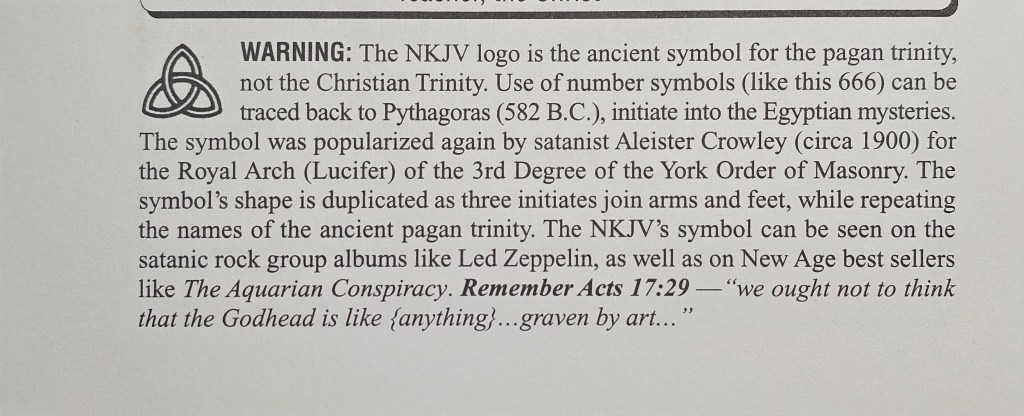
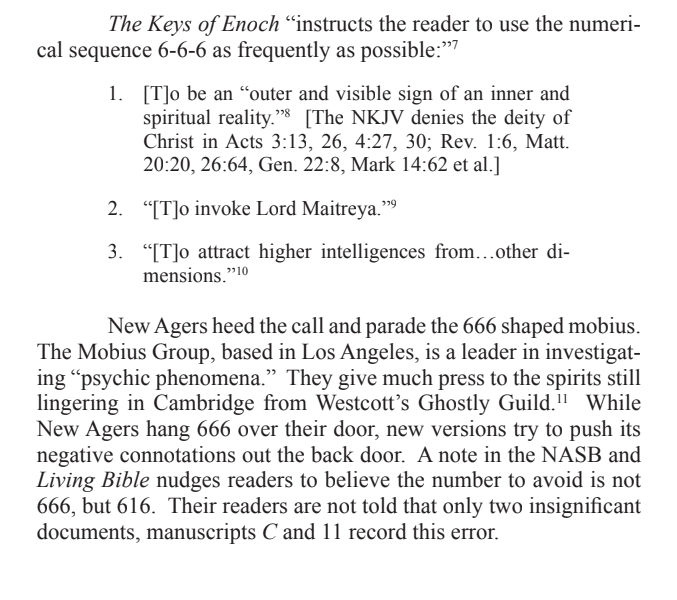
Don’t cut yourself with your New KJV. For your safety, Gail provides this footnote on page 147 the Language of the King James Bible.
Witch Bible?
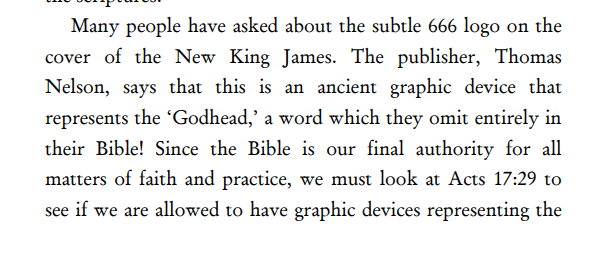
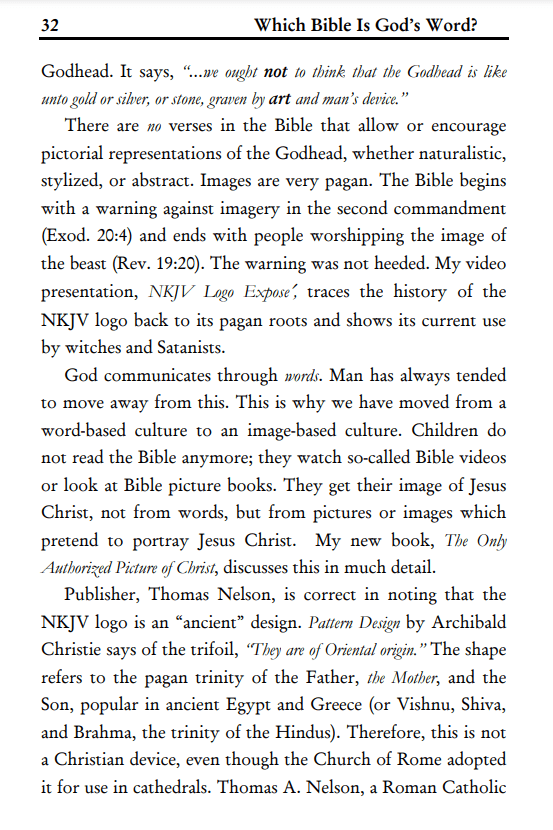
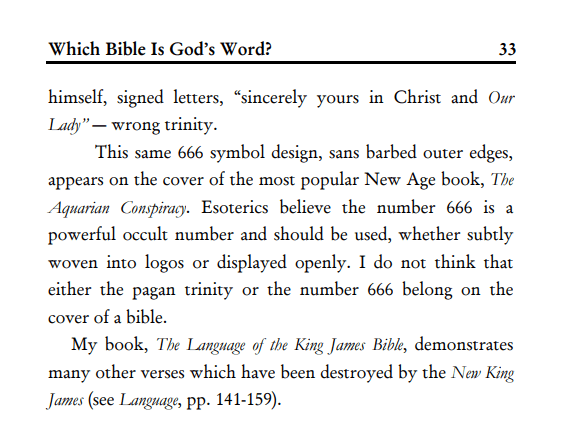
A book I do not (yet) personally own gives a little more detail. Chek out the preview of Which Bible Is God’s Word? James D. Price (NKJV Translator) can rest peacefully since Gail acknowledges his objection that the Auarian Conspiracy’s symbol lacks the points typical of other triquetras. (Read Price’s opjections to Riplinger’s claims here.)
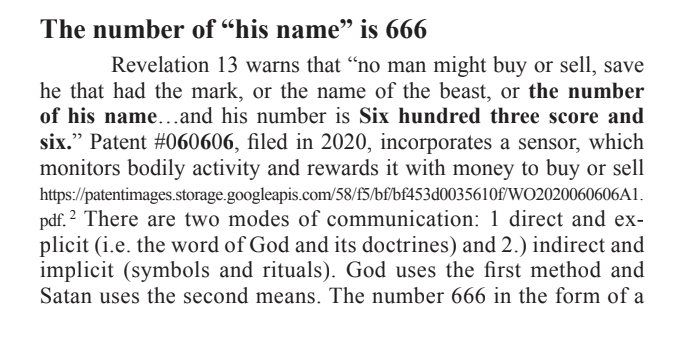
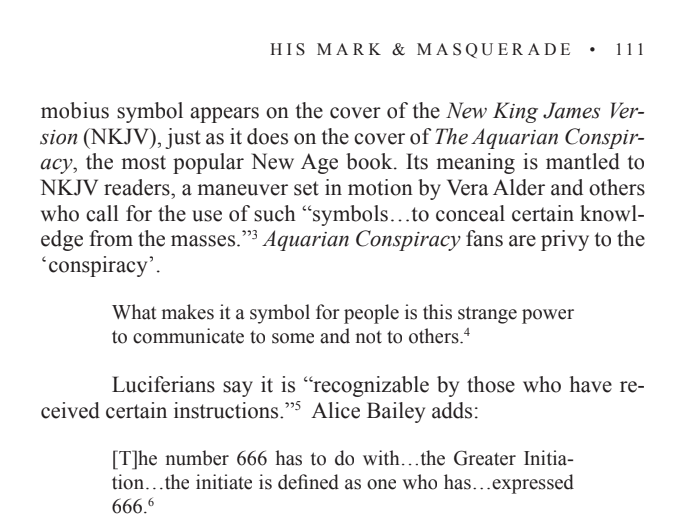
Outside of an advertisment for her NKJV Logo DVD, Gail’s only reference to the triquetra in New Age Bible Versions is on page 111, but it is never mentioned by name. We cannot find any allusions to the symbol in In Awe of Thy Word or Hazardous Materials. Clearly, the subject of this symbol fits the context of NABV, not the other books, but it is hardly mentioned.
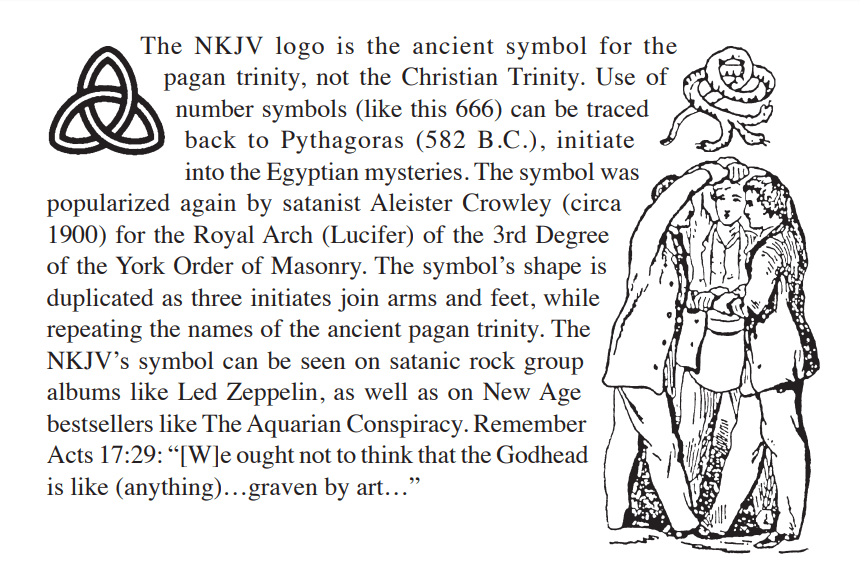
NABV 2021, p. 110
NABV 2021, p. 111 (top)
NABV 2021, p. 111 (bottom)
So you don’t have to type it all out, here’s the link she mentions on page 110 for the “Patent #060606“. You’re welcome. 😘
Texe Marrs gives more detail on this Masonic “dance” in Conspiracy World (p. 596-604). For all of Texe’s short comings (such as his interactions with James White during White’s debate with D.A. Waite, his black listing of the Dead Sea Scrolls based on limited information, and his fundamental rejection of the book of Esther), he does have some very interesting stuff.
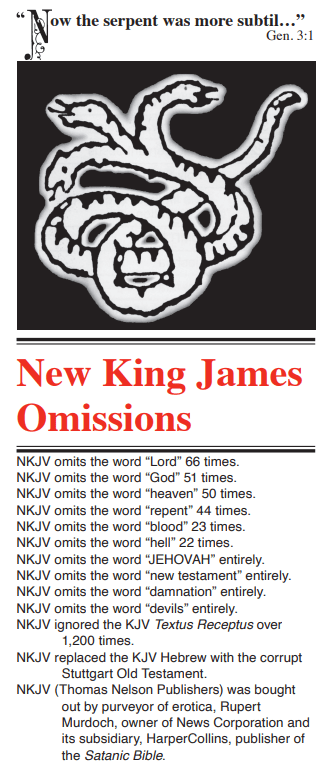
Sun Signs (a New Agey website) goes deep on the meaning of dreams and horoscopes. Not sure how much weight to put to it, but they see 3 interpretations including “the three aspects of the self, a warning about the consequences of deception, or a reminder of the importance of looking at a situation from multiple perspectives.” on their “3 HEADED SNAKE DREAM INTERPRETATION” page. Notice also that the serpents tail has smoothed out corners like on the Aquarian Conspiracy.
We are reasonably sure that this is “the serpent noad” which Gail refers to in NKJV Errors AUDIO.
Sadly, I coundn’t find anything regarding this image through Google Lens. 😢 I’ll have to ask Gail where she got it from (provided she ever talks to me again). She does say in NKJV Errors AUDIO that she found it as “________” in the McMillan’s Visual Dictionary. She claimed the NKJV logo was not identified as a triquetra (#47), but “as item #35 which is the serpent noad.” I checked the 1995 edition and there is no entry for the triquetra or the serpent noad. In fact I found its section on symbols to be far less than extencive. Possibly the same place as the illustration of the “Three Times Three”, Duncan’s Ritual of Freemasonry? We’ll see. 🤔
I did discover that Noad is a “locative name for someone who lived near the site of a beacon (a signal fire) or at a place so named, from a misdivision of Middle English”. (familysearch.org) It is also an abreviation for the New Oxford American Dictionary (en.wikipedia.org). Kinda sounds like NORAD, too. 😂
Math Time! (I hate math!)
When Gail called the triquetra “the mobius symbol”, I’ll be you thought Mobius was the name of a demon like I did. Sounds ominous and scary, but nope.
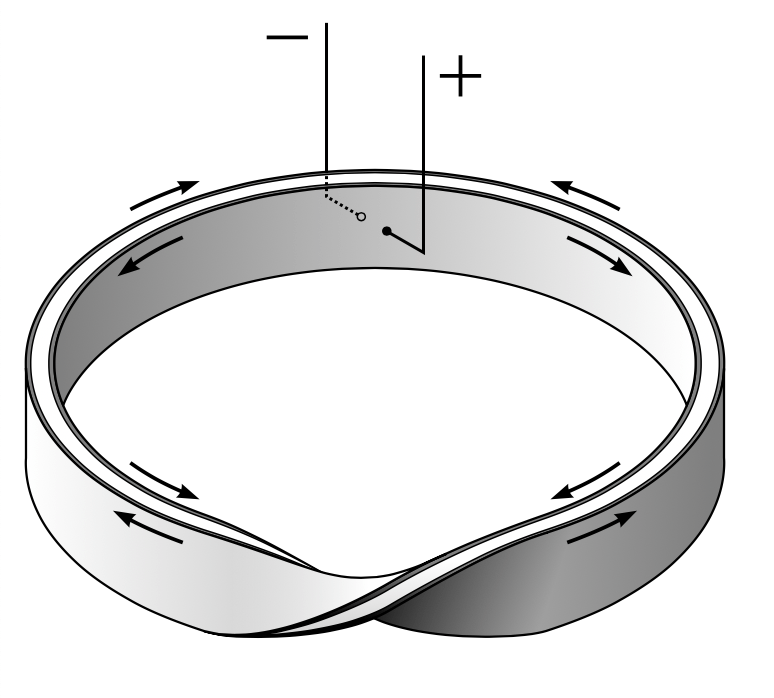
The Möbius Strip
“In mathematics, a Möbius strip, Möbius band, or Möbius loop is a surface that can be formed by attaching the ends of a strip of paper together with a half-twist. As a mathematical object, it was discovered by Johann Benedict Listing and August Ferdinand Möbius in 1858, but it had already appeared in Roman mosaics from the third century CE. The Möbius strip is a non-orientable surface, meaning that within it one cannot consistently distinguish clockwise from counterclockwise turns. Every non-orientable surface contains a Möbius strip.” (Thank you, Wikipedia. 👏)
In English, follow along the band with your eye and pretty soon you’ll find yourself on the other side of the band! Pretty cool, am I right?
To be sure, the concept of a Mobius has its own symbolic significance, such as eternity, duality, etc. Gail is correct in identifying the triquetra as a knotted Mobius (“a Mobius symbol”), but I disagree when it is called “the Mobius symbol” as if it is the one and only. Google “what is the Mobius symbol” sometime and see what you get (hint stage left).
Pagans Propogate
The plot thickens when peruse popular pagan and paranormal promoters.
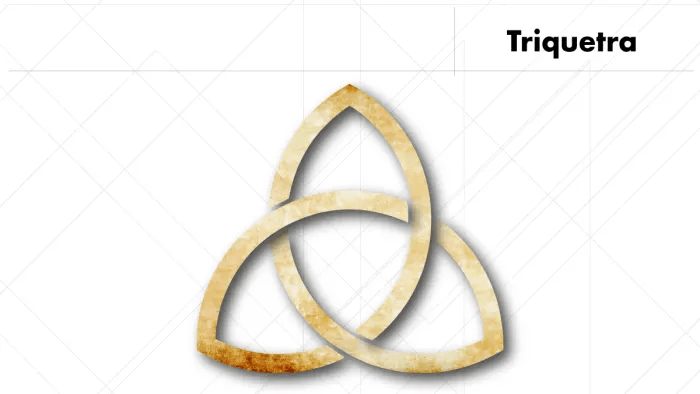
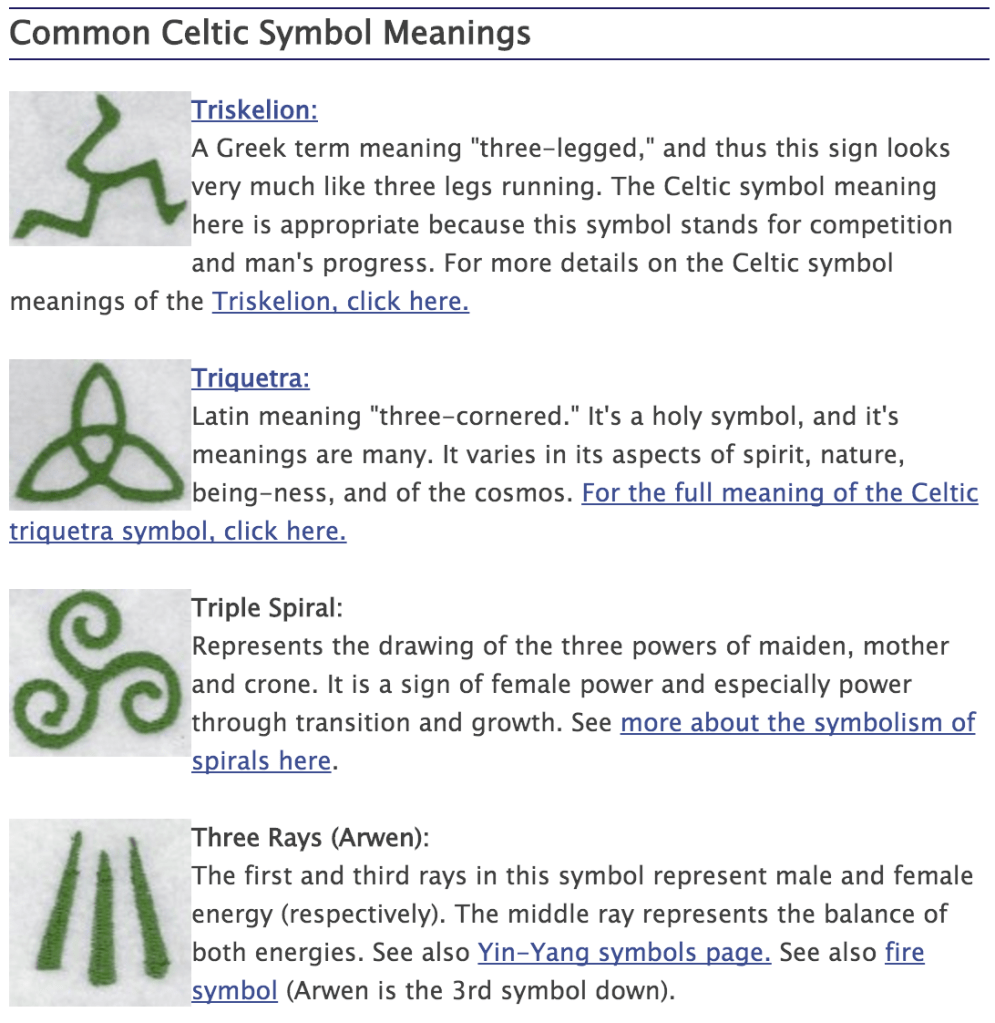
Triquetra
The triquetra has long been used to symbolize the holy trinity but predates Christianity and its use as such. This symbol has been found in Celtic and Nordic inscriptions and arts as well as on Germanic coins and Swedish runes as far back as the 11th century.
Some modern traditions use it to represent the connection between the mind, body, and soul. In Celtic-based pagan traditions, it is often used as a symbol of the three realms of earth, sea, and sky. In the past, there has been speculation that the triquetra is a symbol of the triple goddess or was used as a Celtic symbol of feminine spirituality though no solid scholarly evidence has been found to date.
It seems that associations between the triquetra and the divine feminine are more recent and promoted by Alister Crowley and others who use Christian symbols and language as a form of blasphemy, rather than for their “pagan” significance.
A symbol with more solid associations with the divine feminine can be seen below.
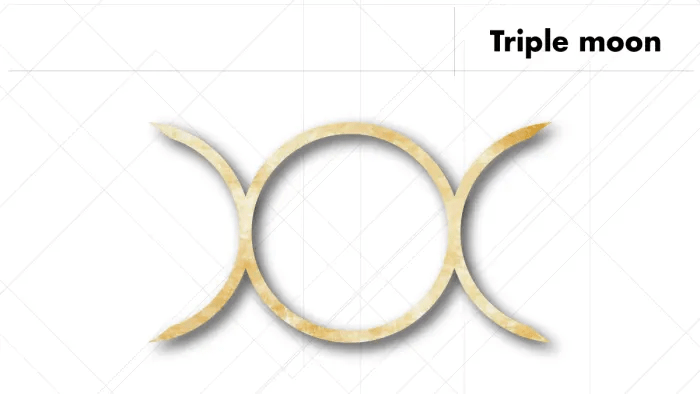
Triple Moon
The triple moon symbol represents the three phases of the moon, known as waxing, full, and waning. Within some paths and traditions, this symbol is also known as the triple goddess and is used to show the three phases of womanhood: maiden, mother, and crone.
The first crescent, the waxing moon, symbolizes new life, rejuvenation, and new beginnings. The middle circle represents the full moon when magic is at its most powerful. Finally, the second crescent moon represents the moon during its waning period. This time of the moon phase is a time that is regarded as the best to send things away, remove them from your life, or finish things.
The history of the triquetra and the following symbol are often interwoven. Thus, it is important to be aware of them both.
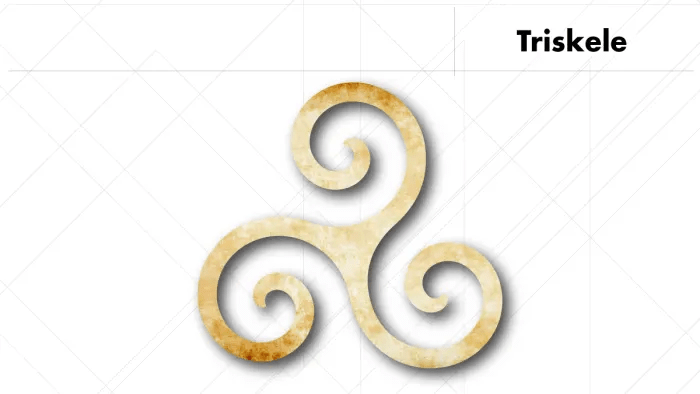
Triskele
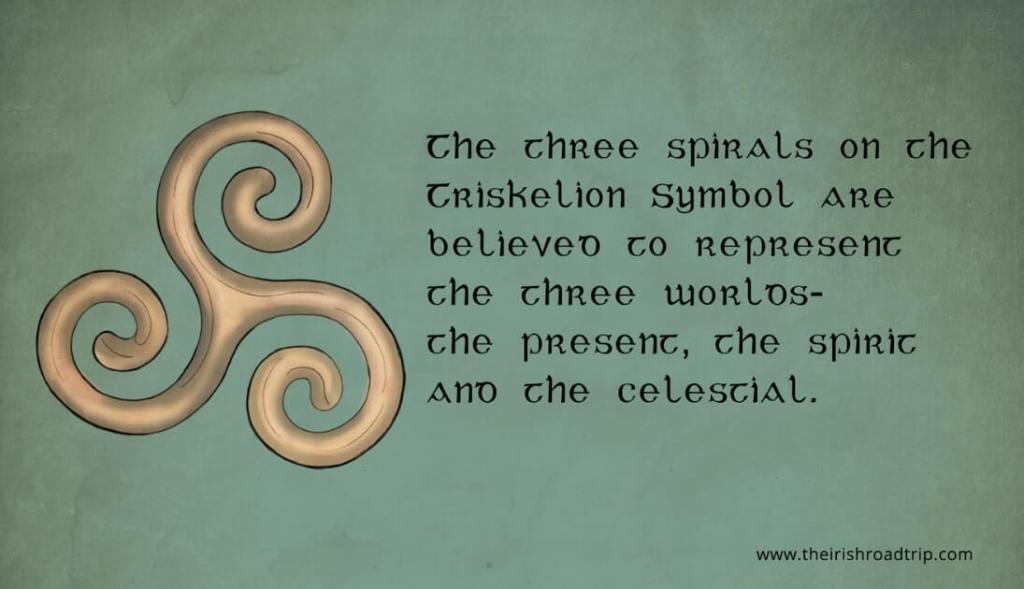
“The triskele is generally considered to be a Celtic design, but it has also been found in Buddhist writings. The exact design can vary, but this symbol always features one shape repeated three times, with each repetition interlocking. Triskeles can be found all over the world; for example, they can be found carved on many Neolithic stones in Ireland and Western Europe, in the symbol for the Isle of Sicily, and on banknotes in the Isle of Man.
Some Celtic traditions use the triskele to represent the realms of earth, sea, and sky.”
I would also like to add that shapes almost identical to the triskele can be seen in the illuminated manuscrips especially the Lindisfarne Gospels.
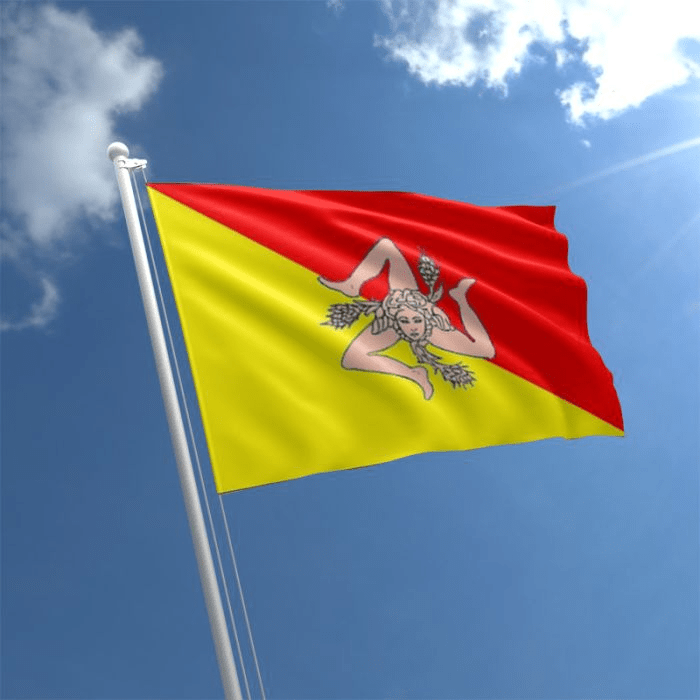
It appears that the triskele can sometimes be called the triskelion, but the triskelion is also identified as the three running legs like those on the flag of Sicily. The names of all these very similar symbols just seems to be too much to keep track of, so I don’t fault the authors of these images.
Wikipedia’s article on the tools of Wicca mention the triquetra only once.
Pentacle, or paten
The Pentacle, or paten, is a disc-shaped altar consecration tool with a sigil or magical symbol engraved or inscribed upon it. The most common symbol is a pentagram within a circle, specifically a pentacle, although some other symbols may be used such as the triquetra. The disc is symbolic of the element of earth. It is typically used during evocation as a symbol which blesses items, as well as magically energizing that which is placed upon it.
In other words, you can sub a triquetra into your magic cirle if you’re fresh out of pentagrams. But is it useful for magic without the circle? I don’t know. Either way, a magic circle represents the world, that’ll be important later.
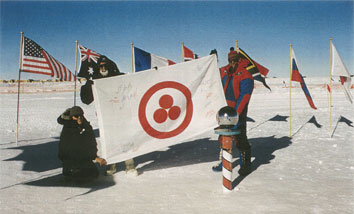
The Banner of Peace
Famous occultist Nicholas Rorich found out this symbol, or one closely related to it, was much older than he thought when he tried using it to communicate with the other side!
The fascinating story of the “Time Mirror” experiment is explored in detail in the following documentary by non-Christian occult researcher Mr. Mythos.
The Saint Patrick Connection
It is my suspicion that, upon Ireland’s conversion to Chrianity (not Roman Catholicism) by St. Patrick, many pagan symbols often litterally carved in stone were repurposed to teach Christian doctrine. Just like tradition tells us that Patrick used the shamrock ☘️ to illustrate the doctrine of the Trinity to his pagan druid converts, so the triquetra’s iconic three archs in one were converted yo Christian usage. Of course, unconverted druids would go on using the symbol within the context of the corrupt pagan system, and so we see it used still today by pagans, druids, witches, and satanists (the true part of Gail’s claims). If you use your imagination, you may even see three Illuminati all-seeing eyes in the symbol.
For the sake of transparency, I must admit that I have not uncovered definitive evidence to support this theory, but it is easy to infer this from the available information. (Hey, Gail gets to say whatever she wants and present it as facts, so why can’t we make an educated guess and be clear it’s a guess?)
Google “how is Saint Patrick connected to the trinity knot”, and lo and behold:
The Trinity was famously taught by St. Patrick using another trefoil symbol of Ireland, the shamrock. It appears the trefoil knot was adopted and repurposed as a symbol of the Holy Trinity by early Irish Christians in the 4th century.
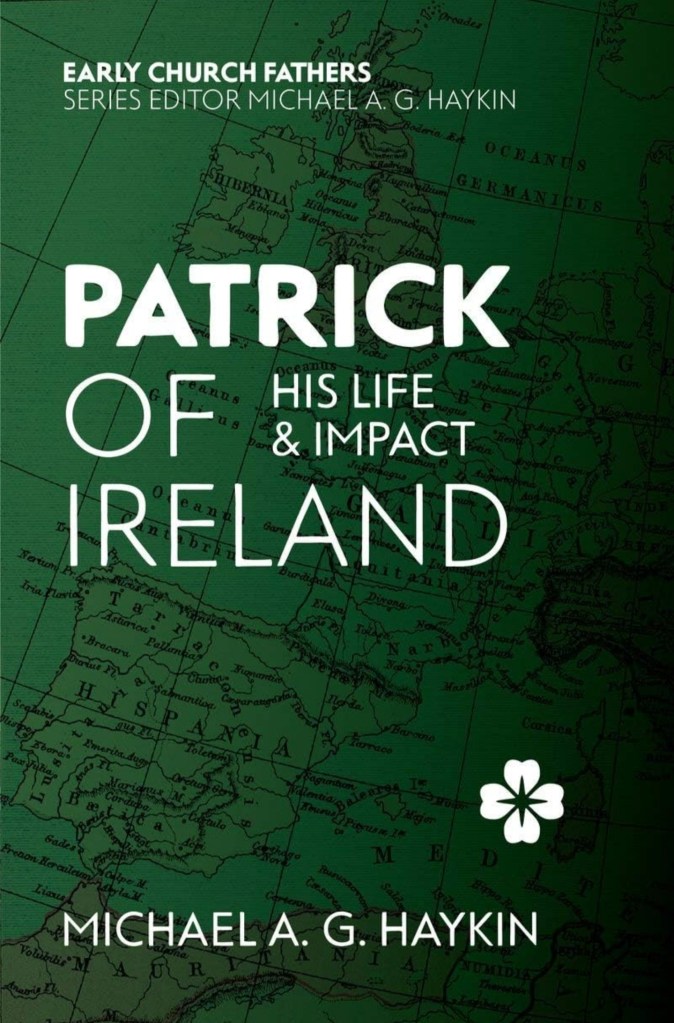
“Patrick of Ireland: His Life and Impact” is a fascinating looking book recommended by my Facebook friend Timothy Berg as a wonderful book demonstrating that “Patrick was solidly Trinitarian.”
Olde Bookes and Squiggly Lines
How long has the triquetra been accepted as a symbol of the Trinity? Hint: It didn’t begin in the 60’s on the cover of the NKJV like some seem to imply.
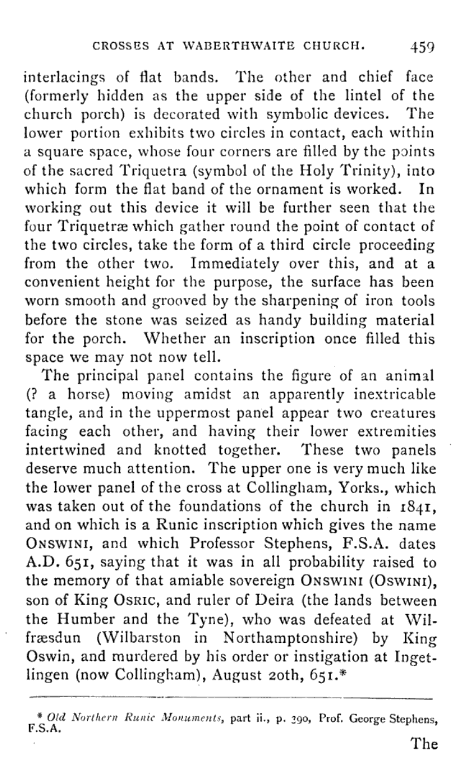
“Of this cross Mr. Thomas2 says: ‘It is the only Latin cross we have…The idea seems to be the development of the cross (Salvation) from the Trinity; the base is a triquetra, the Trinity symbol, formed of a double-furrowed band, the ascending limb from which grows into a plaited stem, which spreads elegantly and without break into the three upper members of the cross. As probably the head, now lost, carried on the plait similarly to the arms, the eye could follow the bands right around all the parts of the cross, and return without break to the triquetra at the base.'”
“The lower portion exhibits two circles in contact, each within a square space, whose four corners are filled by the points of the sacred Triquetra (symbol of the Holy Trinity), into which form the flat band of the ornament is worked. In working out this device it will be further seen that the four Triquetra which gather round the point of contact of the two circles, take the form of a third circle proceeding from the other two.”
Triquetra Island
Before this, “Triquetra” was another name for Sicily since it has three corners. A triquetra of knees featured in the middle of their flag with a Medusa’s head at the center. With the gorgon’s head fixed to the center of her shield, the goddess Athena was seen by Sicillian civilians as the protector of their island. The triquetra’s function as a symbol of protection is clear.
On a program with researcher Texe Mars (1944-2019), Gail shares a little about the symbol that left me confused for years before looking into this for myself. Do you think this clip demonstrates Gail’s confusion about the “NKJV logo” or that it reveals an early stage in the development of her research?
[Soundbite coming soon, Unknown Audio recording, Bringing the Triquetra to its knees (__:__)]
In Gail’s video on the NKJV symbol, she refers to a classical dictionary that supports the idea that Pythagoras and his followers called the triquetra “the 666 symbol”. We have searched the entire dictionary in 3 editions and found no such reference. Its use as another name for Sicily is the only definition of “Triquetra” in “Lemprière’s Classical Dictionary.”
Read Lemprière’s full entry on “Pythagoras” for yourself! It’s a doozie!
Pythagŏras, a celebrated philosopher, born at Samos. His father Mnesarchus was a person of distinction, and therefore the son received that education which was most calculated to enlighten his mind and invigorate his body. Like his contemporaries, he was early made acquainted with poetry and music; eloquence and astronomy became his private studies, and in gymnastic exercises he often bore the palm for strength and dexterity. He first made himself known in Greece, at the Olympic games, where he obtained, in the 18th year of his age, the prize for wrestling; and, after he had been admired for the elegance and the dignity of his person, and the brilliancy of his understanding, he retired into the east. In Egypt and Chaldæa he gained the confidence of the priests, and learned from them the artful policy, and the symbolic writings, by which they governed the prince as well as the people, and, after he had spent many years in gathering all the information which could be collected from antique tradition concerning the nature of the gods and the immortality of the soul, Pythagoras revisited his native island. The tyranny of Polycrates at Samos disgusted the philosopher, who was a great advocate for national independence; and though he was the favourite of the tyrant, he retired from the island, and a second time assisted at the Olympic games. His fame was too well known to escape notice; he was saluted in the public assembly by the name of Sophist, or wise man; but he refused the appellation, and was satisfied with that of philosopher, or, the friend of wisdom. “At the Olympic games,” said he, in explanation of this new appellation he wished to assume, “some are attracted with the desire of obtaining crowns and honours, others come to expose their different commodities to sale, while curiosity draws a third class, and the desire of contemplating whatever deserves notice in that celebrated assembly; thus, on the more extensive theatre of the world, while many struggle for the glory of a name, and many pant for the advantages of fortune, a few, and indeed but a few, who are neither desirous of money nor ambitious of fame, are sufficiently gratified to be spectators of the wonder, the hurry, and the magnificence of the scene.” From Olympia, the philosopher visited the republics of Elis and Sparta, and retired to Magna Græcia, where he fixed his habitation in the town of Crotona, about the 40th year of his age. Here he founded a sect which has received the name of the Italian, and he soon saw himself surrounded by a great number of pupils, which the recommendation of his mental as well as his personal accomplishments had procured. His skill in music and medicine, and his knowledge of mathematics and of natural philosophy, gained him friends and admirers, and amidst the voluptuousness that prevailed among the inhabitants of Crotona, the Samian sage found his instructions respected and his approbation courted; the most debauched and effeminate were pleased with the eloquence and the graceful delivery of the philosopher, who boldly upbraided them for their vices, and called them to more virtuous and manly pursuits. These animated harangues were attended with rapid success, and a reformation soon took place in the morals and the life of the people of Crotona. The females were exhorted to become modest, and they left off their gaudy ornaments; the youths were called away from their pursuits of pleasure, and instantly they forgot their intemperance, and paid to their parents that submissive attention and deference which the precepts of Pythagoras required. As to the old, they were directed no longer to spend their time in amassing money, but to improve their understanding, and to seek that peace and those comforts of mind which frugality, benevolence, and philanthropy alone can produce. The sober and religious behaviour of the philosopher strongly recommended the necessity and importance of these precepts. Pythagoras was admired for his venerable aspect; his voice was harmonious, his eloquence persuasive, and the reputation he had acquired by his distant travels, and by being crowned at the Olympic games, was great and important. He regularly frequented the temples of the gods, and paid his devotion to the divinity at an early hour; he lived upon the purest and most innocent food, he clothed himself like the priests of the Egyptian gods, and by his continual purifications and regular offerings, he seemed to be superior to the rest of mankind in sanctity. These artful measures united to render him an object not only of reverence, but of imitation. To set himself at a greater distance from his pupils, a number of years was required to try their various dispositions; the most talkative were not permitted to speak in the presence of their master before they had been his auditors for five years, and those who possessed a natural taciturnity were allowed to speak after a probation of two years. When they were capable of receiving the secret instructions of the philosopher, they were taught the use of cyphers and hieroglyphic writings, and Pythagoras might boast that his pupils could correspond together, though in the most distant regions, in unknown characters; and by the signs and words which they had received, they could discover, though strangers and barbarians, those that had been educated in the Pythagorean school. So great was his authority among his pupils, that to dispute his word was deemed a crime, and the most stubborn were drawn to coincide with the opinions of their opponent, when they helped their arguments by the words of the master said so, an expression which became proverbial in jurare in verba magistri. The great influence which the philosopher possessed in his school was transferred to the world: the pupils divided the applause and the approbation of the people with their venerable master, and in a short time the rulers and the legislators of all the principal towns of Greece, Sicily, and Italy, boasted in being the disciples of Pythagoras. The Samian philosopher was the first who supported the doctrine of metempsychosis, or transmigration of the soul into different bodies, and those notions he seemed to have imbibed among the priests of Egypt, or in the solitary retreats of the Brachmans. More strenuously to support his chimerical system, he declared he recollected the different bodies which his soul had animated before that of the son of Mnesarchus. He remembered to have been Æthalides the son of Mercury, to have assisted the Greeks during the Trojan war in the character of Euphorbus [See: Euphorbus], to have been Hermotimus, afterwards a fisherman, and last of all Pythagoras. He forbade his disciples to eat flesh, as also beans, because he supposed them to have been produced from the same putrefied matter from which, at the creation of the world, man was formed. In his theological system Pythagoras supported that the universe was created from a shapeless heap of passive matter by the hands of a powerful being, who himself was the mover and soul of the world, and of whose substance the souls of mankind were a portion. He considered numbers as the principles of everything, and perceived in the universe regularity, correspondence, beauty, proportion, and harmony, as intentionally produced by the Creator. In his doctrines of morality, he perceived in the human mind propensities common to us with the brute creation; but besides these, and the passions of avarice and ambition, he discovered the nobler seeds of virtue, and supported that the most ample and perfect gratification was to be found in the enjoyment of moral and intellectual pleasures. The thoughts of the past he considered as always present to us, and he believed that no enjoyment could be had where the mind was disturbed by consciousness of guilt, or fears about futurity. This opinion induced the philosopher to recommend to his followers a particular mode of education. The tender years of the Pythagoreans were employed in continual labour, in study, in exercise, and repose; and the philosopher maintained his well-known and important maxim, that many things, especially love, are best learnt late. In a more advanced age, the adult was desired to behave with caution, spirit, and patriotism, and to remember that the community and civil society demanded his exertions, and that the good of the public, and not his own private enjoyments, were the ends of his creation. From lessons like these, the Pythagoreans were strictly enjoined to call to mind, and carefully to review, the actions, not only of the present, but of the preceding days. In their acts of devotion, they early repaired to the most solitary places of the mountains, and after they had examined their private and public conduct, and conversed with themselves, they joined in the company of their friends, and early refreshed their body with light and frugal aliments. Their conversation was of the most innocent nature; political or philosophic subjects were discussed with propriety, but without warmth, and after the conduct of the following day was regulated, the evening was spent with the same religious ceremony as the morning, in a strict and partial self-examination. From such regularity nothing but the most salutary consequences could arise, and it will not appear wonderful that the disciples of Pythagoras were so much respected and admired as legislators, and imitated for their constancy, friendship, and humanity. The authors that lived in, and after, the age of Alexander, have rather tarnished than brightened the glory of the founder of the Pythagorean school, and they have obscured his fame by attributing to him actions which were dissonant with his character as a man and a moralist. To give more weight to his exhortations, as some writers mention, Pythagoras retired into a subterraneous cave, where his mother sent him intelligence of everything which happened during his absence. After a certain number of months he again reappeared on the earth, with a grim and ghastly countenance, and declared, in the assembly of the people, that he was returned from hell. From similar exaggerations, it has been asserted that he appeared at the Olympic games with a golden thigh, and that he could write in letters of blood whatever he pleased on a looking-glass, and that, by setting it opposite to the moon, when full, all the characters which were on the glass became legible on the moon’s disc. They also support that, by some magical words, he tamed a bear, stopped the flight of an eagle, and appeared on the same day and at the same instant in the cities of Crotona and Metapontum, &c. The time and the place of the death of this great philosopher are unknown; yet many suppose that he died at Metapontum about 497 years before Christ; and so great was the veneration of the people of Magna Græcia for him, that he received the same honours as were paid to the immortal gods, and his house became a sacred temple. Succeeding ages likewise acknowledged his merits, and when the Romans, A.U.C. 411, were commanded by the oracle of Delphi to erect a statue to the bravest and wisest of the Greeks, the distinguished honour was conferred on Alcibiades and Pythagoras. Pythagoras had a daughter, called Damo. There is now extant a poetical composition ascribed to the philosopher, and called the golden verses of Pythagoras, which contain the greatest part of his doctrines and moral precepts; but many support that it is a supposititious composition, and that the true name of the writer was Lysis. Pythagoras distinguished himself also by his discoveries in geometry, astronomy, and mathematics, and it is to him that the world is indebted for the demonstration of the 47th proposition of the first book of Euclid’s elements, about the square of the hypothenuse. It is said that he was so elated after making the discovery, that he made an offering of a hecatomb to the gods; but the sacrifice was undoubtedly of small oxen, made with wax, as the philosopher was ever an enemy to shedding the blood of all animals. His system of the universe, in which he placed the sun in the centre, and all the planets moving in elliptical orbits round it, was deemed chimerical and improbable, till the deep inquiries and the philosophy of the 16th century proved it, by the most accurate calculations, to be true and incontestable. Diogenes Laërtius, Porphyry, Iamblicus, and others, have written an account of his life, but with more erudition, perhaps, than veracity. Cicero, de Natura Deorum, bk. 1, ch. 5; Tusculanæ Disputationes, bk. 4, ch. 1.—Diogenes Laërtius, bk. 8, &c.—Hyginus, fable 112.—Ovid, Metamorphoses, bk. 15, li. 60, &c.—Plato.—Pliny, bk. 34, ch. 6.—Aulus Gellius, bk. 9.—Iamblic.—Porphyry.—Plutarch.――A soothsayer of Babylon, who foretold the death of Alexander and of Hephæstion, by consulting the entrails of victims.――A tyrant of Ephesus.――One of Nero’s wicked favourites. (https://www.gutenberg.org/cache/epub/68769/pg68769-images.html)
“Sicĭlia, the largest and most celebrated island in the Mediterranean sea, at the bottom of Italy. It was anciently called Sicania, Trinacria, and Triquetra. It is of a triangular form, and has three celebrated promontories, one looking towards Africa, called Lilybæum; Pachynum looking towards Greece; and Pelorum towards Italy.” (A Classical Dictionary)
“Triquĕtra, a name given to Sicily by the Latins, for its triangular form. Lucretius, bk. 1, li. 78.” (A Classical Dictionary)
“Bibliotheca Classica Or, A Classical Dictionary” By John Lemprière (1831) may also hold keys to Riplinger’s elusive reference. I’m not doubting her claim, but I believe she referred to the wrong source and I would LOVE to see where she got this from!
At the end of the day, I want to give Gail the benefit of the doubt that she is not just making things up. However, given her track record in dealing with other subjects, I have to assume that she is either very confused or lying deliberately until some other editions of these various books is located to validate her claims.
She’s right, though. The Triquetra can be a mobius, and it is often used in the occult. More on this coming soon.
Years ago I reached out to Thomas Nelson publishers about the symbol. This is what they said. Miles,Thank you for your inquiry. The symbol on the cover of some early New King James Bibles is the Triquetra, from a Latin word meaning “three-cornered,” and was used by the early church to represent the Trinity. The three interwoven arcs are equal in size, and each can be distinguished from the other two, but they cannot be separated without destroying the figure. This symbolizes that the Father, the Son, and the Holy Spirit are three distinct Persons of equal power, honor, and glory, but are indivisibly one God. The Triquetra was especially popular in religious art during the Middle Ages, and is well established as a Trinitarian symbol in Christian art and iconography.Thomas Albert Stafford in Christian Symbols in the Evangelical Churches (New York: Abingdon-Cokesbury Press, 1994, pp. 50-52) states that the triquetra is: one of the most beautiful and most satisfying of the symbols of the Holy Trinity. The three equal arcs of the circle denote equality of the three Persons of the Godhead. The lines run continuously and therefore express their eternal existence. They are interwoven, which expresses their unity. The center forms an equilateral triangle, itself a symbol of the Trinity. Each pair of arcs combines to form a “vesica,” previously explained as an aureole, indicative of glory. So, here we have a complex expression of equality, eternity, unity and glory in what is essentially a simple form. Heather Child and Dorothy Colles in Christian Symbols, Ancient and Modern: A Handbook for Students (New York: Charles Scribner’s Sons, 1971, p. 44) affirm this: The Triquetra is an early symbol of the Trinity; the continuous interweaving of indivisible but equal arcs may be taken to express Eternity; in the centre is the triangle of the Trinity. In Seasons and Symbols: A Handbook on the Church Year (Minneapolis: Augsburg Publishing House, 1962, pp. 70, 71), Robert P. Wetzler and Helen Huntington identify the Triquetra as a symbol of the Holy Trinity. Many other books also contain verification of the Triquetra as a Christian symbol. A few of those are listed here: Symbols: Signposts of Devotion by Ratha Doyle McGee, The Upper Room, Nashville, Tennessee, 1956. Symbols in the Church by Carl Van Treeck and Aloysius Croft, The Bruce Company, Milwaukee, 1936. Church Symbolism by F. R. Webber, J. H. Jansen, Cleveland, 1927. Any symbol can be abused, misused and desecrated. For example, the Nazis used a form of the cross as a party symbol, a use altogether contrary to the true message of the Christian cross. Nonetheless, Christians will uphold the Cross as a symbol of a Gospel that saves. We are sorry that certain groups or individuals have misunderstood or misused the Triquetra. That does not alter the fact that it is an ancient symbol of the Holy Trinity and remains so today. Blessings.
Josh
Customer Service Representative
Retangling the Knot 🪢
From bands to brands, the Triquetra is a popular logo! More often than knot (!), when we see it outside of a Christian context we find it plastered up in dark and ominous places. This is by no means each instance, but you get the drift.
The “666” Bible
Gracing the front of early NKJV printings, is our beloved triquetra! This fact is the main reason we are even talking about this symbol! If it weren’t utilized on the cover of the famed KJV update, not one KJV-only person would have ever objected to it, not even Gail Riplinger.
Pastor Scott Ingram has an interesting video on the NKJV’s infamous logo.
Triquetras also feature prominently in ministries that emphasize the Deity of Christ. Apologetics ministries such as Apologia Radio and James White’s Alpha and Omega Ministries are constantly engaged in debates about the Deity of Christ with Mormons, Jehovah’s Witnessesn and Muslims and feature the triquetra as a Trinitarian symbol. Textus Receptus advocate, Dead Sea Scroll scholar, and ancient Christian history scholar Ken Johnson (biblefacts.org) also uses the symbol in his books as we will explore later.
The use of the Triquetra in Christianity makes me wonder, how often are “Christians” who are secretly druids using the symbol to communicate with eachother? 🤔 Bill Schnoebelen was secretly a druid when he was a Mormon since (according to him), Mormonism was founded to be an organization where druids and witches could pretend to be conservative Protestant Christians while still believing all the same things as druids and witches. How many have infiltrated churches, Bible colleges, and Bible translation teams, we may never know. But we can be assured snakes sometimes wear sheep’s clothing.
Let’s move on to some actual snakes who use the triquetra.
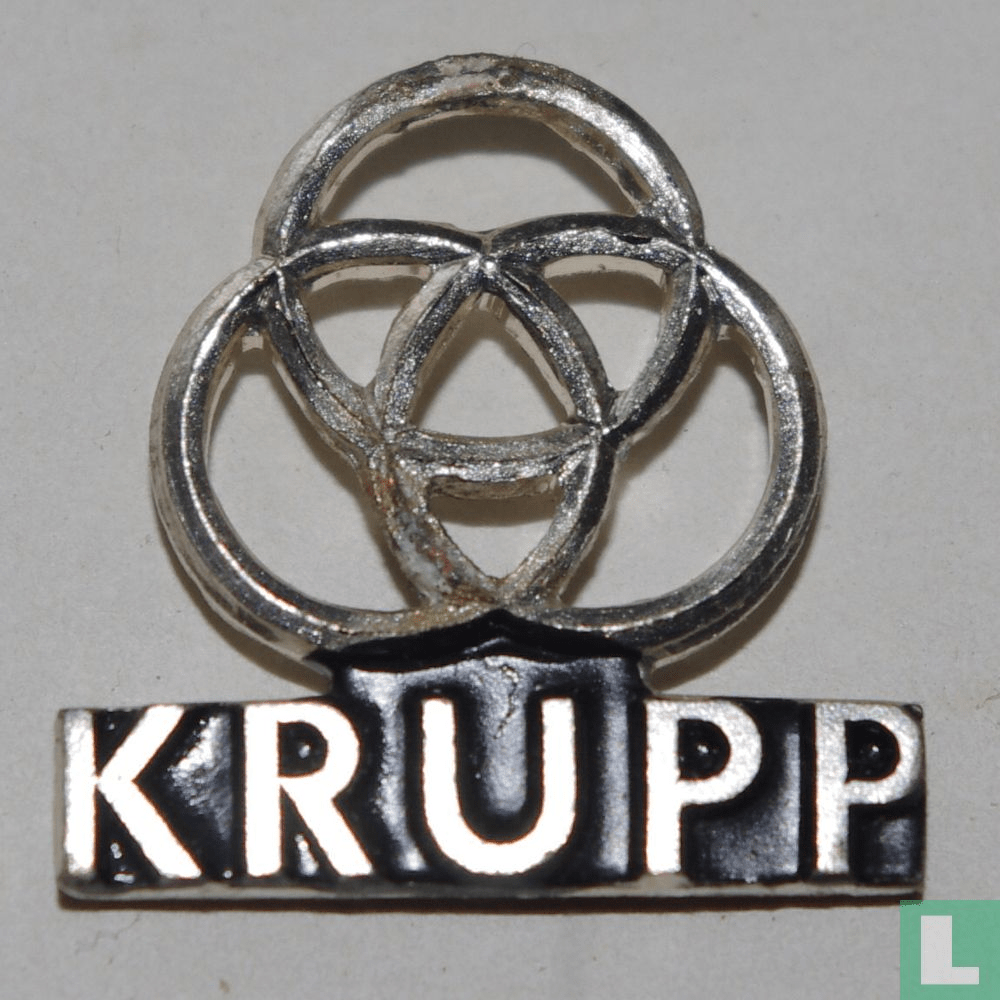
Power KRUPPS
The logo for the “family” company producing munitions for Hitler. If memory serves, Fritz Springmire also identifies them the Krupps among the Illuminati families.
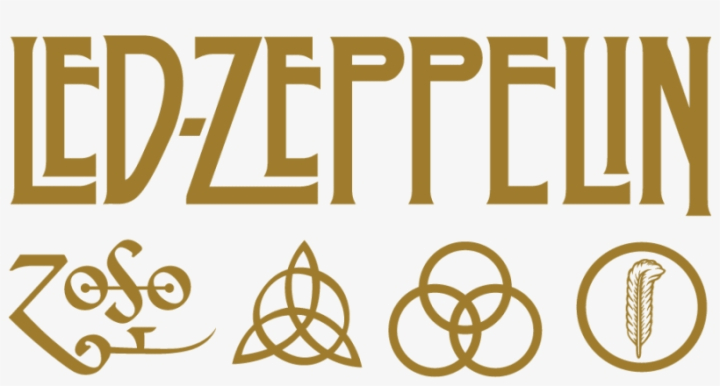
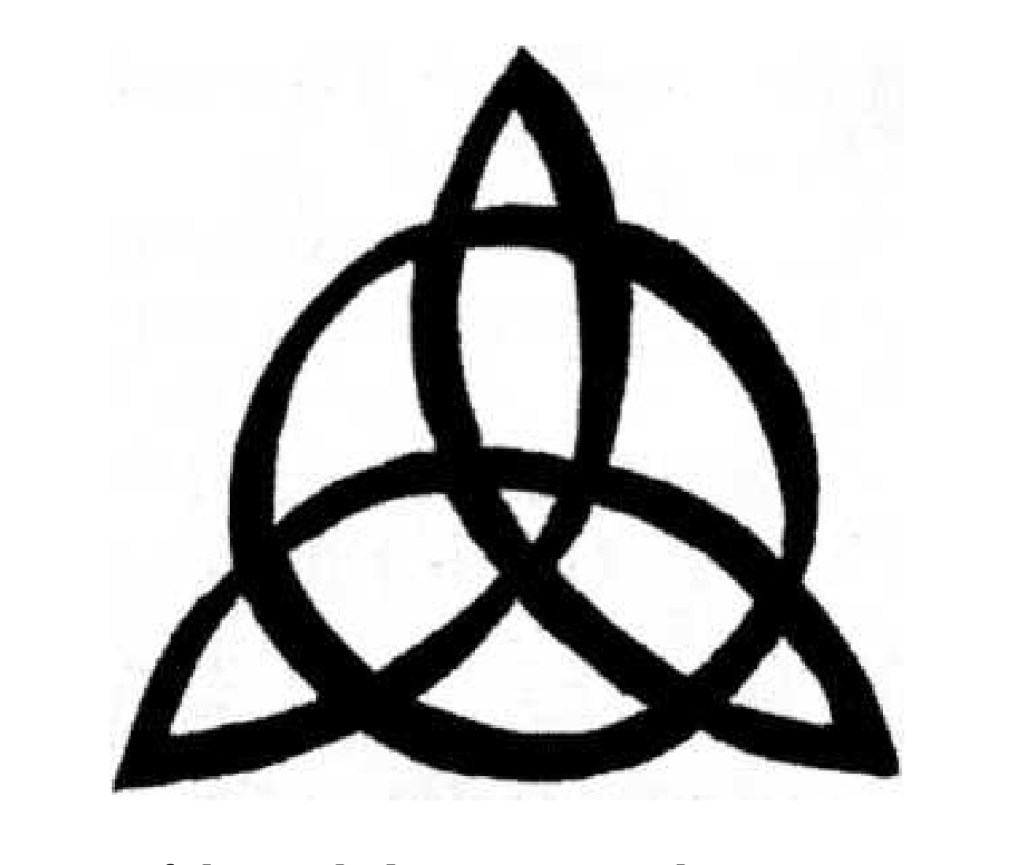
Led-Triquetras? Upside Down and Right Side Up
The same twist on the Triquetra adopted by John Bonham of Led Zeppelin. The acceptable reason he gave for using it was to signify his father, mother, and him and “was also the inverted Ballantine Beer symbol”. (See Four Led Zeppelin Symbols and Their Meaning)
In her presentation, Gail attempt to make something of the fact that the circles that make up the NKJV triquetra symbol form a triangle which points down. She does not seem to recognize that the similar itself points up on the NKJV cover. We are very curious to know what her boundlessly elaborate interpretation style does with the fact that Led Zeppelin that’s band members utilized both orientations of the symbol. The world may never know.
From everything I’ve heard, if a symbol’s point is oriented upward it is typically understood to represent the light path or positive form of witchcraft. Oriented downward it represents the dark path closely associated with Satanism and Aalister Crowley. Of course, the difference between these two paths can be as little as the time of day or night it may be.
Dawning of the Age of Triquarius??
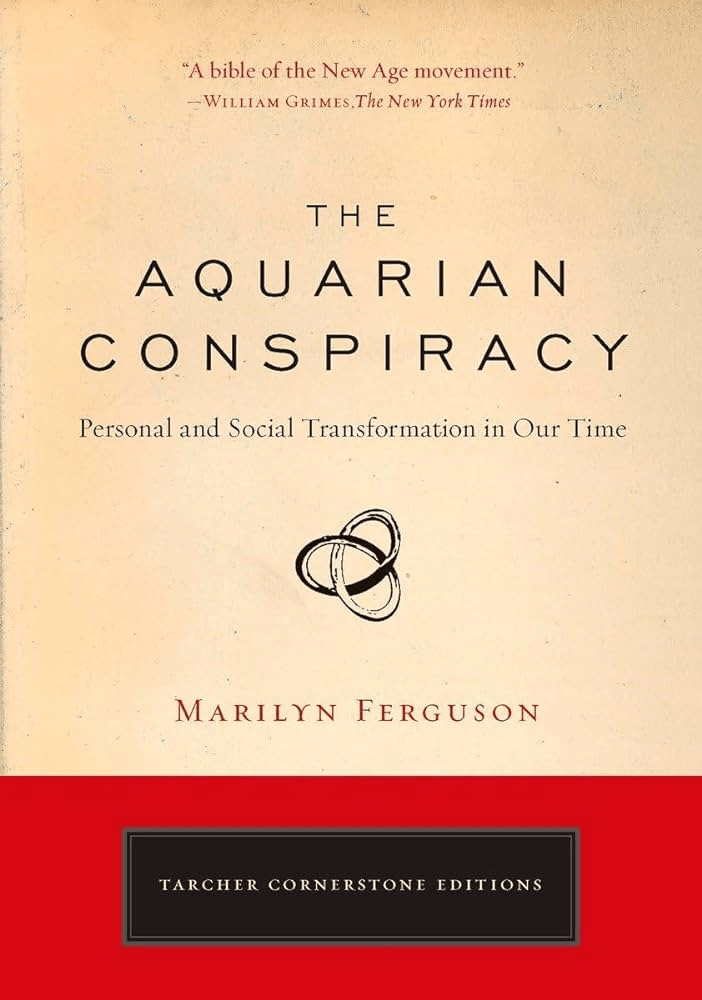
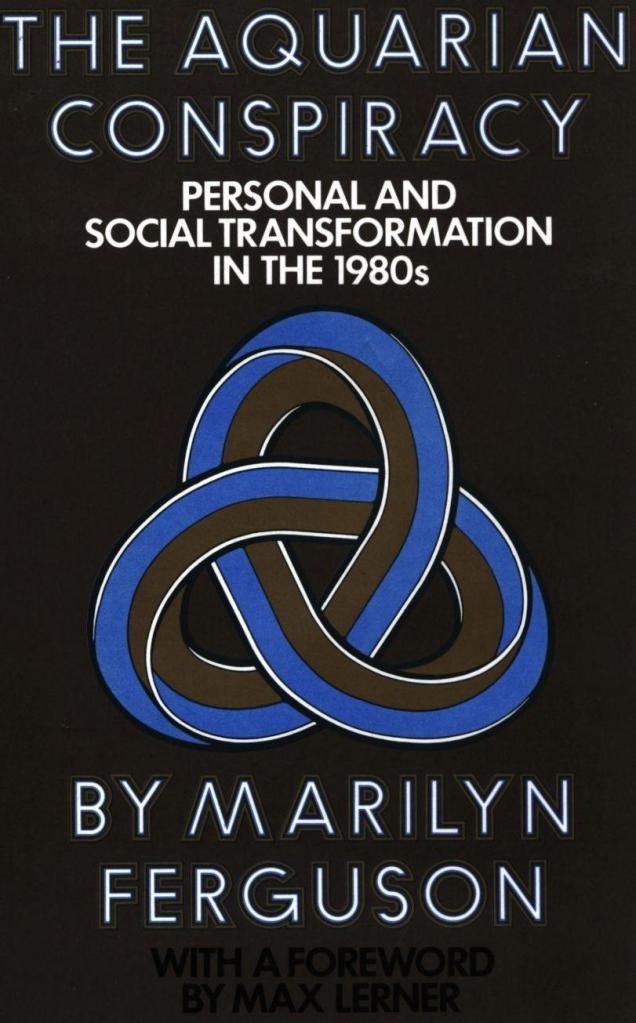
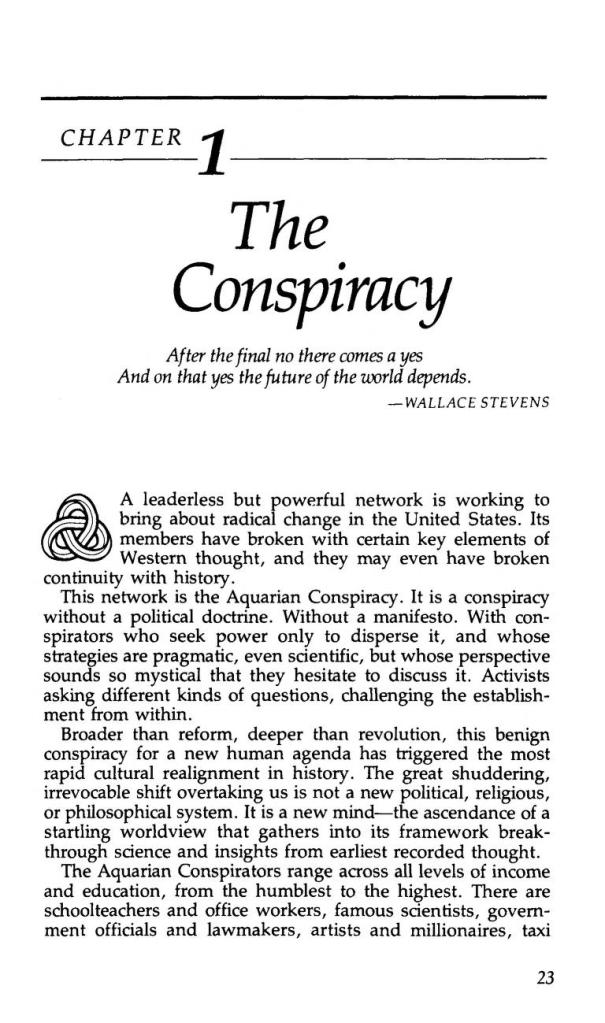
Anti-NKJV websites regularly show the older cover of this New Age gem. Not only is Marilyn Ferguson’s Aquarian Conspiracy responsible (in our opinion) for Gail’s mistaken title “the mobius symbol” (13 times in New Age Bible Versions), it also first came on the scene in Britian the year before (1981, copyrighted 1980) the publishing of the NKJV in 1982! New editions affectionately call this book “A bible of the New Age movement.” Facinating. But are they even the same symbol?
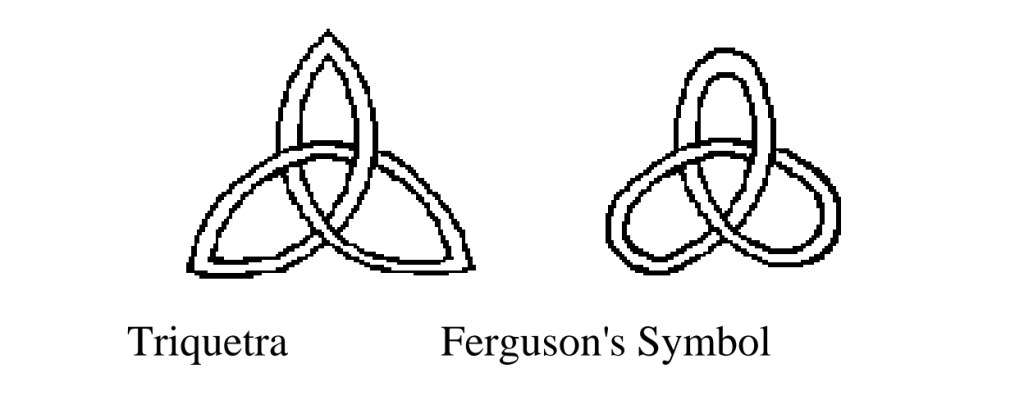
Recently it hit me. It differs form the Trinity symbol in that it’s loops are not corners! Triquetra litterally means “three-cornered”, hence why the island of Sicily used to be called “Triquetra”. There are no corners on the cover of Marilyn Ferguson’s book. Technically it couldn’t be called a triquetra. Perhaps this is where Gail decided introduction of a new term, “the mobius symbol”, was necessary.
James D. Price had something to say about this which I have difficulty fathoming until I thought about it good and hard.
Riplinger’s statement is false because the symbol that appears on some albums of the rock group Led Zeppelin has been modified with a superimposed circle. Furthermore, Riplinger falsely identifies the triquetra with the symbol on the cover of Marilyn Ferguson’s book The Aquarian Conspiracy. However, that symbol is not a triquetra, as Riplinger rightly knows–she has been informed.4 The symbols are similar but distinctly different as the following illustration indicates. The triquetra has three distinct corners, as its name indicates; the symbol on Ferguson’s book has three rounded lobes which cannot be confused with corners.
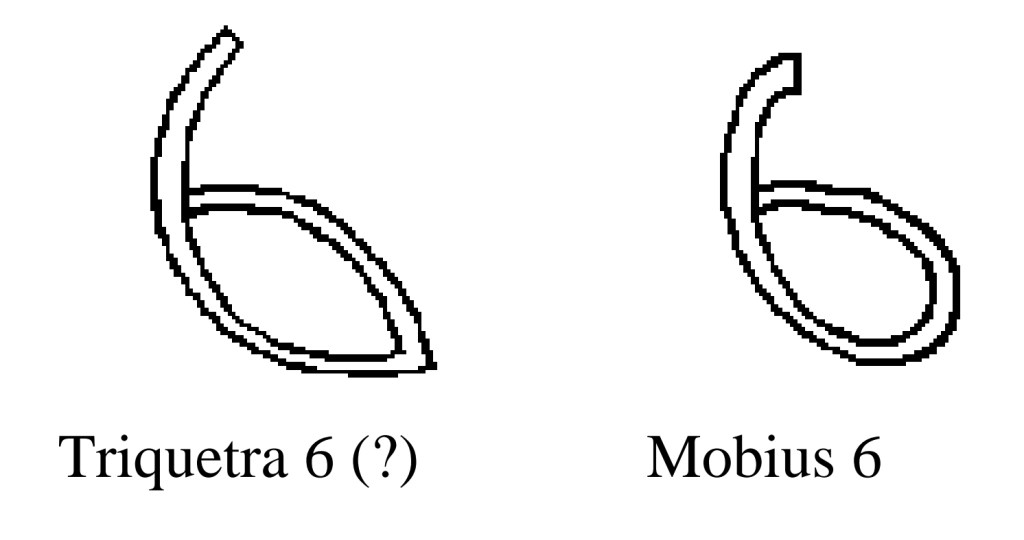
From this false equating of the symbols, Riplinger imagines that the triquetra forms three sixes which she then identifies with the number 666 of the antichrist. One could visualize sixes on a Ferguson’s symbol, but never on a triquetra. No one writes or prints a six with a pointed bottom! The following illustration demonstrates how ridiculous the suggestion is:
The evidence indicates that Riplinger bore false witness. The triquetra is an ancient symbol of the Holy Trinity and it remains so today. The fact that recent unbelievers have abused, misused, and even desecrated this symbol does not deprive it of its ancient sacred significance.
I guess you could call the Aquarian Conspiracy’s symbol the “trilobetra”. 🤭 Gail observed this difference (see above), nevertheless, in her mind the symbols are the same with only a minor variation.
Personally, I do not know if the small differencees fiscussed by Price discusses demonstrates separate origin stories or functions. To me, they seem to be the same. At the end of the day, even the pointy triquetra is used in occult circles and what are we to do with that information? 🤔
Cathy Burns, another researcher of occult symbols and author of Masonic and Occult symbols illustrated, had this to say about the Triquetra.
Some people try to make some of the occultic symbols into “Christian” symbols such as saying that the pentagram represents the five wounds of Christ or that the triangle is a symbol of the Trinity. We cannot do this for the Bible says in Deuteronomy 4:15-19, 23…
God does not want us to make ANY image of Him in any way. …(Acts 17:29)
Deuteronomy 12:3-4; See also Deuteronomy 7:5. Deuteronomy 7:25-26… [commands to destroy Canaanite pillars and images]
…
Marilyn Ferguson, a New Ager, used the symbol of the triquetra (another name for the triskele) on her book The Aquarian Conspiracy. This is a variation for the number 666. Other books and materials have a similar design printed on them,such as books from David Spangler, the person who lauds Lucifer, and TheWitch’s Grimoire. As most people know, the number 666 is the number of thebeast (see Revelation 13:18) and is evil, yet the occultists and New Agers lovethis number and consider it to be a sacred number.
As stated earlier, many organizations, such as the World Future Society and the Trilateral Commission, incorporate this symbol into their logo. I think it is quite interesting to see that this same symbol appears on the cover of the New King James Bible as well!
The symbol below is used to exorcise evil spirits. Isn’t there a striking similarity to the logo on the New King James Bible?!
…
Satanists love to use 666 but sometimes it is disguised as “FFF,” since “F” is the 6th letter of the alphabet. Sometimes they will use 999 since 9 is an upside down 6. Also used in Satanism is 3 circles connected at the center which is another symbol representing the mark of the beast.
Cathy seems possess extensive knowledge of occult symbolism, its history, and its use in the modern day. I cannot personally attest to her reliability, but I do wonder where she gets her information. Her book referenced above was published five years after New Age Bible Versions and at this point I suspect she either drew from Gail’s work, drew from the same source, or drew from a similar source.
So far I don’t see anywhere in the Aquarian Conspiracy where Marilyn dsicusses her cover art, but I’ll keep looking.
Forasmuch then as we are the offspring of God, we ought not to think that the Godhead is like unto gold, or silver, or stone, graven by art and man’s device.
Acts 17:29, KJV
We are not to see God as being like an idol. Cathy’s claim that “God does not want us to make ANY image of Him in any way” – including illustrating the doctrine of the Trinity – based on Acts 17:29 is plainly absurd. Although it completely ignores the context of Paul’s statement, though it is a common assertion between Cathy, Gail, and gheir followers. In doing so they demonize all Christians who dare utilize the triquetra to illustrate the Trinity while simultaneously underlining their own double standards.
If the triquetra is used in exorcism, as the symbol of the cross often is, it is clearly because the exorcist is calling upon the power of the Trinity. Why Cathy mentions this as though it proves the triquetra is satanic is beyond me. And yes there is a striking similarity, Cathy, because it’s the same just with a circle around it. 🙄 One is not for the Trinity and the other for Wicca. 🤦♂️
Setting Nimrod Adrift
Panbabylonianism is behind most Jehovah’s Witness, Muslim, and Fundamentalist arguments against holidays, symbols, etc. It seeks to prove by any means necessary that all occult and Catholic symbols and practices go back to Nimrod and his wife. It’s claims are highly controversial, and even though we used to accept its arguments, we have begun questioning them in recent years due to the work of Ken Johnson whom we will speak of later.
Considering that panbabylonianism’s only source seems to be the Two Babylons by Alexander Hislop, which is of highly questionable accuracy, we will have much more exploring to do before we have found the truth about these ancient matters. Below we will supply everything we’ve found so far.
Although Hyslop makes no direct reference to the triquetra, panbabylonians who prefer history to be neat as a pin will no doubt attempt to find some connection between Nimrod and the famous Trinity knot. Perhaps some of the arguments Hyslop puts forward about the Trinity in the first chapter of his book will do.
We’ve seen how Gail and modern pagans view the triquetra, but what is going on behind the scenes? Are we expected to believe Nimrod invented the triquetra? Did it exist before Nimrod? What was it’s original use before Nimrod? How is it’s original significance relevant today?
Pagan Roots Tied in Knots
I wondered what an educated wiccan would say about Gail’s research. I have not found it yet. However, I did find that Catherine Beyer, a practicing Wiccan who has taught “religion at Lakeland College in Wisconsin as well as humanities and Western culture at the University of Wisconsin, Green Bay” had something fascinating to say.
“While many people (particularly neopagans) view the triquetra as pagan, most European knotwork is less than 2000 years old, and it often (although certainly not always) emerged within Christian contexts rather than pagan contexts, or else there is no obvious religious context at all. There is no known clearly pre-Christian use of the triquetra, and many of its uses are clearly primarily decorative rather than symbolic.
This means that sources that display triquetras and other common knotwork and give a clear definition of what meaning they held to pagan Celts are speculative and without clear evidence.”
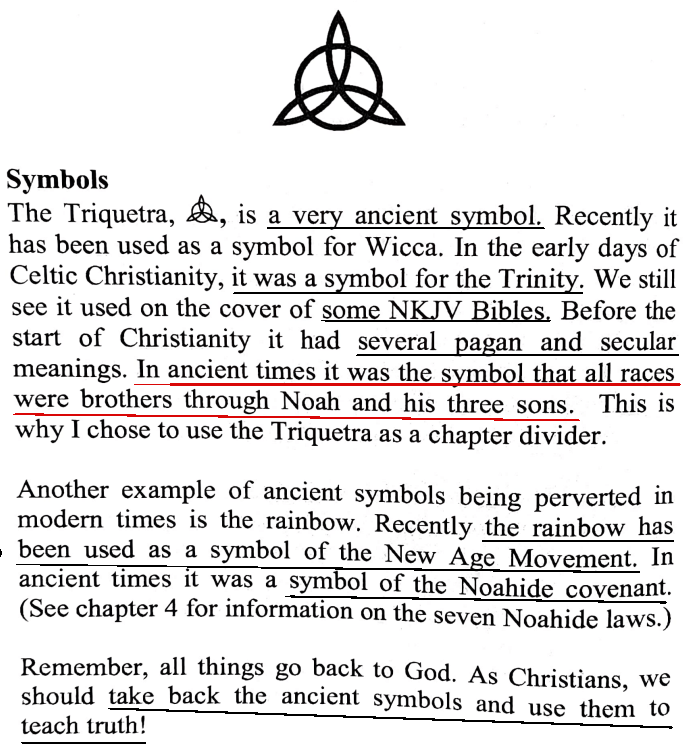
Since the triquetra is found all over the world from ancient America to Japan, could the everyone’s favorite symbol be as old as civilization itself? In his book on Ancient Post-Flood History, biblical scholar Ken Johnson uses the symbol decorativly because of its strong significance to his subject. He states that
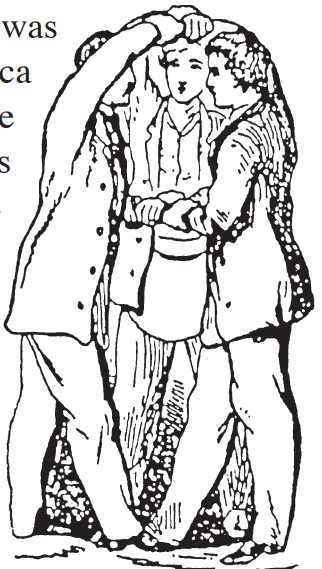
Shem, Ham, and Japheth formed the original post-flood brotherhood! It is easy, then, to see why a secret brotherhood with roots in the British isles would adopt the symbol into their rituals! That being said, it looks like the men in Gail’s flyer weren’t somoning Satan after all (though, I suppose, they could have used any symbol to do so given enough malintent). Even today you can buy jewelry which features the triquetra as a symbol of family and brotherhood and protection! (See 5 Ancient Celtic Symbols For Brothers And Their Meanings Explained by the Irish Roadtrip)
Remember as well that Ham is credited as the father of necromancy and black magic on this side of Noah’s flood. We aren’t saying there’s nothing going on, we are just saying that crying foul at every triquetra may not be doing anyone any good.
We have reached out to Ken for documentation of his claim on March 16th, 2025, and are greatly anticipating his reply!
Brotherhood of the Snake
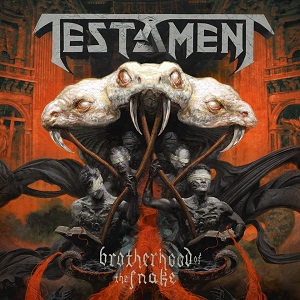
Notice that the three-headed serpent from Gail’s NKJV tract is twisted into the form of a triquetra, bearing in mind that the logo’s oldest use is to signify brotherhood, specifically, the brotherhood of all races. What is the oldest and highest order in the occult world which runs and ruins the world behind the scenes? You guessed it! And it is more than an album by Testament (above)! It is otherwise known as the Brotherhood of the Dragon. But Satan has twisted many things to mock God, and I believe the triquetra is one of them. Halloween is another.
Putting the triquetra on the cover of a Bible does not mean it is promoting the mark of the beast. There is much more to bring to light about this brotherhood, but it will take some time for us to gather, so hang tight.
A Side Issue?
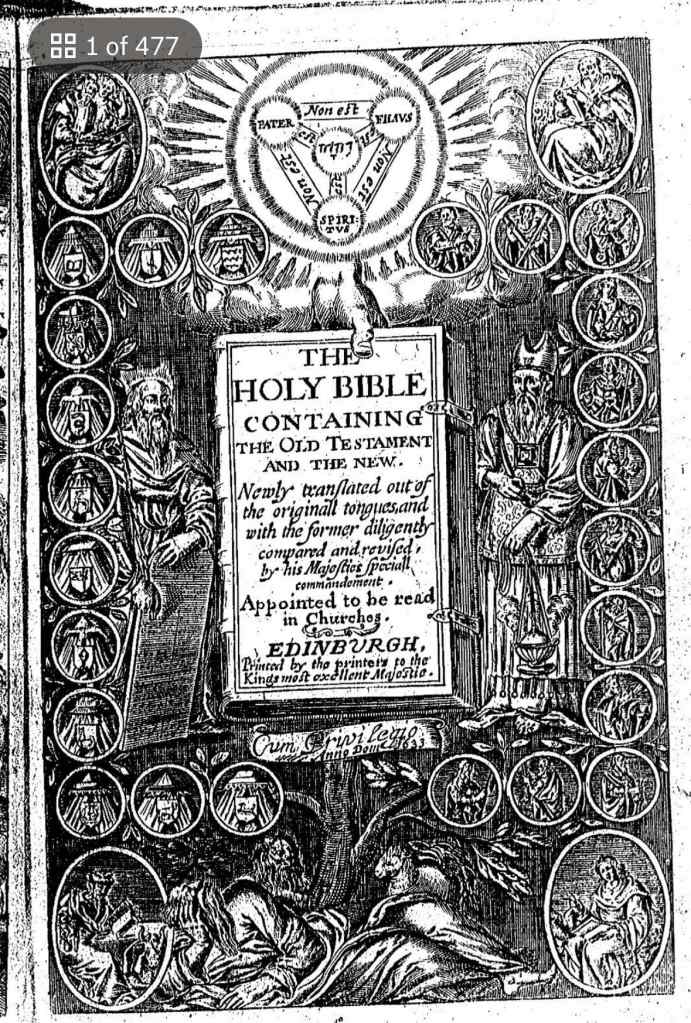
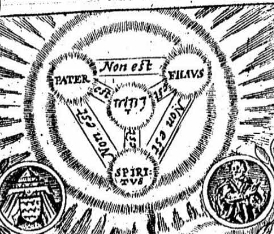
In the NKJV Death Certificate, Gail seems to claim that depicting the Trinity with “man’s divice” is a sin. Take a look at the title page of this 1633 printing of the KJV and note the hypocracy.
Is this an occult symbol in a KJV? Above is the title page of a King James Bible printed in Edinburgh in 1633. Also notice that the point of the triangle is pointed down. Is this edition satanic? Or is it further evidence that Gail Riplinger not only knows nothing about how symbols are used in the occult, but also that she does not know how symbols are used. At any rate, it is clear evidence of a serious double standard upheld by the Riplinger/AVP narative.
Is there a balance to be struck before we make moutinas out of mole hills and side issues into main issues? To my knowledge, the first person to make a huge issue with the “occult origins” of the triquestra is none other than our friend Gail Rplinger. From watching Gail’s lengthy presentation sold as “NKJV Logo Expose’ DVD“, it is pretty obvious that she doesn’t actually know much about the symbol or its origins. This “Expose’” and its “documentation” typifies her paranoid analysis of modern versions and her skewed defence of the KJV.
Nick Sayers (a KJV and TR defender who is harshly criticized by Gail Riplinger for his work on the KJV 2023) runs a website which seeks to provide a much more detailed analysis of the controversy. He strikes a balance which we find refreshing:
“Some King James Only proponants teach that the NKJV logo is an occult symbol, and this symbol has been called by Texe Marrs as “Satan’s fingerprint”. But when the original King James Version of 1611 is examined, it has mason handshakes throughout (masonry was not cultic until the late 1700’s) and similar triangular symbology representing the trinity [see above] etc.. which has also been adoped by the occult (as almost every symbol has). David Bray combines several anachronistc Mason and Rosicrucian conspiracy theories to claim that the 1611 version has occult symbology [3]. While many see the symbol as a serious issue as there are believers who believe that such symbols are demonic, many believers do not think so, and in the defence of the KJV and comparing it to the NKJV this would be a side issue rather than that comparing the actual words written.”
Before we get accused of whitewashing the triquetra because of its supposed link to Noah and his sons, lets remember how they were worshiped after they died. Here’s a thought, did a demon disguised as Noah appear to Ham (the founder of necromancy this side of the Flood) demanding to be worshiped in grotesque and bloody ways? I don’t know, but I have suspicions.
Read the passage on the death and worship of Noah and other “gods” for yourself!
“In the very same yeare also [three hundred and fortie fourth yeare after the inundation of the world], Noe Ianus finding & perceiving his end to approch, and that now his lustinesse and vigour of spirits began to shrinke and decrease, created one of his sonnes, called Cranus, the King and Patriarke over the Ianigenes (which are now called Tuscanes) and the sixt yeare after departed this life, and gave up to his maker, his noble and heroicke spirit: which was after he had raigned in Italie fourescore and two yeares, and after the floud three hundred fortie six yeares, before the foundation of Troy foure hundred and fourescore, and before the incarnation of Christ, one thousand nine hundred threescore and seven yeares, and in the age of the same Noe, nine hundred and fiftie.
The death of this good King and Patriarke possessed almost all the people in the world with great sorrow and lamentation, and especially the Armenians and Italians, who in most honorable manner celebrated his obsequies with such their then used rites and ceremonies, and after∣ward dedicated and attributed unto him divine honours and godlike adoration, building and consecrating tem∣ples and holy aultars unto him, calling him by divers and severall names and titles, as the Sun, the Heaven, the Seed of the world, the Father of the gods, the Soul of the world, the God of peace, the giver of justice and holinesse, the expulser of things hurtfull: also their children and succes∣sours called him Ianus, Geminus, Quadrisons, Enoirius, Ogyges, Vertumnus, Vadymon, Protheus, Multisors, Diespi∣ter, and Iupiter: and they invented all manner of honours Page [unnumbered] and straunge worships to reverence and adore him: they also shaped foorth his picture into diverse formes and fa∣shions: sometimes setting him foorth with two faces, to signifie thereby his wisdome upon every matter and every occasion: sometimes also with foure faces, to denotate therby that he was the god of the yeare for that he had so devided it into four several parts, being the Spring, Sum∣mer, Autumn, and Winter,* as Macrobius in his Saturnals also remembreth, saying: Ianus apud nos in quatuor partes spectat, ut demonstrateius simulachrum èphaleris advectū: [Google Translate: “Janus looks at us in four parts, so that more demonstratively he has brought the simulacrum of the cephalus.” Probably a horrid translation. Let me know below!] Afterwards, the Phenicians pourtraied him foorth in the forme of a Dragon, biting her taile, to shew thereby the roundnesse, and the beginning and ending of the yeare. In honour of him also at this day the first moneth of the yeare is called after his owne name Ianuarius,* as Servius in his Aeneidos affirmeth. The ancients likewise have sha∣ped him forth with two keyes in his hand, to shew thereby that he was the invent or of gates and dores, as also of the locking of them and making them fast, to the end, that the holy temples and sacred places should not bee polluted with the impious abuse of theeves and uncivile persons, and to avoid adulteries and other such like sinnes then raigning; and of his name since have all dores and gates been called Ianuae. In many other sorts and formes have the auncients defigured the image of this Noe Ianus, as Propertius and many others have written, who in the fourth booke of his Elegies, thus speaketh:
Quid mirare meas tot in uno corpore formas? Accipe Vertumni signa paterna dei Tuscus ego Tuscis orior, &c.
Google Translate: “Why wonder that I have so many forms in one body? Receive the paternal signs of the god of Vertum.” (Probably a horrid translation. Let me know below!)
Page [unnumbered]And undoubtedly, there hath not beene read of any that lived so uprightly and justly as this Patriarke Noe, neither that ever any had such honours, reverence, and godlike adoration done unto him, both in his life time, and after his death, who also was among those people in those daies called God: neither is it to bee wondered, that in those elder times there were so many gods held & wor∣shipped among the auncients, for so much as it is to bee understood, That in those daies all those princes, rulers, and governors that had lived vertuously, justly, and godly, and had commaunded their people with mildnesse, equi∣tie, and uprightnesse, were entearmed gods, and that also without performing any idolatrous adoration or reve∣rence unto them, as Metasthenes, an auncient author and hystorian of Persia affirmeth, where hee thus saith: Ante Nynum ducentis & quadragintà novem annis regnatum fuit sub tribus dijs regibus, quorum qui primus universo im∣peravit orbi, fuit Ogyges, qui prefuit inundationi terrarū, &c. Cathon also, another very auncient writer, thus speaketh: Italia complura a dijs & ducibus sortita fuit nomina, à Iano Ianicula quem quidem Enotrium dictum existimant, quia invenit uvum & far. And for these and such like reasons, Moyses and other godly Patriarkes were called gods, not that they were so in essence, but onely in participation, as in the seventh chapter of Exodus it is written: Ego te dedi deum Pharaoni: and in the the three and twenty chapter, Dijs non detrahes, & principem populi tui ne maledicas. Further also the Prophet David thus sayth: Principes po∣pulorum congregati sunt, cum deo Abraham, quoniam dij fortes terrae vehementer elevati sunt.
These things are thus so amply and at large exposed, Page [unnumbered] to the end, that the reader of this Treatise should not so much marvell or wonder when mention is made in this booke of gods and goddesses, which in those daies were so much observed and reverenced.*Ovid rehearsing the words of this Noe Ianus, and shewing that in his death the golden age ceased, thus sayth:
Tunc ego regnabam patiens cum terra deorum Esset, & humanis numina mixta locis Nondum iustitiam, facinus mortale fugarat, Vltima de superis illa reliquit humum, Proque meta populum, sive vt pudor ille regebat, Nullus erat iustis reddere iura labor Nil mihi cum bello, postes pacem que tuebar, &c.
Google Translate: “Then I reigned patiently when the earth of the gods Was, and human deities mingled in places Until justice, a mortal deed had fled, The last of the above left the earth, And the goal of the people, no matter how shame that ruled, There was no labor to render justice to the righteous. the peace which I was defending, &c.” (Probably a horrid translation. Let me know below!)
And as Noe was among these auncients thus honored and adored, and temples and altars consecrated unto him: so also was Titea his wife held in great reverence, worship, and holy esteeme, who was called also Vesta, Aretia, Terra, Regina sacrorum, magna Cybeles, Materque deorum, atque Vestalium Princeps, sive Abbatissa, as Berosus and other writers affirme. Having thus touched the death of this good Patriarke Noe, it shall not bee now impertinent something to remember and speake of the wicked and abhominable life of his degenerate sonne Cham, which although of it selfe it be worthlesse of any recapitulation or recitall, yet to descend to the lineall genealogie of the Lybian Hercules the Great, it cannot bee well omitted: from which Hercules, Dardanus the first founder and erecter of Troy, descended and came.
It hath been alreadie specified, how Noe deviding the universall earth unto his children, and how Cham [Ham] aboun∣ding in all vices and detestable courses, notwithstanding was not deprived of his portion, but had his right of inhe∣ritance justly allotted unto him, which was the third part of the world, and particularly Affrica to the hether part of Aegypt; for which countries he was commaunded by his father to depart, with his wife Noegla, and five and thir∣tie rulers (which is as much to say, as the cheefes of fami∣lie of his bloud and house) as also with all their children and issue: which was accordingly performed, and present∣ly he established himselfe as king and Saturne of Aegypt, where he erected and built a citie called Chem-Myn: and among them also, he himselfe was called Pan, and Silva∣nus, which people likewise (so engendred and issued of that familie) to honour and worship him the more, and to shew their love unto him, lived in all impious and ungra∣cious manner, perpetrating most odious and soule-dam∣ning villanies, affirming publickly, That men ought law∣fully to have the companie of their owne mothers, sisters, and daughters, in all lusts and concupiscence of the flesh; and other many most inhumane and shamefull acts, not to be recited. And to shew that they gloried and bosted in the wickednesse of such their king and ruler, they entear∣med him by the name of Cham Esenuus, which signifieth their infamous god Pan. And thus he ruled in Egipt long time, even unto the six and fiftith yeare of the raigne of Iupiter Belus, the second king of Babylon: in the which yeare he began to travell, and came into Italie (which was then called Kytim) to his brother Comerus Gallus, the first king of that countrey; after whose death, Cham presently Page [unnumbered] usurped and undertooke that mightie governement: who in stead of vertuous instructions and godly laws, in which all other princes round about him, his kinsmen (com∣maunding Germanie, Spaine, and France) had instructed and taught their people, cleane contrarie infected the youth of Italie with all manner of impieties, incivilitie, and corruptible vices: persuading them (beeing of them∣selves well addicted) to usurie, robberie, murder, poyso∣nings, and the studie of the Magicke art, who by reason of his owne great skill therein, was surnamed Zoroastes, and was the first inventor and practiser of that vild and di∣abolicall learning, of the use of which hee composed and writ many bookes, and hee was called generally through∣out the world, Cam Esenuus, id est, Cam infamis, & impudi∣cus, propagator. Some have thought, That the Turke for those and such like causes, is called in his letters patents, le grand Cam de Tartaria.“
After Noah died, much like with Enoch before the flood, the people began to worship him as a god, especially the Sun. This worship seemed to become corrupt and depraved rapidly into the ancient paganism of the fallen angels and demons through the agency of his wicked son Ham, the first occultist this side of the Flood. If you find a Noah worshiper today, he may just have a triquetra tattooed on himself and play in a metal band.
Relax. It’s just a conspiracy theory.
Conclusion
The triquetra has many different uses depending on the heart of the person using it.
The triquetra predates Paganism and has possible significance to Noah’s family and beyond.
The ancient cults like the Illuminati corrupted the symbol for use in occult rituals (possibly a pre-flood use of the symbol) and to represent the Brotherhood of the Snake.
St Patrick’s victory over the evils of druidism caused symbols like the triquetra – the original meaning of which paganism had corrupted – to be repurpose to Christian usage.
Gail Riplinger’s claim that the triquetra is purely an occult symbol and not one for the holy Trinity is unfounded. Her clamims are concocted by cherry-picking citations that are more or less reliably sorced.
There is nothing wrong with a Christian using the triquetra to represent the Trinity on the cover of a Bible, ministry logos, or section markers.
Do you agree with our conclusions? Why or why not? Let us know below.
Let’s Talk
What do you think? Feel free to reach out to us below!












 Bible Version Conspiracy