It’s a KJV-only Easter tradition to talk about the correct translation of Acts 12:4. I like the tradition, but let’s add a Bible Version Conspiracy twist! I hope it triggers some nostalgia as well as your critical thinking!
Acts 12:4 KJV — And when he had apprehended him, he put him in prison, and delivered him to four quaternions of soldiers to keep him; intending after Easter to bring him forth to the people.
Some links are affiliate links. We earn from qualifying purchases.
Trouble With Easter
The matter runs deep! Is Easter a pagan holiday that belongs in the KJV? Is it an accurate translation? Is “Easter” a dynamic equivalency in the KJV? Does context determine if the word is correctly translated? If the KJV translates were wrong about the “days of unleavened bread”, does the KJV become less than the inspired words of God? Here’s what we’ve found to answer these questions.
The “Pasca” Papers
Should we “Passover” Easter? Apparently, the KJV mistranslated it in Acts 12:4:
Acts 12:4 KJV — And when he had apprehended him, he put him in prison, and delivered him to four quaternions of soldiers to keep him; intending after Easter to bring him forth to the people.
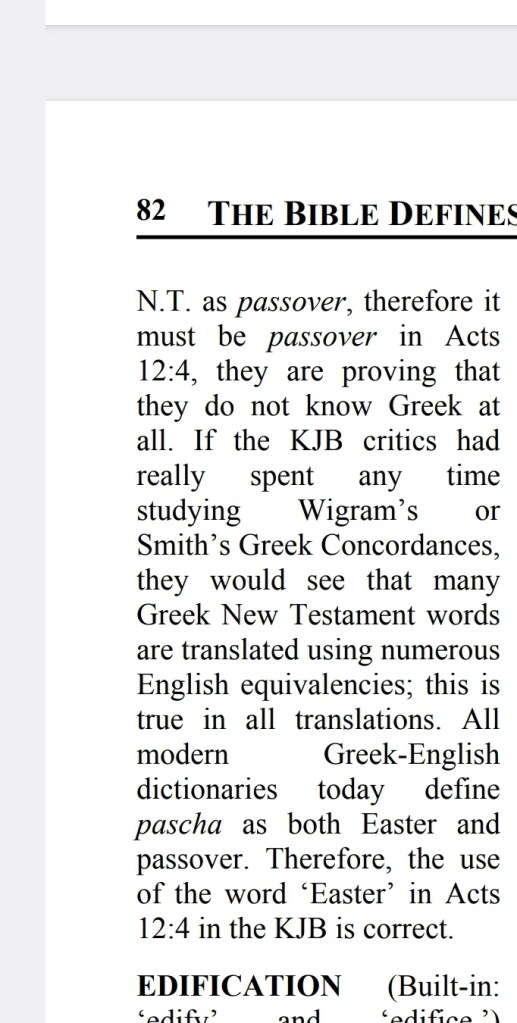
Modern scholars feel the translation debate is over because “pasca” simply means “passover” and all the Easter eggs have been found. KJV-only authors follow the bunny trail adhering to the KJV rendering “pasca” as Easter in only one place. Here are all the articles in one bucket:
I’ve often heard KJV defenders argue that Herod would not regard the Passover and wait for it to be over before having his Easter fun. However, Matthew Henry gives a possible reason why Herod wanted to wait until after all the Passover decorations were taken down. He does not mention the feast of unleavened bread.
He [Herod] would do this after Easter,meta to pascha—after the passover, certainly so it ought to be read, for it is the same word that is always so rendered; and to insinuate the introducing of a gospel-feast, instead of the passover, when we have nothing in the New Testament of such a thing, is to mingle Judaism with our Christianity. Herod would not condemn him till the passover was over, some think, for fear lest he should have such an interest among the people that they should demand the release of him, according to the custom of the feast: or, after the hurry of the feast was over, and the town was empty, he would entertain them with Peter’s public trial and execution. Thus was the plot laid, and both Herod and the people long to have the feast over, that they may gratify themselves with this barbarous entertainment.
These seem like good reasons for Herod to acknowledge and plan around the Jewish Passover without caring about it religiously. Tell us below what you think about the reasons given by Matthew Henry.
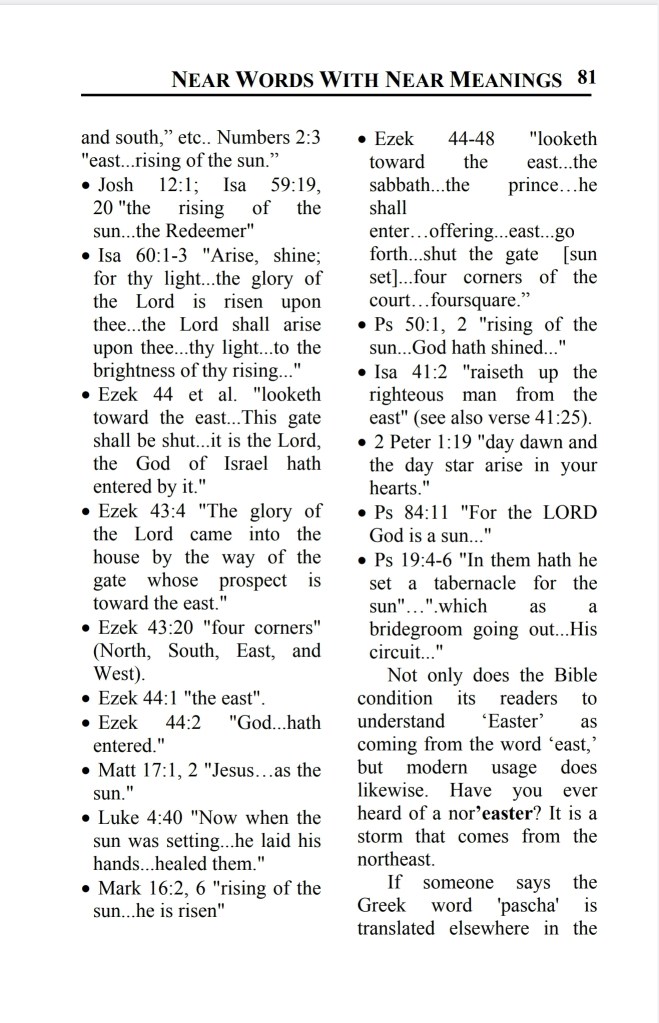
Personally, I would like to know why translations prior to the KJV rendered “pasca” as Easter in other places besides Acts 12. Apparently, Tyndale used “Easter” in all references in the New Testament with no distinction in Acts 12:4. Likewise, Martin Luther translated “Oster” in all the same instances. Apparently, “Passover” was simply equated with the Christian festival of “Easter”.
Later on we’ll see how “Easter” has always been our English equivalent for “Passover”, not a pagan holiday as some claim.
What do you think “pasca” should be translated as? Let us know below.
Scholars and Commentaries
Paragraph
Adam Clarke
Acts 12:4. Four quaternions of soldiers — That is, sixteen, or four companies of four men each, who had the care of the prison, each company taking in turn one of the four watches of the night.
Intending after Easter to bring him forth — μετα το τασχα, After the passover. Perhaps there never was a more unhappy, not to say absurd, translation than that in our text. But, before I come to explain the word, it is necessary to observe that our term called Easter is not exactly the same with the Jewish passover. This festival is always held on the fourteenth day of the first vernal full moon; but the Easter of the Christians, never till the next Sabbath after said full moon; and, to avoid all conformity with the Jews in this matter, if the fourteenth day of the first vernal full moon happen on a Sabbath, then the festival of Easter is deferred till the Sabbath following. The first vernal moon is that whose fourteenth day is either on the day of the vernal equinox, or the next fourteenth day after it. The vernal equinox, according to a decree of the council of Nice, is fixed to the 21st day of March; and therefore the first vernal moon is that whose fourteenth day falls upon the 21st of March, or the first fourteenth day after. Hence it appears that the next Sabbath after the fourteenth day of the vernal moon, which is called the Paschal term, is always Easter day. And, therefore, the earliest Paschal term being the 21st of March, the 22d of March is the earliest Easter possible; and the 18th of April being the latest Paschal term, the seventh day after, that is the 25th of April, is the latest Easter possible.The term Easter, inserted here by our translators, they borrowed from the ancient Anglo-Saxon service-books, or from the version of the Gospels, which always translates the το πασχα of the Greek by this term; e.g. Matthew 26:2: Ye know that after two days is the feast of the passover. [Anglo-Saxon] Wite ye that aefter twam dagum beoth Eastro. Matthew 16:19: And they made ready the passover. [Anglo-Saxon] And hig gegearwodon hym Easter thenunga (i.e. the paschal supper.) Prefixed to Matthew 28:1, are these words: [Anglo-Saxon] This part to be read on Easter even. And, before Matthew 28:8, these words: [Anglo-Saxon] Mark 14:12: And the first day of unleavened bread when they killed the passover. [Anglo-Saxon] And tham forman daegeazimorum, tha hi Eastron offrodon. Other examples occur in this version. Wiclif used the word paske, i.e. passover; but Tindal, Coverdale, Becke, and Cardmarden, following the old Saxon mode of translation, insert Easter: the Geneva Bible very properly renders it the passover. The Saxon [Anglo-Saxon] are different modes of spelling the name of the goddess Easter, whose festival was celebrated by our pagan forefathers on the month of April; hence that month, in the Saxon calendar, is called [Anglo-Saxon] Easter month. Every view we can take of this subject shows the gross impropriety of retaining a name every way exceptionable, and palpably absurd.
Tyndale and Luther translated “pasca” as “Easter” in places beside Acts 12:4 in their translations, but why? Bryan C Ross shows, if nothing else, how both sides of the Bible version debate seem to have done very little research into this question! Bryan goes deep into the traditional English usage of the word “Easter”. This is Part 2 Here’s a link to Part 1 and Part 3.
Bryan points out the inconsistancies in Sam Gipp’s arguments for “Easter” including:
Easter’s nonexistant relation to Istar apparently invented by Hislop
Harod’s desire to please the Jews.
Use of “passover” refering to a 7-day feast (Ezekiel 45:21, Matthew 26:17-18, etc.)
It highlights deficiencies in both KJV-critical and KJV-only retoric surrounding this debate. I can’t wait for my copy to arrive!
James White
Unfortunately, it appears James White, author of The King James Only Controversy, simply assumes the KJV translators made a mistake at Acts 12:4. It’s a shame that he seems to have done little research into the word’s usage between the first century and now as Bryan Ross does. Here is the section from the first edition of his book:
Is Easter Pagan??
Although we disagree with Michael Jones on several things, his videos on Easter and the Resurrection are excellent.
Easter’s Ancient Origins
Is Easter based on Istar and paganism, or do its roots go further back to a time before paganism just after the flood? Hislop and Johnson have both written extensively tackling this question. Both conservative Christians and highly respected researchers came to two very different conclusions.
Panbabylonianism: “Nimrod started all this.”
Sam Gipp promotes this view which was initially put forward in Alexander Hislop’s The Two Babylons. The arguments in this book have been well received by fundamentalist Christians because of their extremely anti-Roman Catholic bent. It’s is available for free viewing and download from the Internet Archive.
Click to purchase the book or audiobook. It is also available on Google books.
Hislop is also critical of the word “Easter’s” appearance in Acts 12:4, stating simply that everyone knows it refers to the Passover.
The festival, of which we read in Church history, under the name of Easter, in the third or fourth centuries, was quite a different festival from that now observed in the Romish Church, and at that time was not known by any such name as Easter. It was called Pasch, or the Passover, and though not of Apostolic institution, * was very early observed by many professing Christians, in commemoration of the death and resurrection of Christ.
* Socrates, the ancient ecclesiastical historian, after a lengthened account of the different ways in which Easter was observed in different countries in his time-i.e., the fifth century–sums up in these words: “Thus much already laid down may seem a sufficient treatise to prove that the celebration of the feast of Easter began everywhere more of custom than by any commandment either of Christ or any Apostle.” (Hist. Ecclesiast.) Every one knows that the name “Easter,” used in our translation of Acts 12:4, refers not to any Christian festival, but to the Jewish Passover. This is one of the few places in our version where the translators show an undue bias.
Then look at Easter. What means the term Easter itself? It is not a Christian name. It bears its Chaldean origin on its very forehead. Easter is nothing else than Astarte, one of the titles of Beltis, the queen of heaven, whose name, as pronounced by the people Nineveh, was evidently identical with that now in common use in this country. That name, as found by Layard on the Assyrian monuments, is Ishtar. The worship of Bel and Astarte was very early introduced into Britain, along with the Druids, “the priests of the groves.” Some have imagined that the Druidical worship was first introduced by the Phoenicians, who, centuries before the Christian era, traded to the tin-mines of Cornwall. But the unequivocal traces of that worship are found in regions of the British islands where the Phoenicians never penetrated, and it has everywhere left indelible marks of the strong hold which it must have had on the early British mind.
From Bel, the 1st of May is still called Beltane in the Almanac; and we have customs still lingering at this day among us, which prove how exactly the worship of Bel or Moloch (for both titles belonged to the same god) had been observed even in the northern parts of this island. “The late Lady Baird, of Fern Tower, in Perthshire,” says a writer in “Notes and Queries,” thoroughly versed in British antiquities, “told me, that every year, at Beltane (or the 1st of May), a number of men and women assemble at an ancient Druidical circle of stones on her property near Crieff. They light a fire in the centre, each person puts a bit of oat-cake in a shepherd’s bonnet; they all sit down, and draw blindfold a piece from the bonnet. One piece has been previously blackened, and whoever gets that piece has to jump through the fire in the centre of the circle, and pay a forfeit. This is, in fact, a part of the ancient worship of Baal, and the person on whom the lot fell was previously burnt as a sacrifice. Now, the passing through the fire represents that, and the payment of the forfeit redeems the victim.” If Baal was thus worshipped in Britain, it will not be difficult to believe that his consort Astarte was also adored by our ancestors, and that from Astarte, whose name in Nineveh was Ishtar, the religious solemnities of April, as now practised, are called by the name of Easter–that month, among our Pagan ancestors, having been called Easter-monath. The festival, of which we read in Church history, under the name of Easter, in the third or fourth centuries, was quite a different festival from that now observed in the Romish Church, and at that time was not known by any such name as Easter. It was called Pasch, or the Passover, and though not of Apostolic institution, * was very early observed by many professing Christians, in commemoration of the death and resurrection of Christ.
* Socrates, the ancient ecclesiastical historian, after a lengthened account of the different ways in which Easter was observed in different countries in his time–i.e., the fifth century–sums up in these words: “Thus much already laid down may seem a sufficient treatise to prove that the celebration of the feast of Easter began everywhere more of custom than by any commandment either of Christ or any Apostle.” (Hist. Ecclesiast.) Every one knows that the name “Easter,” used in our translation of Acts 12:4, refers not to any Christian festival, but to the Jewish Passover. This is one of the few places in our version where the translators show an undue bias.
That festival agreed originally with the time of the Jewish Passover, when Christ was crucified, a period which, in the days of Tertullian, at the end of the second century, was believed to have been the 23rd of March. That festival was not idolatrous, and it was preceded by no Lent. “It ought to be known,” said Cassianus, the monk of Marseilles, writing in the fifth century, and contrasting the primitive Church with the Church in his day, “that the observance of the forty days had no existence, so long as the perfection of that primitive Church remained inviolate.” Whence, then, came this observance? The forty days’ abstinence of Lent was directly borrowed from the worshippers of the Babylonian goddess. Such a Lent of forty days, “in the spring of the year,” is still observed by the Yezidis or Pagan Devil-worshippers of Koordistan, who have inherited it from their early masters, the Babylonians. Such a Lent of forty days was held in spring by the Pagan Mexicans, for thus we read in Humboldt, where he gives account of Mexican observances: “Three days after the vernal equinox…began a solemn fast of forty days in honour of the sun.” Such a Lent of forty days was observed in Egypt, as may be seen on consulting Wilkinson’s Egyptians. This Egyptian Lent of forty days, we are informed by Landseer, in his Sabean Researches, was held expressly in commemoration of Adonis or Osiris, the great mediatorial god. At the same time, the rape of Proserpine seems to have been commemorated, and in a similar manner; for Julius Firmicus informs us that, for “forty nights” the “wailing for Proserpine” continued; and from Arnobius we learn that the fast which the Pagans observed, called “Castus” or the “sacred” fast, was, by the Christians in his time, believed to have been primarily in imitation of the long fast of Ceres, when for many days she determinedly refused to eat on account of her “excess of sorrow,” that is, on account of the loss of her daughter Proserpine, when carried away by Pluto, the god of hell. As the stories of Bacchus, or Adonis and Proserpine, though originally distinct, were made to join on and fit in to one another, so that Bacchus was called Liber, and his wife Ariadne, Libera (which was one of the names of Proserpine), it is highly probable that the forty days’ fast of Lent was made in later times to have reference to both. Among the Pagans this Lent seems to have been an indispensable preliminary to the great annual festival in commemoration of the death and resurrection of Tammuz, which was celebrated by alternate weeping and rejoicing, and which, in many countries, was considerably later than the Christian festival, being observed in Palestine and Assyria in June, therefore called the “month of Tammuz”; in Egypt, about the middle of May, and in Britain, some time in April.
To conciliate the Pagans to nominal Christianity, Rome, pursuing its usual policy, took measures to get the Christian and Pagan festivals amalgamated, and, by a complicated but skilful adjustment of the calendar, it was found no difficult matter, in general, to get Paganism and Christianity–now far sunk in idolatry–in this as in so many other things, to shake hands. The instrument in accomplishing this amalgamation was the abbot Dionysius the Little, to whom also we owe it, as modern chronologers have demonstrated, that the date of the Christian era, or of the birth of Christ Himself, was moved FOUR YEARS from the true time. Whether this was done through ignorance or design may be matter of question; but there seems to be no doubt of the fact, that the birth of the Lord Jesus was made full four years later than the truth. This change of the calendar in regard to Easter was attended with momentous consequences. It brought into the Church the grossest corruption and the rankest superstition in connection with the abstinence of Lent. Let any one only read the atrocities that were commemorated during the “sacred fast” or Pagan Lent, as described by Arnobius and Clemens Alexandrinus, and surely he must blush for the Christianity of those who, with the full knowledge of all these abominations, “went down to Egypt for help” to stir up the languid devotion of the degenerate Church, and who could find no more excellent way to “revive” it, than by borrowing from so polluted a source; the absurdities and abominations connected with which the early Christian writers had held up to scorn. That Christians should ever think of introducing the Pagan abstinence of Lent was a sign of evil; it showed how low they had sunk, and it was also a cause of evil; it inevitably led to deeper degradation. Originally, even in Rome, Lent, with the preceding revelries of the Carnival, was entirely unknown; and even when fasting before the Christian Pasch was held to be necessary, it was by slow steps that, in this respect, it came to conform with the ritual of Paganism. What may have been the period of fasting in the Roman Church before sitting of the Nicene Council does not very clearly appear, but for a considerable period after that Council, we have distinct evidence that it did not exceed three weeks. *
* GIESELER, speaking of the Eastern Church in the second century, in regard to Paschal observances, says: “In it [the Paschal festival in commemoration of the death of Christ] they [the Eastern Christians] eat unleavened bread, probably like the Jews, eight days throughout…There is no trace of a yearly festival of a resurrection among them, for this was kept every Sunday” (Catholic Church). In regard to the Western Church, at a somewhat later period–the age of Constantine–fifteen days seems to have been observed to religious exercises in connection with the Christian Paschal feast, as appears from the following extracts from Bingham, kindly furnished to me by a friend, although the period of fasting is not stated. Bingham (Origin) says: “The solemnities of Pasch [are] the week before and the week after Easter Sunday–one week of the Cross, the other of the resurrection. The ancients speak of the Passion and Resurrection Pasch as a fifteen days’ solemnity. Fifteen days was enforced by law by the Empire, and commanded to the universal Church…Scaliger mentions a law of Constantine, ordering two weeks for Easter, and a vacation of all legal processes.”
The words of Socrates, writing on this very subject, about AD 450, are these: “Those who inhabit the princely city of Rome fast together before Easter three weeks, excepting the Saturday and Lord’s-day.” But at last, when the worship of Astarte was rising into the ascendant, steps were taken to get the whole Chaldean Lent of six weeks, or forty days, made imperative on all within the Roman empire of the West. The way was prepared for this by a Council held at Aurelia in the time of Hormisdas, Bishop of Rome, about the year 519, which decreed that Lent should be solemnly kept before Easter. It was with the view, no doubt, of carrying out this decree that the calendar was, a few days after, readjusted by Dionysius. This decree could not be carried out all at once. About the end of the sixth century, the first decisive attempt was made to enforce the observance of the new calendar. It was in Britain that the first attempt was made in this way; and here the attempt met with vigorous resistance. The difference, in point of time, betwixt the Christian Pasch, as observed in Britain by the native Christians, and the Pagan Easter enforced by Rome, at the time of its enforcement, was a whole month; * and it was only by violence and bloodshed, at last, that the Festival of the Anglo-Saxon or Chaldean goddess came to supersede that which had been held in honour of Christ.
* CUMMIANUS, quoted by Archbishop USSHER, Sylloge Those who have been brought up in the observance of Christmas and Easter, and who yet abhor from their hearts all Papal and Pagan idolatry alike, may perhaps feel as if there were something “untoward” in the revelations given above in regard to the origin of these festivals. But a moment’s reflection will suffice entirely to banish such a feeling. They will see, that if the account I have given be true, it is of no use to ignore it. A few of the facts stated in these pages are already known to Infidel and Socinian writers of no mean mark, both in this country and on the Continent, and these are using them in such a way as to undermine the faith of the young and uninformed in regard to the very vitals of the Christian faith. Surely, then, it must be of the last consequence, that the truth should be set forth in its own native light, even though it may somewhat run counter to preconceived opinions, especially when that truth, justly considered, tends so much at once to strengthen the rising youth against the seductions of Popery, and to confirm them in the faith once delivered to the Saints.
If a heathen could say, “Socrates I love, and Plato I love, but I love truth more,” surely a truly Christian mind will not display less magnanimity. Is there not much, even in the aspect of the times, that ought to prompt the earnest inquiry, if the occasion has not arisen, when efforts, and strenuous efforts, should be made to purge out of the National Establishment in the south those observances, and everything else that has flowed in upon it from Babylon’s golden cup? There are men of noble minds in the Church of Cranmer, Latimer, and Ridley, who love our Lord Jesus Christ in sincerity, who have felt the power of His blood, and known the comfort of His Spirit. Let them, in their closets, and on their knees, ask the question, at their God and at their own consciences, if they ought not to bestir themselves in right earnest, and labour with all their might till such a consummation be effected. Then, indeed, would England’s Church be the grand bulwark of the Reformation–then would her sons speak with her enemies in the gate–then would she appear in the face of all Christendom, “clear as the sun, fair as the moon, and terrible as an army with banners.” If, however, nothing effectual shall be done to stay the plague that is spreading in her, the result must be disastrous, not only to herself, but to the whole empire.
Such is the history of Easter. The popular observances that still attend the period of its celebration amply confirm the testimony of history as to its Babylonian character. The hot cross buns of Good Friday, and the dyed eggs of Pasch or Easter Sunday, figured in the Chaldean rites just as they do now. The “buns,” known too by that identical name, were used in the worship of the queen of heaven, the goddess Easter, as early as the days of Cecrops, the founder of Athens–that is, 1500 years before the Christian era. “One species of sacred bread,” says Bryant, “which used to be offered to the gods, was of great antiquity, and called Boun.” Diogenes Laertius, speaking of this offering being made by Empedocles, describes the chief ingredients of which it was composed, saying, “He offered one of the sacred cakes called Boun, which was made of fine flour and honey.” The prophet Jeremiah takes notice of this kind of offering when he says,
“The children gather wood, the fathers kindle the fire, and the women knead their dough, to make cakes to the queen of heaven.” *
* Jeremiah 7:18. It is from the very word here used by the prophet that the word “bun” seems to be derived. The Hebrew word, with the points, was pronounced Khavan, which in Greek became sometimes Kapan-os (PHOTIUS, Lexicon Syttoge); and, at other times, Khabon (NEANDER, in KITTO’S Biblical Cyclopoedia). The first shows how Khvan, pronounced as one syllable, would pass into the Latin panis, “bread,” and the second how, in like manner, Khvon would become Bon or Bun. It is not to be overlooked that our common English word Loa has passed through a similar process of formation. In Anglo-Saxon it was Hlaf.
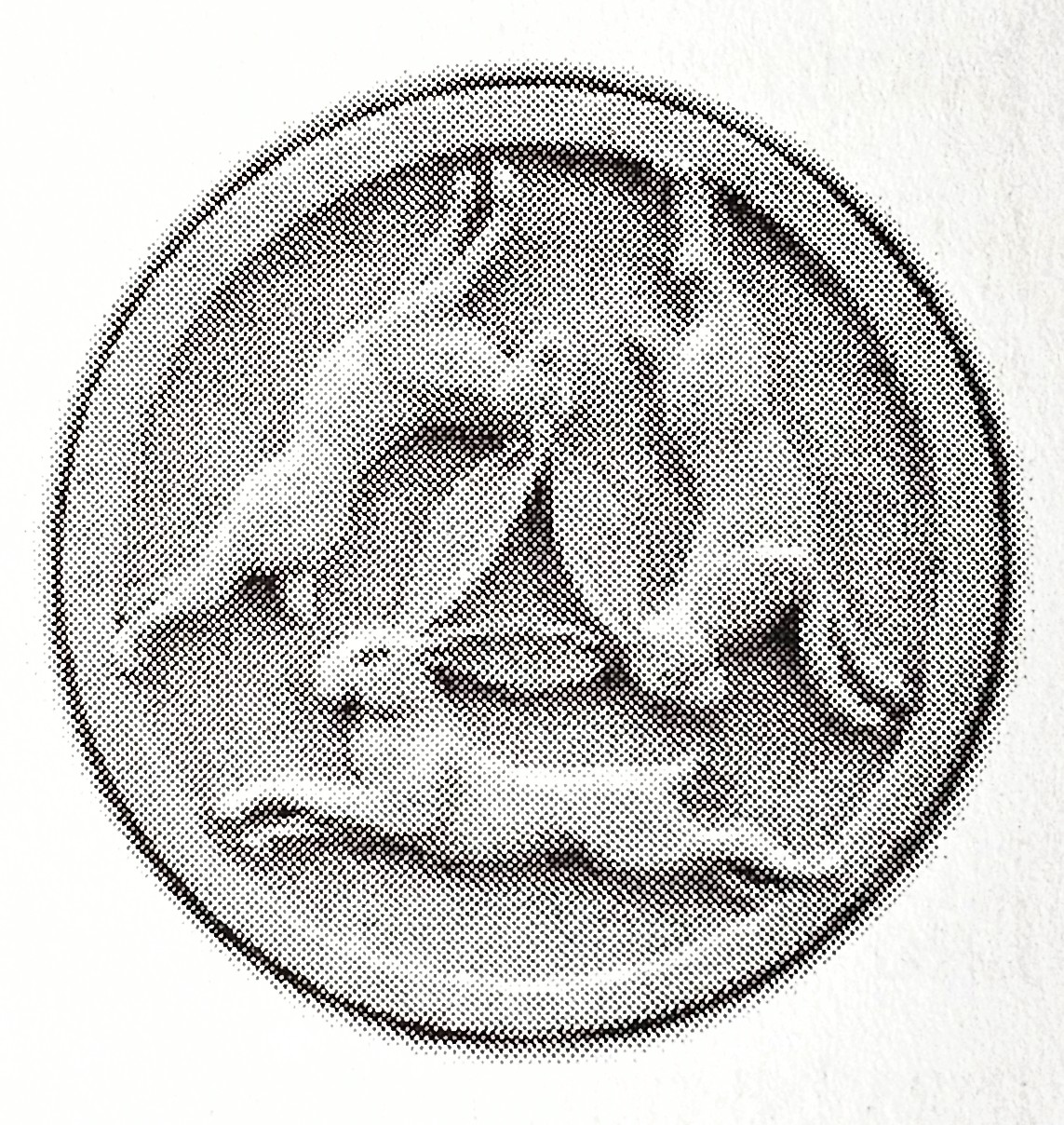
The hot cross buns are not now offered, but eaten, on the festival of Astarte; but this leaves no doubt as to whence they have been derived. The origin of the Pasch eggs is just as clear. The ancient Druids bore an egg, as the sacred emblem of their order. In the Dionysiaca, or mysteries of Bacchus, as celebrated in Athens, one part of the nocturnal ceremony consisted in the consecration of an egg. The Hindoo fables celebrate their mundane egg as of a golden colour. The people of Japan make their sacred egg to have been brazen. In China, at this hour, dyed or painted eggs are used on sacred festivals, even as in this country. In ancient times eggs were used in the religious rites of the Egyptians and the Greeks, and were hung up for mystic purposes in their temples. (see figure 31 below).
Figure 31
From Egypt these sacred eggs can be distinctly traced to the banks of the Euphrates. The classic poets are full of the fable of the mystic egg of the Babylonians; and thus its tale is told by Hyginus, the Egyptian, the learned keeper of the Palatine library at Rome, in the time of Augustus, who was skilled in all the wisdom of his native country: “An egg of wondrous size is said to have fallen from heaven into the river Euphrates. The fishes rolled it to the bank, where the doves having settled upon it, and hatched it, out came Venus, who afterwards was called the Syrian Goddess”–that is, Astarte. Hence the egg became one of the symbols of Astarte or Easter; and accordingly, in Cyprus, one of the chosen seats of the worship of Venus, or Astarte, the egg of wondrous size was represented on a grand scale. (see figure 32 below)
Figure 32
The occult meaning of this mystic egg of Astarte, in one of its aspects (for it had a twofold significance), had reference to the ark during the time of the flood, in which the whole human race were shut up, as the chick is enclosed in the egg before it is hatched. If any be inclined to ask, how could it ever enter the minds of men to employ such an extraordinary symbol for such a purpose, the answer is, first, The sacred egg of Paganism, as already indicated, is well known as the “mundane egg,” that is, the egg in which the world was shut up. Now the world has two distinct meanings–it means either the material earth, or the inhabitants of the earth. The latter meaning of the term is seen in Genesis 11:1, “The whole earth was of one language and of one speech,” where the meaning is that the whole people of the world were so. If then the world is seen shut up in an egg, and floating on the waters, it may not be difficult to believe, however the idea of the egg may have come, that the egg thus floating on the wide universal sea might be Noah’s family that contained the whole world in its bosom. Then the application of the word egg to the ark comes thus: The Hebrew name for an egg is Baitz, or in the feminine (for there are both genders), Baitza. This, in Chaldee and Phoenician, becomes Baith or Baitha, which in these languages is also the usual way in which the name of a house is pronounced. *
* The common word “Beth,” “house,” in the Bible without the points, is “Baith,” as may be seen in the name of Bethel, as given in Genesis 35:1, of the Greek Septuagint, where it is “Baith-el.”
The egg floating on the waters that contained the world, was the house floating on the waters of the deluge, with the elements of the new world in its bosom. The coming of the egg from heaven evidently refers to the preparation of the ark by express appointment of God; and the same thing seems clearly implied in the Egyptian story of the mundane egg which was said to have come out of the mouth of the great god. The doves resting on the egg need no explanation. This, then, was the meaning of the mystic egg in one aspect. As, however, everything that was good or beneficial to mankind was represented in the Chaldean mysteries, as in some way connected with the Babylonian goddess, so the greatest blessing to the human race, which the ark contained in its bosom, was held to be Astarte, who was the great civiliser and benefactor of the world. Though the deified queen, whom Astarte represented, had no actual existence till some centuries after the flood, yet through the doctrine of metempsychosis, which was firmly established in Babylon, it was easy for her worshippers to be made to believe that, in a previous incarnation, she had lived in the Antediluvian world, and passed in safety through the waters of the flood. Now the Romish Church adopted this mystic egg of Astarte, and consecrated it as a symbol of Christ’s resurrection. A form of prayer was even appointed to be used in connection with it, Pope Paul V teaching his superstitious votaries thus to pray at Easter: “Bless, O Lord, we beseech thee, this thy creature of eggs, that it may become a wholesome sustenance unto thy servants, eating it in remembrance of our Lord Jesus Christ, &c” (Scottish Guardian, April, 1844).
Besides the mystic egg, there was also another emblem of Easter, the goddess queen of Babylon, and that was the Rimmon or “pomegranate.” With the Rimmon or “pomegranate” in her hand, she is frequently represented in ancient medals, and the house of Rimmon, in which the King of Damascus, the Master of Naaman, the Syrian, worshipped, was in all likelihood a temple of Astarte, where that goddess with the Rimmon was publicly adored. The pomegranate is a fruit that is full of seeds; and on that account it has been supposed that it was employed as an emblem of that vessel in which the germs of the new creation were preserved, wherewith the world was to be sown anew with man and with beast, when the desolation of the deluge had passed away. But upon more searching inquiry, it turns out that the Rimmon or “pomegranate” had reference to an entirely different thing. Astarte, or Cybele, was called also Idaia Mater, and the sacred mount in Phrygia, most famed for the celebration of her mysteries, was named Mount Ida–that is, in Chaldee, the sacred language of these mysteries, the Mount of Knowledge. “Idaia Mater,” then, signifies “the Mother of Knowledge“–in other words, our Mother Eve, who first coveted the “knowledge of good and evil,” and actually purchased it at so dire a price to herself and to all her children. Astarte, as can be abundantly shown, was worshipped not only as an incarnation of the Spirit of God, but also of the mother of mankind. (see note below) When, therefore, the mother of the gods, and the mother of knowledge, was represented with the fruit of the pomegranate in her extended hand (see figure 33), inviting those who ascended the sacred mount to initiation in her mysteries, can there be a doubt what that fruit was intended to signify? Evidently, it must accord with her assumed character; it must be the fruit of the “Tree of Knowledge”–the fruit of that very
“Tree, whose mortal taste. Brought death into the world, and all our woe.”
The knowledge to which the votaries of the Idaean goddess were admitted, was precisely of the same kind as that which Eve derived from the eating of the forbidden fruit, the practical knowledge of all that was morally evil and base. Yet to Astarte, in this character, men were taught to look at their grand benefactress, as gaining for them knowledge, and blessings connected with that knowledge, which otherwise they might in vain have sought from Him, who is the Father of lights, from whom cometh down every good and perfect gift. Popery inspires the same feeling in regard to the Romish queen of heaven, and leads its devotees to view the sin of Eve in much the same light as that in which Paganism regarded it. In the Canon of the Mass, the most solemn service in the Romish Missal, the following expression occurs, where the sin of our first parent is apostrophised: “Oh blessed fault, which didst procure such a Redeemer!” The idea contained in these words is purely Pagan. They just amount to this: “Thanks be to Eve, to whose sin we are indebted for the glorious Saviour.” It is true the idea contained in them is found in the same words in the writings of Augustine; but it is an idea utterly opposed to the spirit of the Gospel, which only makes sin the more exceeding sinful, from the consideration that it needed such a ransom to deliver from its awful curse. Augustine had imbibed many Pagan sentiments, and never got entirely delivered from them.
As Rome cherishes the same feelings as Paganism did, so it has adopted also the very same symbols, so far as it has the opportunity. In this country, and most of the countries of Europe, no pomegranates grow; and yet, even here, the superstition of the Rimmon must, as far as possible, be kept up. Instead of the pomegranate, therefore, the orange is employed; and so the Papists of Scotland join oranges with their eggs at Easter; and so also, when Bishop Gillis of Edinburgh went through the vain-glorious ceremony of washing the feet of twelve ragged Irishmen a few years ago at Easter, he concluded by presenting each of them with two eggs and an orange.
Now, this use of the orange as the representative of the fruit of Eden’s “dread probationary tree,” be it observed, is no modern invention; it goes back to the distant times of classic antiquity. The gardens of the Hesperides in the West, are admitted by all who have studied the subject, just to have been the counterpart of the paradise of Eden in the East. The description of the sacred gardens, as situated in the Isles of the Atlantic, over against the coast of Africa, shows that their legendary site exactly agrees with the Cape Verd or Canary Isles, or some of that group; and, of course, that the “golden fruit” on the sacred tree, so jealously guarded, was none other than the orange. Now, let the reader mark well: According to the classic Pagan story, there was no serpent in that garden of delight in the “islands of the blest,” to TEMPT mankind to violate their duty to their great benefactor, by eating of the sacred tree which he had reserved as the test of their allegiance. No; on the contrary, it was the Serpent, the symbol of the Devil, the Principle of evil, the Enemy of man, that prohibited them from eating the precious fruit–that strictly watched it–that would not allow it to be touched. Hercules, one form of the Pagan Messiah–not the primitive, but the Grecian Hercules–pitying man’s unhappy state, slew or subdued the serpent, the envious being that grudged mankind the use of that which was so necessary to make them at once perfectly happy and wise, and bestowed upon them what otherwise would have been hopelessly beyond their reach. Here, then, God and the devil are exactly made to change places. Jehovah, who prohibited man from eating of the tree of knowledge, is symbolised by the serpent, and held up as an ungenerous and malignant being, while he who emancipated man from Jehovah’s yoke, and gave him of the fruit of the forbidden tree–in other words, Satan under the name of Hercules–is celebrated as the good and gracious Deliverer of the human race. What a mystery of iniquity is here! Now all this is wrapped up in the sacred orange of Easter.
That Semiramis, under the name of Astarte, was worshipped not only as an incarnation of the Spirit of God, but as the mother of mankind, we have very clear and satisfactory evidence. There is no doubt that “the Syrian goddess” was Astarte (LAYARD’S Nineveh and its Remains). Now, the Assyrian goddess, or Astarte, is identified with Semiramis by Athenagoras (Legatio), and by Lucian (De Dea Syria). These testimonies in regard to Astarte, or the Syrian goddess, being, in one aspect, Semiramis, are quite decisive. 1. The name Astarte, as applied to her, has reference to her as being Rhea or Cybele, the tower-bearing goddess, the first as Ovid says (Opera), that “made (towers) in cities”; for we find from Layard that in the Syrian temple of Hierapolis, “she [Dea Syria or Astarte] was represented standing on a lion crowned with towers.” Now, no name could more exactly picture forth the character of Semiramis, as queen of Babylon, than the name of “Ash-tart,” for that just means “The woman that made towers.” It is admitted on all hands that the last syllable “tart” comes from the Hebrew verb “Tr.” It has been always taken for granted, however, that “Tr” signifies only “to go round.” But we have evidence that, in nouns derived from it, it also signifies “to be round,” “to surround,” or “encompass.” In the masculine, we find “Tor” used for “a border or row of jewels round the head” (see PARKHURST and also GESENIUS). And in the feminine, as given in Hesychius (Lexicon), we find the meaning much more decisively brought out. Turis is just the Greek form of Turit, the final t, according to the genius of the Greek language, being converted into s. Ash-turit, then, which is obviously the same as the Hebrew “Ashtoreth,” is just “The woman that made the encompassing wall.” Considering how commonly the glory of that achievement, as regards Babylon, was given to Semiramis, not only by Ovid, but by Justin, Dionysius, Afer, and others, both the name and mural crown on the head of that goddess were surely very appropriate.
In confirmation of this interpretation of the meaning of the name Astarte, I may adduce an epithet applied to the Greek Diana, who at Ephesus bore a turreted crown on her head, and was identified with Semiramis, which is not a little striking. It is contained in the following extract from Livy: “When the news of the battle [near Pydna] reached Amphipolis, the matrons ran together to the temple of Diana, whom they style Tauropolos, to implore her aid.” Tauropolos, from Tor, “a tower,” or “surrounding fortification,” and Pol, “to make,” plainly means the “tower-maker,” or “maker of surrounding fortifications”; and to her as the goddess of fortifications, they would naturally apply when they dreaded an attack upon their city.
Semiramis, being deified as Astarte, came to be raised to the highest honours; and her change into a dove, as has been already shown, was evidently intended, when the distinction of sex had been blasphemously attributed to the Godhead, to identify her, under the name of the Mother of the gods, with that Divine Spirit, without whose agency no one can be born a child of God, and whose emblem, in the symbolical language of Scripture, was the Dove, as that of the Messiah was the Lamb. Since the Spirit of God is the source of all wisdom, natural as well as spiritual, arts and inventions and skill of every kind being attributed to Him (Exo 31:3; 35:31), so the Mother of the gods, in whom that Spirit was feigned to be incarnate, was celebrated as the originator of some of the useful arts and sciences (DIODORUS SICULUS). Hence, also, the character attributed to the Grecian Minerva, whose name Athena, as we have seen reason to conclude, is only a synonym for Beltis, the well known name of the Assyrian goddess. Athena, the Minerva of Athens, is universally known as the “goddess of wisdom,” the inventress of arts and sciences. 2. The name Astarte signifies also the “Maker of investigations“; and in this respect was applicable to Cybele or Semiramis, as symbolised by the Dove. That this is one of the meanings of the name Astarte may be seen from comparing it with the cognate names Asterie and Astraea (in Greek Astraia), which are formed by taking the last member of the compound word in the masculine, instead of the feminine, Teri, or Tri (the latter being pronounced Trai or Trae), being the same in sense as Tart. Now, Asterie was the wife of Perseus, the Assyrian (HERODOTUS), and who was the founder of Mysteries (BRYANT). As Asterie was further represented as the daughter of Bel, this implies a position similar to that of Semiramis. Astraea, again, was the goddess of justice, who is identified with the heavenly virgin Themis, the name Themis signifying “the perfect one,” who gave oracles (OVID, Metam.), and who, having lived on earth before the Flood, forsook it just before that catastrophe came on. Themis and Astraea are sometimes distinguished and sometimes identified; but both have the same character as goddesses of justice. The explanation of the discrepancy obviously is, that the Spirit has sometimes been viewed as incarnate and sometimes not. When incarnate, Astraea is daughter of Themis. What name could more exactly agree with the character of a goddess of justice, than Ash-trai-a, “The maker of investigations,” and what name could more appropriately shadow forth one of the characters of that Divine Spirit, who “searcheth all things, yea, the deep things of God”? As Astraea, or Themis, was “Fatidica Themis,” “Themis the prophetic,” this also was another characteristic of the Spirit; for whence can any true oracle, or prophetic inspiration, come, but from the inspiring Spirit of God? Then, lastly, what can more exactly agree with the Divine statement in Genesis in regard to the Spirit of God, than the statement of Ovid, that Astraea was the last of the celestials who remained on earth, and that her forsaking it was the signal for the downpouring of the destroying deluge? The announcement of the coming Flood is in Scripture ushered in with these words (Gen 6:3):
“And the Lord said, My Spirit shall not always strive with man, for that he also is flesh: yet his days shall be an hundred and twenty years.“
All these 120 years, the Spirit was striving; when they came to an end, the Spirit strove no longer, forsook the earth, and left the world to its fate. But though the Spirit of God forsook the earth, it did not forsake the family of righteous Noah. It entered with the patriarch into the ark; and when that patriarch came forth from his long imprisonment, it came forth along with him. Thus the Pagans had an historical foundation for their myth of the dove resting on the symbol of the ark in the Babylonian waters, and the Syrian goddess, or Astarte–the same as Astraea–coming forth from it. Semiramis, then, as Astarte, worshipped as the dove, was regarded as the incarnation of the Spirit of God. 3. As Baal, Lord of Heaven, had his visible emblem, the sun, so she, as Beltis, Queen of Heaven, must have hers also–the moon, which in another sense was Asht-tart-e, “The maker of revolutions“; for there is no doubt that Tart very commonly signifies “going round.” But, 4th, the whole system must be dovetailed together.
As the mother of the gods was equally the mother of mankind, Semiramis, or Astarte, must also be identified with Eve; and the name Rhea, which, according to the Paschal Chronicle was given to her, sufficiently proves her identification with Eve. As applied to the common mother of the human race, the name Astarte is singularly appropriate; for, as she was Idaia mater, “The mother of knowledge,” the question is, “How did she come by that knowledge?” To this the answer can only be: “by the fatal investigations she made.” It was a tremendous experiment she made, when, in opposition to the Divine command, and in spite of the threatened penalty, she ventured to “search” into that forbidden knowledge which her Maker in his goodness had kept from her. Thus she took the lead in that unhappy course of which the Scripture speaks–“God made man upright, but they have SOUGHT out many inventions” (Eccl. 7:29).
Now Semiramis, deified as the Dove, was Astarte in the most gracious and benignant form. Lucius Ampelius calls her “the goddess benignant and merciful to me” (bringing them) “to a good and happy life.” In reference to this benignity of her character, both the titles, Aphrodite and Mylitta, are evidently attributed to her. The first I have elsewhere explained as “The wrath-subduer,” and the second is in exact accordance with it. Mylitta, or, as it is in Greek, Mulitta, signifies “The Mediatrix.” The Hebrew Melitz, which in Chaldee becomes Melitt, is evidently used in Job 33:23, in the sense of a Mediator; “the messenger, the interpreter” (Melitz), who is “gracious” to a man, and saith, “Deliver from going down to the pit: I have found a ransom,” being really “The Messenger, the MEDIATOR.” Parkhurst takes the word in this sense, and derives it from “Mltz,” “to be sweet.” Now, the feminine of Melitz is Melitza, from which comes Melissa, a “bee” (the sweetener, or producer of sweetness), and Melissa, a common name of the priestesses of Cybele, and as we may infer of Cybele, as Astarte, or Queen of Heaven, herself; for, after Porphyry, has stated that “the ancients called the priestesses of Demeter, Melissae,” he adds, that they also “called the Moon Melissa.” We have evidence, further, that goes far to identify this title as a title of Semiramis. Melissa or Melitta (APPOLODORUS)–for the name is given in both ways–is said to have been the mother of Phoroneus, the first that reigned, in whose days the dispersion of mankind occurred, divisions having come in among them, whereas before, all had been in harmony and spoke one language (Hyginus). There is no other to whom this can be applied but Nimrod; and as Nimrod came to be worshipped as Nin, the son of his own wife, the identification is exact. Melitta, then, the mother of Phoroneus, is the same as Mylitta, the well known name of the Babylonian Venus; and the name, as being the feminine of Melitz, the Mediator, consequently signifies the Mediatrix. Another name also given to the mother of Phoroneus, “the first that reigned,” is Archia (LEMPRIERE; SMITH). Now Archia signifies “Spiritual” (from “Rkh,” Heb. “Spirit,” which in Egyptian also is “Rkh” [BUNSEN]; and in Chaldee, with the prosthetic a prefixed becomes Arkh). * From the same root also evidently comes the epithet Architis, as applied to the Venus that wept for Adonis. Venus Architis is the spiritual Venus. **
* The Hebrew Dem, blood, in Chaldee becomes Adem; and, in like manner, Rkh becomes Arkh.
** From OUVAROFF we learn that the mother of the third Bacchus was Aura, and Phaethon is said by Orpheus to have been the son of the “wide extended air” (LACTANTIUS). The connection in the sacred language between the wind, the air, and the spirit, sufficiently accounts for these statements, and shows their real meaning.
Thus, then, the mother-wife of the first king that reigned was known as Archia and Melitta, in other words, as the woman in whom the “Spirit of God” was incarnate; and thus appeared as the “Dea Benigna,” “The Mediatrix” for sinful mortals. The first form of Astarte, as Eve, brought sin into the world; the second form before the Flood, was avenging as the goddess of justice. This form was “Benignant and Merciful.” Thus, also, Semiramis, or Astarte, as Venus the goddess of love and beauty, became “The HOPE of the whole world,” and men gladly had recourse to the “mediation” of one so tolerant of sin.
I find it fascinating that in Gipp’s What’s the Big Deal about the KJV? Part 7, he makes a big deal about easter being a pagan holiday celebrated by Herod, citing his source as The Two Babylons. He further states that everything in The Two Babylons is correct. He immediately follows this with the statement that hislop is not our final authority. Does he mention this because he is aware that Hislop is critical of the King James Bible’s translation in this verse?
In my opinion, both are correct! I feel that Hislop helped to expose a lot of pagan practice and Gnosticism which had crept into the Catholic, Anglican, and Protestant churches through the centuries. However, he did not go far enough in his research to find the origins of the holidays, etc.
On the other hand, Ken Johnson gets down to the roots of the pagan practices and often reveals their biblical origins. His research exposing Halloween is one of my favorite examples. However, sometimes Ken fails to acknowledge the influence Gnosticism and Paganism have on history through Roman Catholicism. Let us know what you think below.
Biblefacts.org: “Noah and his sons started all this.”
Ken Johnson explores the origins of modern holidays, the history of modern holiday traditions, and their Bibllical significance. Panbabylonian theories find themselves refuted at every turn. His entry on Easter soundly defeats the many charges laid against it by KJV-onlyists, JWs, atheists, etc.
Click to purchase the book or audiobook.
Easter
Easter Sunday is a Christian celebration of the resurrection of Jesus Christ. Christians believe that Jesus was the prophesied Messiah and that He fulfilled the prophecy of dying for our sins and resurrecting three days afterward. It is also called Resurrection Sunday.
From the time of the Egyptian Exodus, Jews have celebrated this time period with a ritual called Passover. Christians believe that the ritual of the Passover Seder predicted the death, burial, and resurrection of the Messiah at His first coming.
The dates of Passover, and therefore Easter, are different every year because the calculation is based on the lunar cycle instead of the solar Gregorian calendar used by most nations today. Easter falls on the first Sunday after the first full moon after the vernal equinox (March 20).
The Name Easter
Some people have noticed that the word Easter sounds like it might have come from the pagan Babylonian goddess Ishtar, or the Germanic goddess Eostre. The words sound virtually the same. But just because they sound alike does not mean they are related words. There is no connection with Easter and Ishtar, but the word Easter seems to be connected with Eostre.
There is a quote from medieval English church father Bede, who wrote in the early eighth century AD. In his Reckoning of Time, Bede explains what the old pagan names for the months were and what they are called now in Christian times. The month of April was called simply “paschal month” by the English Christians at that time. The Old pagan name of the month of April was “Eostre.”
“Eosturmonath has a name which is now translated ‘Paschal month’, and which was once called after a goddess of theirs named Eostre, in whose honour feasts were celebrated in that month. Now they designate that Paschal season by her name, calling the joys of the new rite by the time-honoured name of the old observance.”
What we do know is that the word Eostre in the Germanic and Saxon languages actually means “rising,” like the sun rising in the east at dawn. The month of April was called the month of “the rising” because spring came, and plants began to bud. Eventually a derivative of the word became “East” and that came to mean the direction the sun would rise in the mornings.
Either the old English month of April was named after a spring goddess or, more likely, it was named after the season of spring and, later, pagans turned the spring season into a goddess they worshipped. If so, the word Easter has no direct connection to paganism.
The Easter Egg
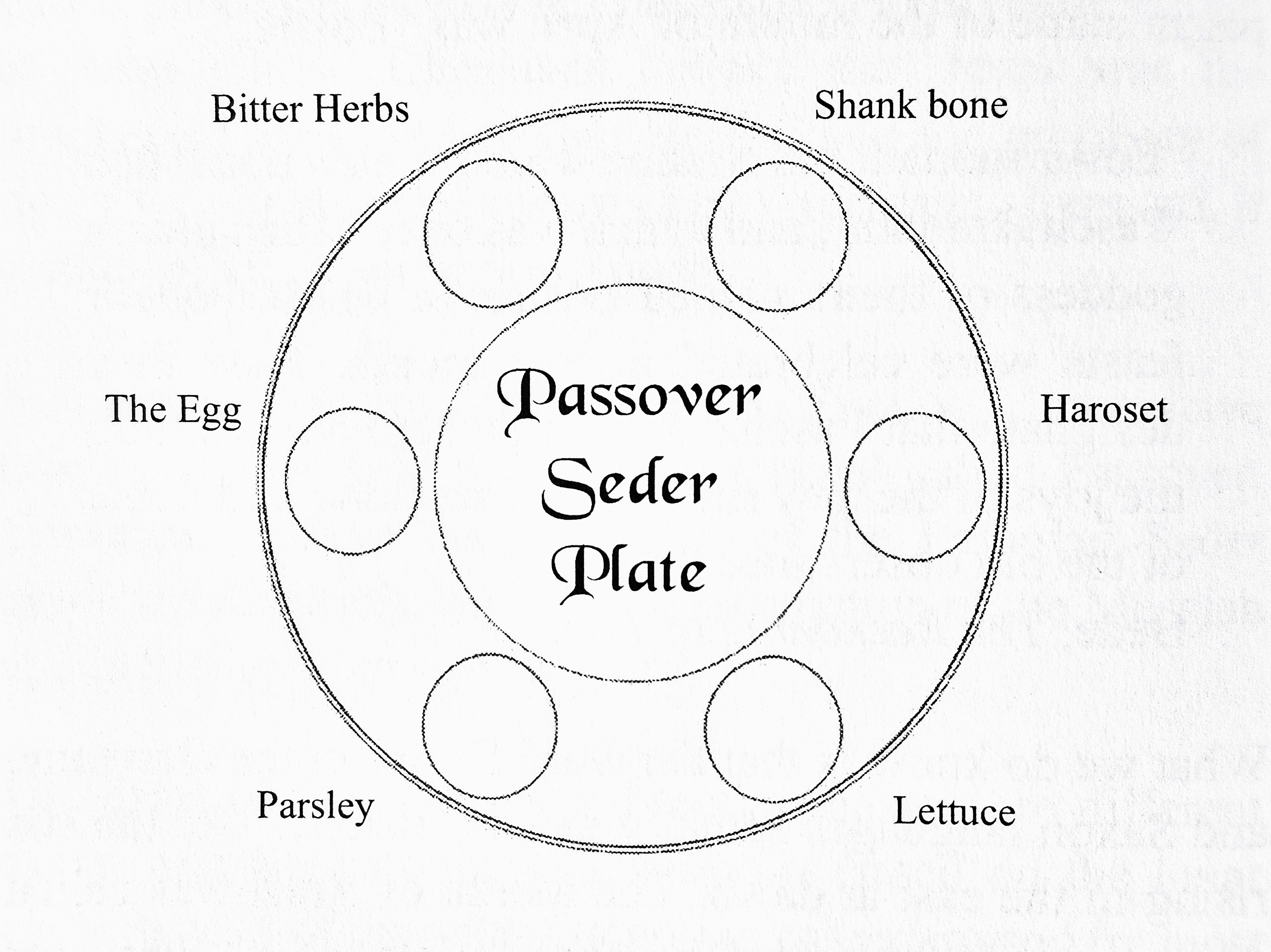
On Passover the Jews perform a ritual meal called the Seder. The Easter Egg comes from this Passover Seder ritual. There is a special dish used for the ritual called a Seder plate. It holds several items. One is an egg. In America it is usually a hard-boiled egg, but in the ritual, it is supposed to be fire roasted.
The Passover Seder egg is an egg roasted brown by fire symbolizing the temple sacrifices. It is said to represent a new beginning or new life that happens because of the temple sacrifices.
As Christians we hold that the temple sacrifices were rituals that pointed to the one sacrifice of the Messiah. If we accept Jesus Christ as our savior, we are given a new birth.
The Easter egg, as we know it, came into being when the Eastern Orthodox Church started coloring their hard-boiled eggs red stating it represents a new life in Jesus Christ
because of his blood shed as the sacrifice for our sins. Cracking the shell and taking the egg out symbolizes the same thing as the Passover Seder ritual of retrieving the hidden matzah that was wrapped in a white cloth – the resurrection of the Messiah.
Did they have the authority to change the ritual? Maybe, maybe not, but the practice did not come from paganism.
In the last hundred years or so Easter eggs have become secular and painted with multiple colors with every possible artistic design imaginable.
The Easter Bunny
Since all nations had to closely observe the spring equinox for planting and hunting, along with looking for the spring equinox, in some areas the people would look for animals to start having young. Rabbits and hares reproduce quickly, so a baby rabbit is a sure sign spring has come. Bird eggs are another sign. Later when the pagans started worshipping the spring season as a goddess, it might have been adapted into some pagan systems. There is no known manuscript, glyph, or stone carving, that connects Ishtar with rabbits. The goddess Asherah is connected with lions and owls, but not rabbits. There are no known records of any kind about the rites of Eostre.
Rabbits were a popular motif in medieval church art. In ancient times, it was widely believed (as by Pliny, Plutarch, Philostratus, and Aelian) that female rabbits could reproduce without the aid of a male rabbit. Of course, this is not true, but the idea of reproducing without the loss of virginity led to rabbits being associated with the VirginMary. Rabbits are often found in Northern European manuscripts and paintings of the Virgin and Christ Child. The triple rabbit became a catholic symbol for the Trinity and is found on many cathedrals in Europe.
By the seventeenth century the Easter bunny and Easter eggs began to blend in Germany. These traditions came to America with the German immigrants in the mid nineteenth century. Shortly thereafter children’s stories of a rabbit that lays eggs came to be.
For the record, the idea that the English word “Easter” comes from a pagan European goddes is discussed in “Easter” or “Passover” in Acts 12:4? by KJV Today.
The Riplinger Scoop: Pagan Festival in the KJV?
It’s been decades since Gail Riplinger began developing her ideas regarding the KJV’s built-in dictionary. She believes every word in the KJV can be defined by its immediate context. Her definition of “Easter” gives fascinating insights into her views of word structure and reveals a serious double standard on her part. From what I can see, she makes no defense of the word in any of her other books.
From Gail’s video exposing the “NKJV logo”, I got the impression that due to Gail blamed all symbolism on Nimrod because of the claims put forward in Hislop’s Two Babylons. In the following article, she reveals that she places the origins of true symbolism and word pictures in the Bible.
Here’s the following excerpt from her book The Dictionary Inside the King James Bible, p. 79-82. Currently, the pages on “Easter” are available as a free sample download on the book’s page, but I don’t know how long it will be available.
Double standard detected! Why when the triquetra (or “NKJV logo”) and “Lucifer” have similar stories of supposed pagan roots as the word “Easter”, the triquetra and Lucifer must be demonized and “Easter” must be sanctified? Is it because it is a word and not a symbol or are we just biased? One must ask, if this word were not in the KJV but were instead used in modern versions, would Gail have attacked “Easter” rather than defending it? Further, if the pagan word (if it is) belongs in the undefiled KJV Bible, what does this mean for the other terms some identify in the modern Bibles?
None of us knew that Gail had allergies. Apparently she breaks out in hives if she gets too close to a fair unbiased treatment of the facts. If Easter appeared in a modern version, not the KJV, we wouldn’t hear one positive word from Gail. We all know she’d be be jumping download modern translator’s throats over the the evil corrupt pagan word that they added to the Bible. We’d never hear the end of it.
Here are some notes on some things about Gail’s “definition” that I find less than satisfactory:
She has painted herself into a corner that was completely unnecessary. Easter still hast to have pagan origins because this is the argument she has been pushing for years. Now the word has to be sanctified somehow. This has to be reconciled with her “holy, harmless, undefiled, seperate from sinners and mand higher” words montra. In the section at the end of each of her books she advertises her other material, Gail’s Q&A is advertised ti answer “Why is “Easter” the correct rendering in Acts 12:4?” Not an accurate translation, THE accurate translation.
Gail has been blowing her horn to reject all lexicons, Bible reference works, and Greek-Hebrew dictionaries for years, describing them as hopelessly corrupt. However, when they do not contradict her ideas about what the KJV or originals languages are supposed to mean, they are taken as the only evidence nessecary to prove the KJV correct. Second double standard detected. Dictionaries, etc. are fine so long as they do not contradict KJV-only arguments. The moment they do, there is nothing to learn or grow from. The lexicon must simply be disposed of because “God is not the author of confusiotn”. )Fascinating comparisons can also be drawn between her defense of “Easter” and her foolishness regarding the “Lucifer” vs “day star” controversy.) Wasn’t this supposed to be about the Bible’s built-in dictionary? Which brings us to our next issue.
In Gail’s responce to Bryan Ross’s evaluation of the evidence (which she does not seem to have read, or at least not carfully), she condecendingly replies that she has an older and better older OED than Ross and that she knows all this deep history beind the word that no one lse seems to have access to. Why not include a little of this information in one of the few places she defends the word “Easter”, or is she simply trying to build herself up in the eyes of her readers by tearing other researchers down?
The Oldest is Best I Decided
Gail’s responce to Ross
Of course Gail’s ire is raised by the mere suggestion that “Easter” means “Passover”, even though her lexicon says the same original word san be translated BOTH ways. Modern versions can’t be right too, and Hislop helps keep the correct rendering “KJV-only”. Its okay that bing “in touch” with lexicogpraphy and history justifies the KJV translation and allows you to make a jab at critics reading comprehension and only as far as it does so. As soon as it ceases to show the KJV as 100% superior to faulty new versions and the words “Easter” and “Passover” are BOTH legitimate because they are the same thing, to hell with lexicography and history.
I do not pretend to be “in touch” with lexicography by any means, but I have proven to be more intouch with design and information technology than Gail on several occasions. I’m pretty sure Gail has interpreted the run on physical copies of outdated editions of the OED the wrong way. Is there more to this perceived “gold rush” than modern English lexicographers losing “touch” with lexicogrphy? Is Gail really the last great lexicographer as she portrays herself, or is there much more mundane and much less exciting explaination like usual? As when the Adobe Creative Suite digital and subscription based only designers were willing to pay through the nose for outdated editions of Illustrator, InDesign and Photoshop, so it is today. Now that the full OED is more exhaustive and easy to access than ever before, it too has been locked behind a subscription wall. The full online OED is subscription based, so physical copies are well worth their enormous prices, and the more out-dated, the better the price may be. The gold rush “combing” the internet could easily be born out of a desire to not pay $10 a month for the rest of a researcher’s life!
Sabbath or Sunday?
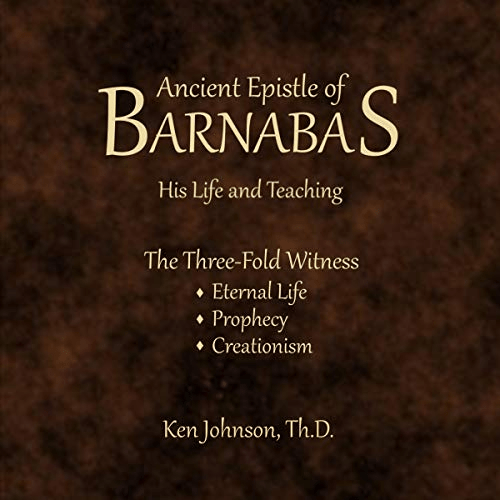
Did Jesus resurrect on a Sunday, “the first day of the week” (Mark 16:2, 9)? Surprisingly, some modern Christians deny this! An ancient epistle by a man who knew Jesus answers this question and further sheds light on why Christians observe the 1st/8th day of the week rather than the 7th.
Click to purchase book or audiobook.
The Epistle of Barnabas is not a canonical book but it it very likely to have been written by the Barnabas we read about in the New Testament. Far from being among the gnostic pseudepigrapha with the so-called “Gospel of Barnabas“, the Epistle of Barnabas reads very much like Hebrews leading some to believe Barnabas could have authored Hebrews as well. (Also see the 6-minute video Q&A A Quick Overview on the Epistle of Barnabas by Ken Johnson.)
Some would have us believe Barnabas is anti-Semitic and teaches Mormon doctrine about Satan and Christ being equal (New Age Bible Versions, p. 637). After listening to the audiobook carefully, I can affirm that neither is the case. The book of Hebrews is just as, if not more, antisemitic, as Ken Johnson points out.
To my knowledge, Gail is the only author to suggest a Mormon connection. To support this, she capitalizes on the capitalization of the word “Lord” in Barnabas 18:2. See more on this on our Hermas & Barnabas page (coming soon). She also mentions J.B Lightfoot’s statement that the Epistle is “is an uncompromising antagonist of Judaism”, but she fails to give any examples. It seems this is because it is no more an antagonist than the rest of the New Testament.
A few years ago I discovered, thanks to Ken Johnson’s YouTube channel, that Barnabas had something very interesting to say about why Christians don’t observe Saturday (the 7th day) but rather Sunday (the 8th day).
Barnabas 15:1 Moreover concerning the Sabbath likewise it is written in the Ten Words, in which He spake to Moses face to face on Mount Sinai; And ye shall hallow the Sabbath of the Lord with pure hands and with a pure heart.
Barnabas 15:2 And in another place He saith; If my sons observe the Sabbath then I will bestow My mercy upon them.
Barnabas 15:3 Of the Sabbath He speaketh in the beginning of the creation; And God made the works of His hands in six days, and He ended on the seventh day, and rested on it, and He hallowed it.
Barnabas 15:4 Give heed, children, what this meaneth; He ended in six days. He meaneth this, that in six thousand years the Lord shall bring all things to an end; for the day with Him signifyeth a thousand years; and this He himself beareth me witness, saying; Behold, the day of the Lord shall be as a thousand years. Therefore, children, in six days, that is in six thousand years, everything shall come to an end.
Barnabas 15:5 And He rested on the seventh day. this He meaneth; when His Son shall come, and shall abolish the time of the Lawless One, and shall judge the ungodly, and shall change the sun and the moon and the stars, then shall he truly rest on the seventh day.
Barnabas 15:6 Yea and furthermore He saith; Thou shalt hallow it with pure hands and with a pure heart. If therefore a man is able now to hallow the day which God hallowed, though he be pure in heart, we have gone utterly astray.
Barnabas 15:7 But if after all then and not till then shall we truly rest and hallow it, when we shall ourselves be able to do so after being justified and receiving the promise, when iniquity is no more and all things have been made new by the Lord, we shall be able to hallow it then, because we ourselves shall have been hallowed first.
Barnabas 15:8 Finally He saith to them; Your new moons and your Sabbaths I cannot away with. Ye see what is His meaning ; it is not your present Sabbaths that are acceptable [unto Me], but the Sabbath which I have made, in the which, when I have set all things at rest, I will make the beginning of the eighth day which is the beginning of another world.
Barnabas 15:9 Wherefore also we keep the eighth day for rejoicing, in the which also Jesus rose from the dead, and having been manifested ascended into the heavens. (Lightfoot’s translation)
There is also a good deal of controversy as to what day of the week he was crucified. The scriptures and tradition seem to say Friday, but many say Wednesday or even Thursday. In my opinion, the jury is still out on this one and I have not chosen to weigh in on this controversy here.
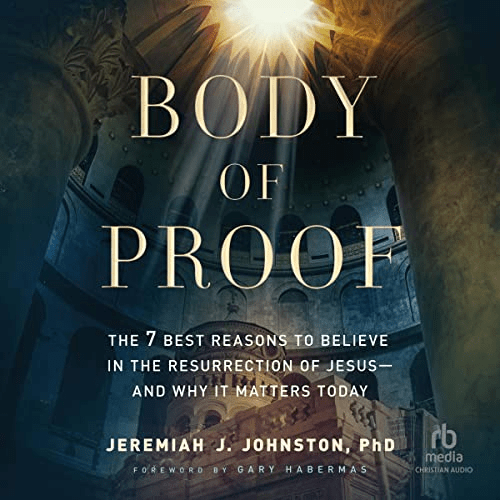
The Case for the Resurrection
1 Corinthians 15:14 KJV — And if Christ be not risen, then is our preaching vain, and your faith is also vain.
Did Jesus even rise from the dead? To fantastic Christian scholars say, yes! For a deeper dive into this information, check out the fascinating presentations of Dr. Craig and Dr. Habermas where they get into much more detail. See also our card ministry page on the Resurrection.
We are sad to say that Bishop B.F. Westcott of Bible revision fame does not seem to have believed in the Resurrection. See more about this on our Westcott & Hort page under “Lake Spots the Fake”.
We need to know why we believe in the Resurrection of Christ and be able to defend it when questions are asked. But is there a hidden belief that has crept into our churches that takes Westcott’s veiled disbelief to a whole other level?
Bill Schnoebelene was just an average Catholic kid trick-or-treating until he had what many would call a paranormal experience that would change his life forever.
As a grown man, Bill was part of what claimed to be the ancient vampire cult based on the teachings of the apostle John (See John 6 and 11). His mentors in this cult made four chilling claims:
Lazarus was the first vampire because he was “undead”. (Not true since there were others raised from the dead in the Old and New Testaments by Elisha [2 Kings 4] and Christ Jesus [Mark 5 and Luke 8.])
Jesus did rise from the dead because He was a vampire. (Please note, it is not enough to “prove” the Resurrection happened. Maybe the more you “prove” it, the more it reinforces someone’s dark beliefs.)
Throughout the Dark Ages, a vampire priest lay concealed within the altar in front of Roman Catholic cathedrals. (I hope this isn’t true, but if such a cult existed then, it would not be inconsistent with The Gnostic Origins of Roman Catholicism by Ken Johnson or Windswept House by Malichi Martin.)
If Bill followed the prescribed ceremonial rituals, he could die and be raised a vampire as well. (Bill’s magical plans were foiled when a Christian began praying for him in the name of Jesus, the one he thought was an ancient vampire! Since then, Bill has served the true risen Christ through his ministry and YouTube channel for decades!)
It is important to note that Gnostic sects of this kind often teach that Jesus Christ was a purely spiritual being that didn’t leave footprints and could not have been nailed to a cross taking the idea of a spiritual Resurrection to a whole new unbiblical and unhistorical level. John (the actual Apostle, not the “John” behind the twisted gnostic Pseudepigraphal books) strongly fought against these beliefs while still alive. In fact, we owe John’s Gospels and his three Epistles to John’s battles against them.
After John’s death, a gnostic leader penned the Apocryphon of John in the second century AD. Its claims that Christ bestowed John with secret occult knowledge were strongly opposed by students of John such as Irenaeus of Lyon. See more in Ken Johnson’s book Demonic Gospels and our card ministry page Lost Books.
Around the same time, there appears to have begun a line of “anti-apostolic succession” for each of the close followers of Christ. To our understanding, even today characters from the Gospels (such as Peter, John, Mary Magdalene, etc.) are titles healed by high “immortal” initiates and fallen angels to perpetuate the idea that John and other disciples are still alive! In fact, Lucifer Dethroned gives a detailed list of each line of pseudo-apostolic succession! John seems to be very closely linked with Freemasonry and vampiric cults.
See the full list of “Apostles” and their cult streams from Bill’s “Lucifer Dethroned”.
Several years later, we were told that we had to amass all twelve of the ancient lines of initiatic power in order to really acquire the “Grail” in all its fullness. What, then, would this Grail give? We would attain true immortality! We would “drink” from this completed Grail and live forever!The “master” who brought Sharon and me into this claimed to be more than 165 years old. Our teachers laid it out before us. Here were the meta-physical “mountains” we needed to scale to attain this goal:
1. Peter — the Roman Catholic priesthood
2. Andrew — the Druidic high priesthood
3. James — the Eastern Orthodox priesthood
4. John — the Masonic order
5. Philip — Tibetan Bon Pa (Buddhist) Priesthood
6. Bartholomew — African (Ashanti) line (modern Voudoun)
7. Thomas — Hinduism & Tantra Yoga
8. Matthew — Illuminated Seers
9. James — Native American (Cherokee) line
10. Thaddeus — Arab (alchemy)- Ishmaeli – Muslim (Thelemic) line11. Simon Zelotes — the Satanic priesthood
12. Judas Iscariot — the Satanic high priesthood
This may help explain the bizarre pilgrimage our lives went through in the 1970’s. We got into virtually every one of these religious lines trying to seek this “Grail,” trying to bring it all together. The “alchemy” involved grew intense and, of course, quite demonic. We were putting together quite an infernal goulash.
Has this parasite celebrated Easter as a pagan festival for centuries within Christianity? Here are some details regarding the Satanic celebrations around Easter. These are only the ones we are told about in Lucifer Dethroned.
Details from the Satanic calendar relating to Easter from Lucifer Dethroned, Appendix I
The Satanic Calendar
“Major feasts (called Sabbats) common to both Wicca and Satanism are as follows. In satanic covens, the feasts which involve at least animal sacrifice are marked (‡). Those which involve human sacrifice and are especially dangerous are marked (‡ ‡). The symbol: (‡ ‡ ‡) means really watch out:
“…2.) Vernal Equinox: March 21. Satanist covens usually require orgies.” (p. 329)
“Specialized Satanic Holidays, Part 1:
“Crowleyan (Thelemic) Festivals and those related to the Set cult: 1.) The Equinox of the Gods: April 8-10. The anniversary of the bringing forth of Liber Al. Sometimes celebrated with drugs and orgies.” (p. 330-331)
“Specialized Satanic Holidays, Part 2:
Miscellaneous Satanist feasts. They are commonly celebrated by some groups, but not all:
…2.) Major Roman Catholic feast-days. Especially Easter (feast of Ishtar), Good Friday, Christmas (Feast of Sol Invictus) and St. John’s Night. (‡ ‡ ‡) requires a human sacrifice (male or female, ideally a Christian minister, a Christian ex-Satanist or the child of a Christian). Also orgies.
“…6.) St. Eichstadt: March 1. (‡) Animal (often dog) dismemberment and sacrifice. Consumption of animal as sacrament. 7.) Grand Climax: Preparation April 19-26, Festival 26-30. (‡ ‡ ‡) Human and sexual sacrifice required (female Christian 1-25 years of age). (p. 331-332)
Sometimes we focus too much on proving Christ’s Resurrection without remembering that there could be “Christians” sitting (or hiding) in our churches who still hold these twisted views today! How are we going to handle this? How does this information change our defense of the Rsurection’s historicity and the supernatural? Let us know your thoughts below.


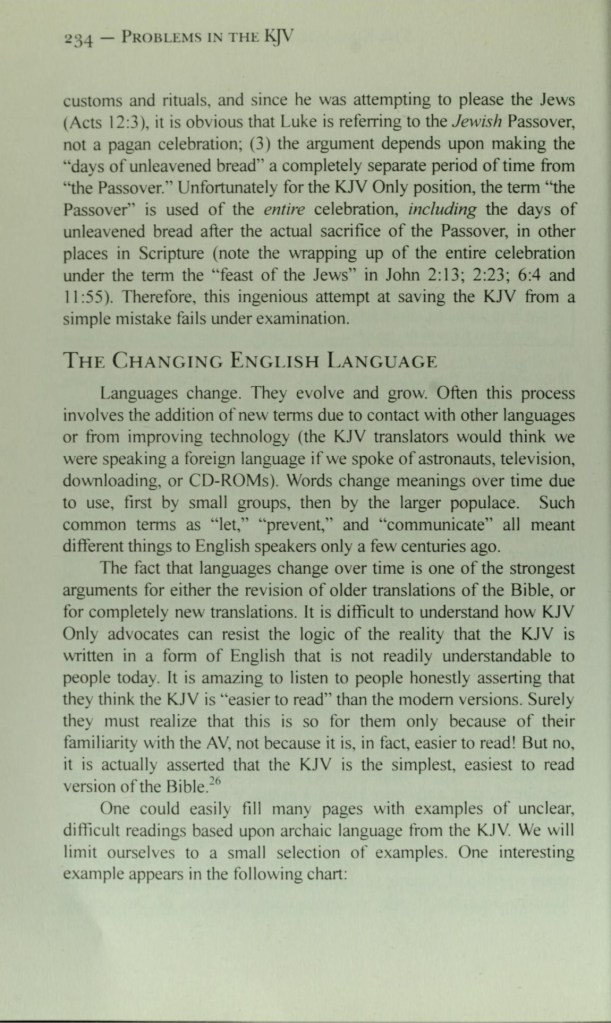


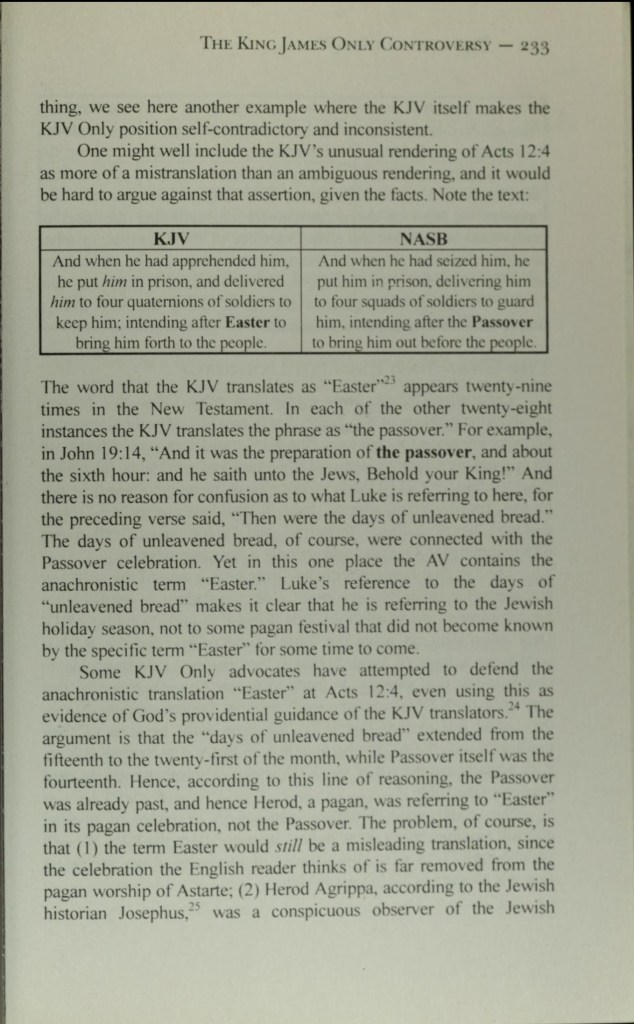
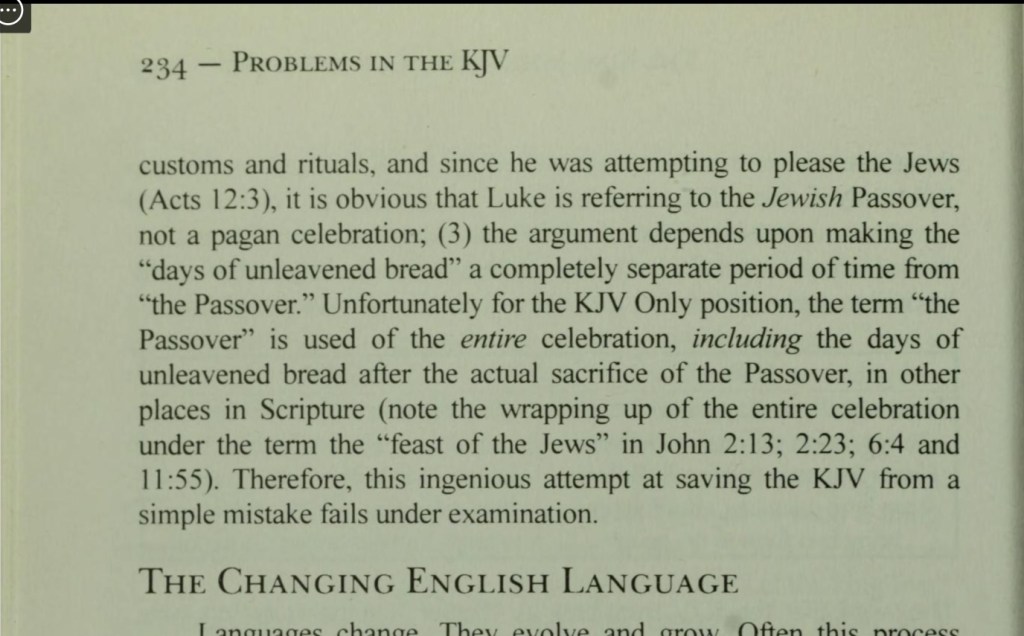
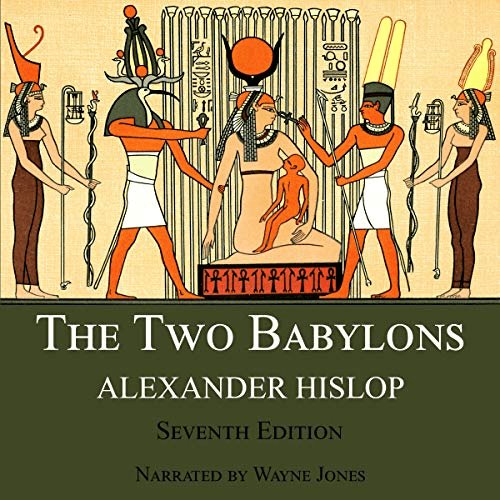
Figure 31
Figure 32







 Bible Version Conspiracy